
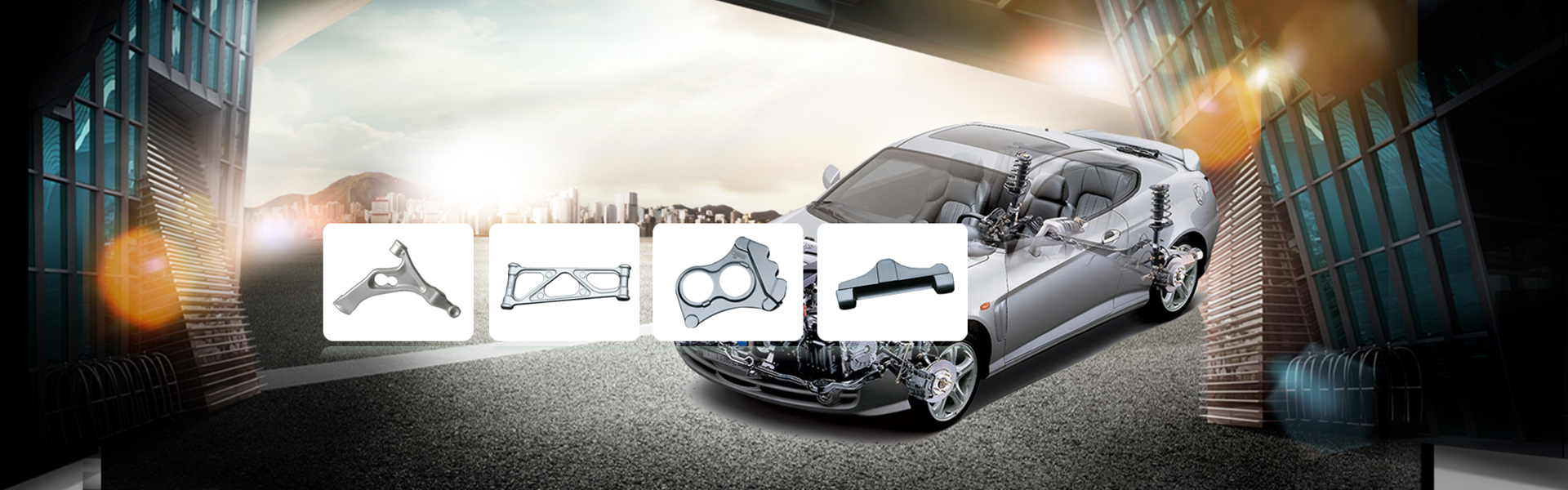
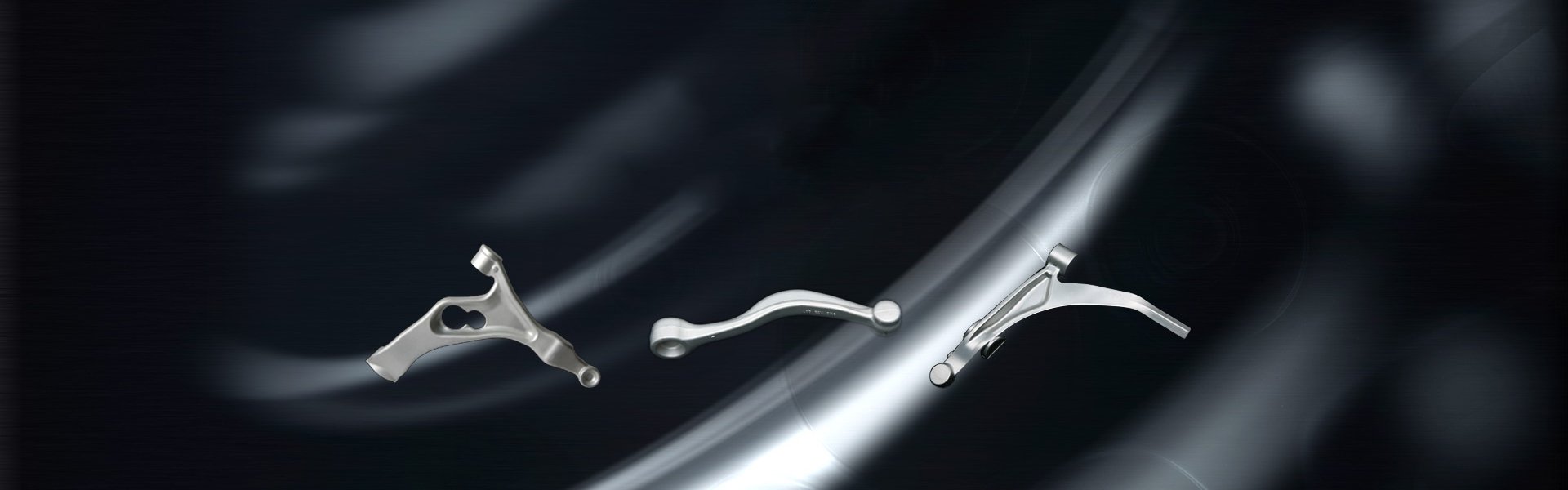

The editor believes that aluminum forging belongs to heat treatment-strengthened aluminum alloys, with alloy systems including Al-Mg-Si and Al-Mg-Cu-Si. Both of these aluminum alloy systems exhibit good plasticity at high temperatures, making them suitable for the production of forgings and stampings. The main grades used for welding are 6A02 (LD2) and 2A14 (LD10), both of which are part of the Al-Mg-Cu-Si series. How can deformation during the aluminum forging process be reduced?
Reduce internal stress of raw material.
Aluminum forging can partially relieve the internal stress of the billet through artificial aging and vibration treatment. Pretreatment is also an effective process. For thick-nose and large-ear blanks, due to the larger allowance, there is greater deformation after processing. If the excess parts of the blank are processed in advance, reducing the allowance for each component, it can not only minimize the processing deformation in subsequent processes but also, after a period of time following pretreatment, release a portion of the internal stress.
Enhancing Cutting Tool Performance
The material and geometric parameters of cutting tools significantly impact cutting forces and cutting heat during aluminum forging processes. Proper tool selection is crucial for reducing deformation in the deep processing of aluminum forgings. Operators can improve the aluminum forging process by starting with the rational choice of tool geometric parameters, enhancing tool structure, and refining workpiece clamping techniques.
3. For thin-walled aluminum parts with poor rigidity, the flexible application of aluminum forging methods is possible.
For thin-walled sleeve components, if radial clamping is used with a three-jaw self-centering chuck or a collet, the workpiece will inevitably deform upon release. At this point, a rigid axial face compression method should be employed. The component's internal bore is used for positioning, a custom wire insertion mandrel is inserted into the bore, the end face is clamped with a cover plate, and then secured with nuts. This approach can prevent clamping deformation when machining the outer diameter, resulting in satisfactory aluminum forging accuracy. Additionally, when processing thin-walled sheet metal parts, it is advisable to use a vacuum chuck to achieve uniform distribution of clamping force, followed by machining with smaller cutting parameters to effectively prevent workpiece deformation.
4. Streamline the workflow
During the aluminum forging process, due to large machining allowances and intermittent cutting, vibrations often occur during milling, affecting processing accuracy and surface roughness. Therefore, the CNC high-speed machining process is generally divided into: roughing - semi-finishing - corner cleaning - finishing, etc. For parts with high precision requirements, secondary and semi-finishing may be necessary before the final finishing process. After roughing, the part can be naturally cooled to eliminate internal stresses generated during roughing and reduce deformation. The allowance after roughing should be greater than the deformation amount, usually 1-2mm.
During the precision finishing of aluminum forging, the precision finishing surface of the parts should maintain a uniform machining allowance, typically ranging from 0.2 to 0.5mm. This ensures that the cutting tool remains in a stable state during the finishing process, significantly reducing cutting deformation and achieving excellent surface finishing quality. It guarantees the precision of deep processing for aluminum products.
