
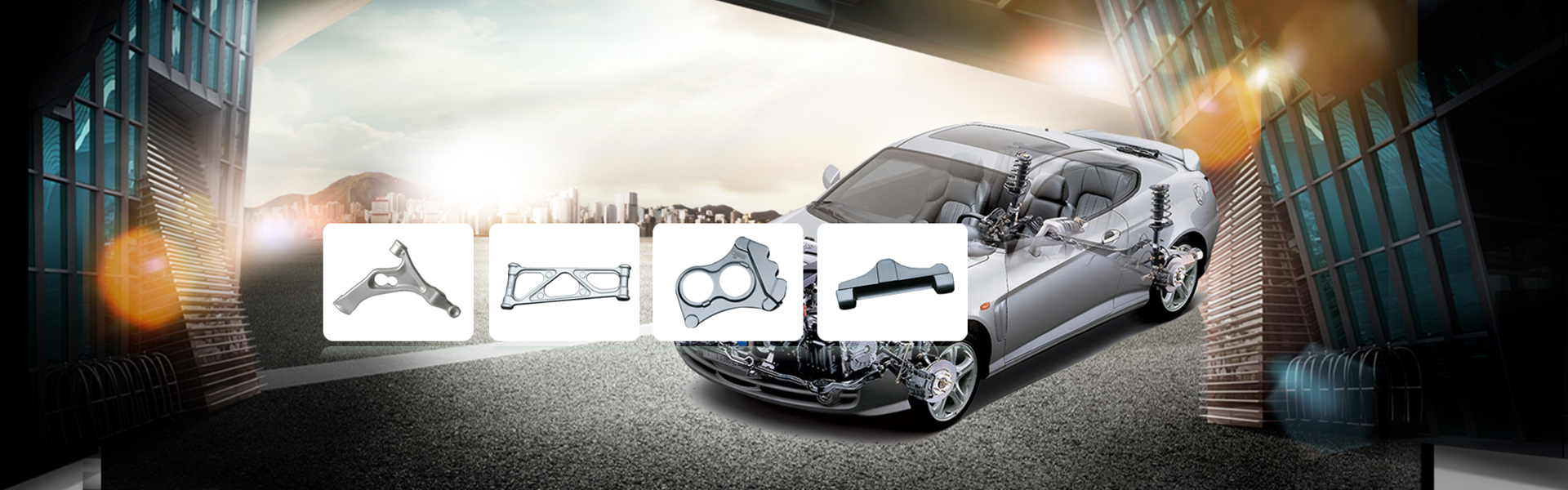


Forging is generally classified as volume forming, where the transfer and distribution of metal volume allow for the creation of rough or near-finished mechanical parts. Aluminum forging is primarily carried out in a heated state. Metal materials can be forged into the desired shapes and sizes, significantly improving their internal structure and enhancing their performance. Therefore, various components or parts that bear large and complex loads are often produced through forging.
Aluminum forging is generally categorized into free forging and die forging. Free forging is typically used with free forging equipment, which employs simple tools to forge metal ingots or slabs into specific shapes and sizes. Free forging is mainly used for single pieces and small batch production. As the demand for larger batches increases, the tools used become more complex, leading to tire die forging. Forging shops in various mechanical repair factories mainly adopt free forging and tire die forging methods. Large forgings, such as large turbine rotors, turbines, giant wheels, and engine crankshafts, also require free forging on large hydraulic presses.
Aluminum forging is a forging method suitable for mass production of forgings. During the die forging process, a special die cavity (mold) shaped or similar to the forging is opened. The die is mounted on a forging press, with the metal billet placed inside the mold. The forging machine loads the billet by forging, causing plastic deformation, with the flow of deformation controlled by the mold space. Die forging also frequently incorporates various bulk forming methods to produce forgings, such as extrusion, roll forging, and cross rolling, which are included within the scope of die forging.
In addition to high productivity, aluminum forging also boasts advantages such as forging shapes and sizes, high material utilization rates, reasonable streamline distribution, long service life of parts, and simple production operations.
Forging materials primarily consist of carbon and alloy steels of various compositions, followed by aluminum, magnesium, copper, titanium, and their alloys. The original state of materials includes bars, ingots, metal powders, and liquid metal. The ratio of the cross-sectional area of the metal before deformation to the cross-sectional area after deformation is known as the forging ratio. Proper selection of the forging ratio, reasonable heating temperature and holding time, appropriate initial and final forging temperatures, and reasonable deformation amount and speed are crucial for improving product quality and reducing costs.
Typically, round or square bars are used as blanks for small and medium-sized forgings. The grain structure and mechanical properties of the bars are uniformly good, with precise dimensions and excellent surface quality, making them suitable for mass production. By properly controlling the heating temperature and deformation conditions, high-performance forgings can be forged without significant forging deformation.
Ingots are used exclusively for large forgings. The ingots have a cast structure with large columnar crystals and a loose center. Therefore, the columnar crystals must be broken into fine grain particles through large plastic deformation, followed by loose compaction to achieve excellent metal structure and mechanical properties.
Powder forging can be produced from P/M preforms by die forging in the hot state without flash. The powder forging density of aluminum is close to that of general die forgings, offering excellent mechanical properties, high precision, and can reduce subsequent cutting and finishing operations. The internal structure of powder forging is uniform with no segregation. It is suitable for manufacturing small gears and other components. However, the cost of powder is significantly higher than that of ordinary billets, limiting its application in production.
Applying static pressure to the liquid metal in the injection mold allows it to solidify, crystallize, flow, plastic deform, and shape under pressure, resulting in die forging with the desired shape and properties. Liquid metal die forging is a forming method that lies between die casting and forging, particularly suitable for complex thin-walled parts that are difficult to form through conventional forging.
In addition to common materials such as carbon steel and various alloy steels, alloys for forging or rolling of aluminum, magnesium, copper, titanium, and their alloys, iron-based superalloys, nickel-based superalloys, and cobalt-based superalloys are also produced. However, these alloys have relatively narrow plastic zones, making forging more challenging.
