
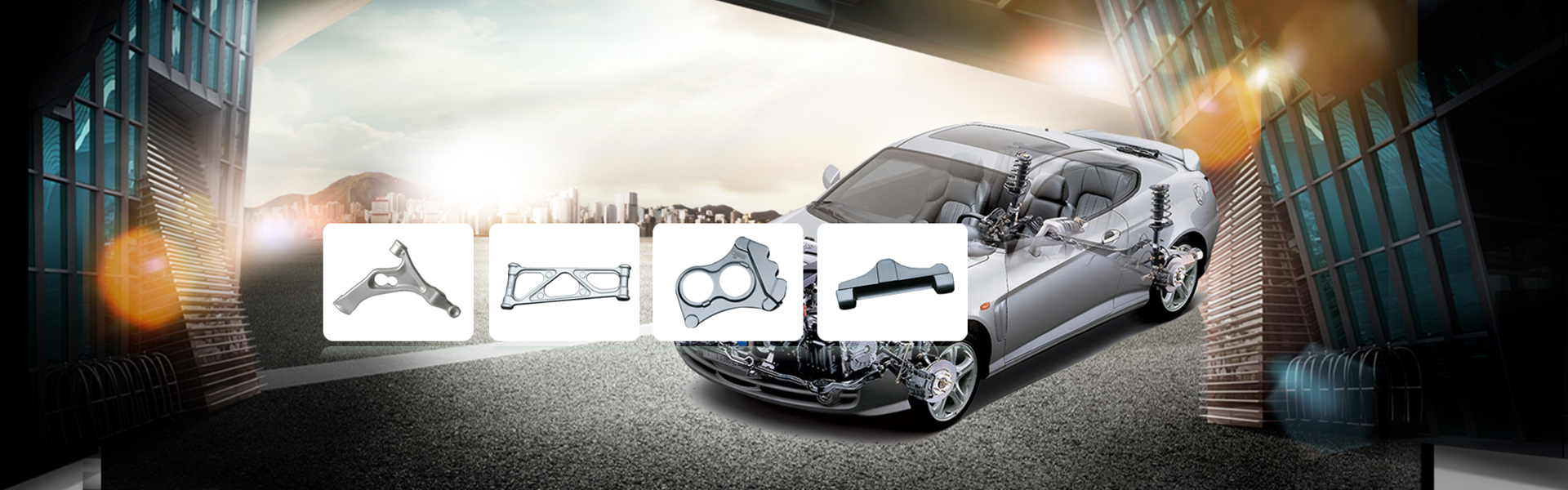

The characteristics of aluminum forging technology are as follows:
(1) Narrow forging deformation temperature range
Most aluminum forging deformation temperatures fall within the range of 350-450°C, with deformation temperatures around 100°C. For a few alloys, the deformation temperature range can even be as low as 50-70°C, allowing for shorter forging operation times. This undoubtedly presents significant difficulties for the forging process. To achieve longer forging times, it is necessary to heat the billet to the upper temperature limit, increase forging heat, and preheat the tools and molds to higher temperatures.
(2) Corresponding rate of change sensitivity
Aluminum alloys are highly sensitive to deformation rates, necessitating the selection of forging equipment with low working speeds and stable velocities for forging. For ingots, to prevent forging cracks, it is typically required to open the ingot at a low speed under compressive stress conditions, utilizing methods such as extrusion, forging, or rolling. Aluminum forging is often performed on hydraulic presses or mechanical presses, rather than on hammer forging equipment as much as possible, due to the relatively limited range of forging equipment choices.
Strict requirements for heating and forging temperatures
Due to the narrow deformation temperature range of aluminum alloy forgings, to extend the forging operation time, it is necessary to heat them as close to the upper limit of the deformation temperature as possible. This requires the use of high-precision heating furnaces and temperature controllers to control the heating temperature; otherwise, overheating is prone to occur.
Most aluminum alloy semi-finished products have high plasticity, making them generally difficult to forge and crack. However, during the forging process, it's crucial to avoid severe deformation to prevent excessive overflow from affecting the structure and properties of the forging. Neglecting proper operation, especially using high-speed forging methods (such as forging hammers) and large deformation, can convert a significant amount of deformation energy into heat, potentially causing the forging temperature to exceed the forging temperature limit, leading to overburning and substandard structure and properties.
(4) Excellent thermal conductivity
Aluminum alloy has a thermal conductivity three to four times that of steel. Its advantages include a smaller billet volume, which can be directly loaded into a high-temperature furnace for heating without preheating. However, its disadvantages are that surface cooling is too rapid during the forging process, leading to significant temperature differences between the inner and outer parts of the aluminum forging, resulting in uneven deformation, localized critical deformation, coarse grain structure, and uneven forging structure. Most aluminum alloys, especially those with extrusion effects like aluminum-manganese alloys, have coarse grain rings on the surface of the extruded bars, which may be related to rapid surface cooling, high friction, uneven deformation of the inner and outer layers, and entering the critical deformation zone. To prevent rapid heat loss, molds and tools in contact with the workpiece must be preheated to 300°C or higher.
High coefficient of friction, poor liquidity
Aluminum alloy and steel molds exhibit a high coefficient of friction, resulting in poor fluidity during deformation, which makes it challenging to fill the mold cavity with metal during the forging process. Typically, it requires adding steps and molds, as well as increasing the radius of the corner radius of the calibrator.
High Adhesion
Aluminum alloys have high viscosity. During large deformation forging, the billet often adheres to the mold, easily causing defects such as forging spalling and warping, and also leading to mold wear. In severe cases, both the forging and the mold may become scrap.
(7) High Cracking Sensitivity
Aluminum alloys are sensitive to cracks. If cracks formed during the forging process are not promptly cleaned up, they will rapidly propagate during subsequent forging, leading to the scrapping of the forging.
