


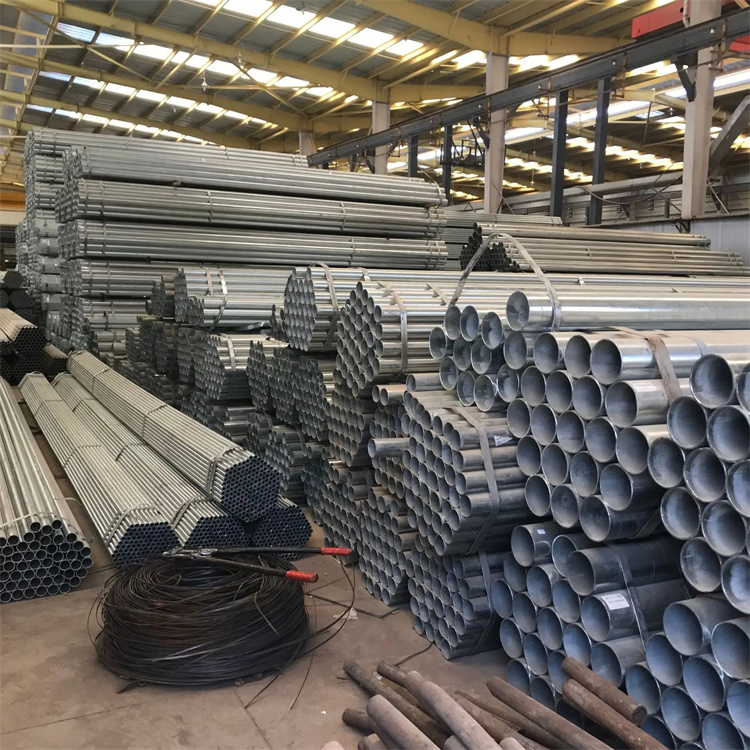

 The tensile test involves preparing a sample from galvanized seamless pipe, breaking it in a tensile testing machine, and then measuring one or more physical properties, typically only the compressive strength, tensile strength, and elongation at break are measured. Additionally, the reduction in area is also assessed. The tensile test is a fundamental physical property testing method for metal composites. Essentially, all metal composites that specify physical properties require a tensile test. These appearances are very detrimental to conducting strength tests on raw materials, and the tensile test has become the method for verifying physical properties.
Tensile tests involve gradually pressing the hard pull force into the surface of the specimen using a hardness tester according to specified standards, then measuring the depth or size of the indentation to determine the strength of the sample. Tensile tests are a very simple, quick, and easy-to-implement method in engineering mechanics performance tests. Ductility—indicates that galvanized seamless tubes are easily damaged. Ductility is closely related to strength; high-strength precision steel tubes generally have greater ductility. Ductility is the property of metal materials to deform under external force without breaking, and the galvanized seamless tubes can be twisted into strings. Ductility is the property of galvanized seamless tubes to deform under external force and then return to their original shape after the external force is removed. Tool steel is a material with toughness.
