
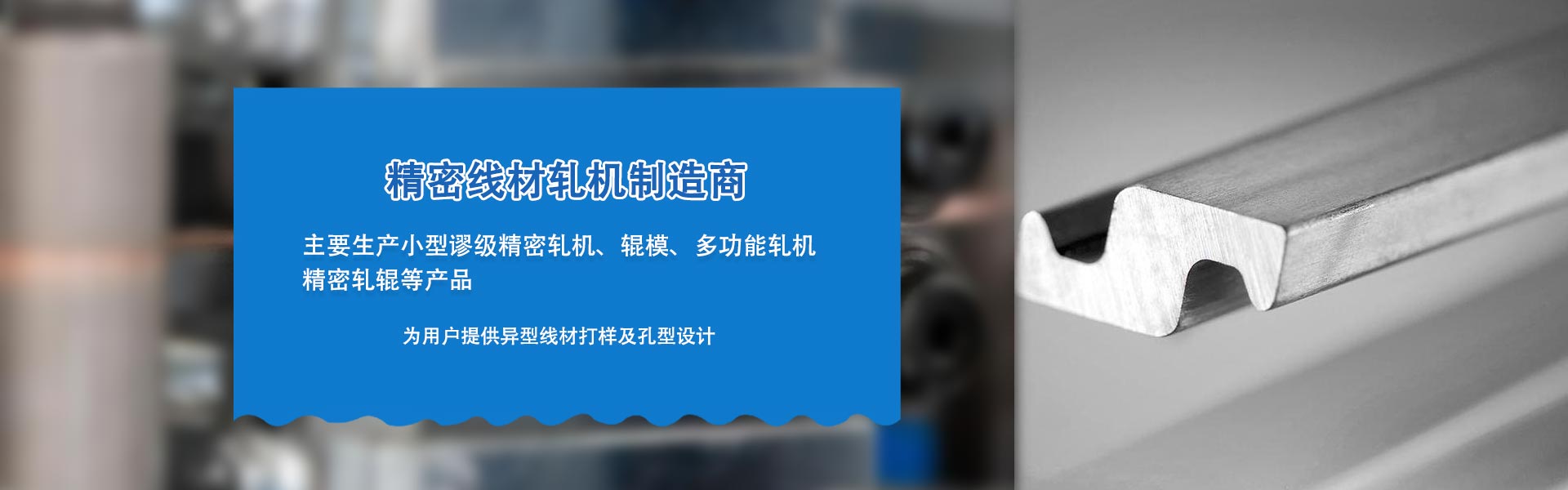
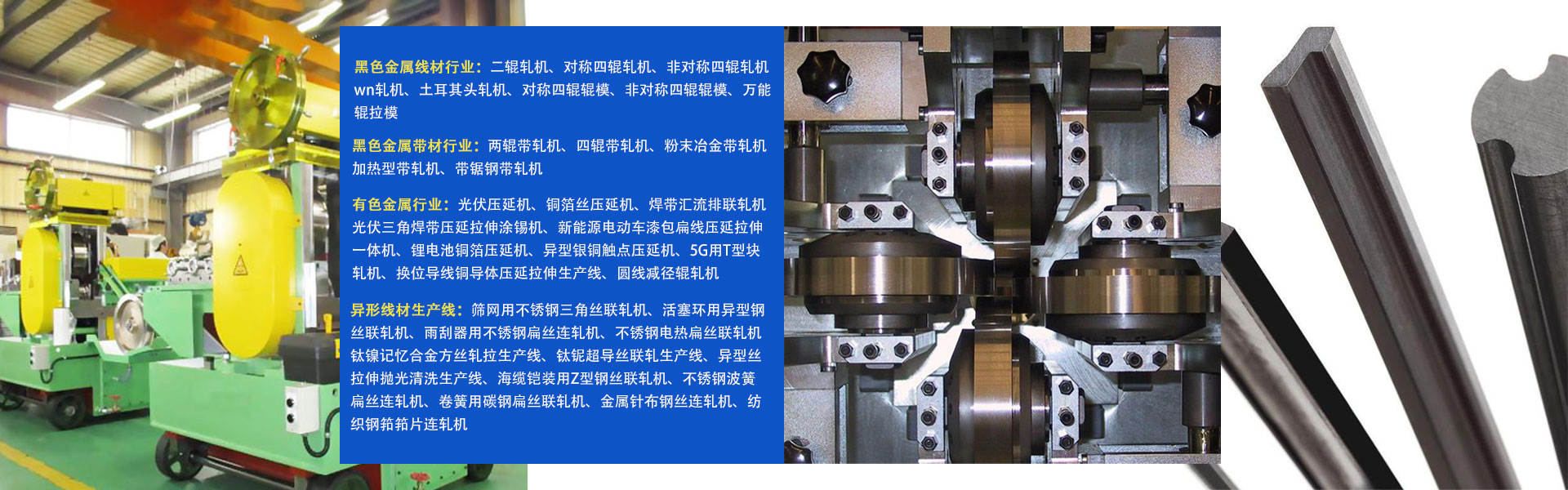

The Universal Mill, named in English as "Universal Mill," consists of a main frame composed of a pair of horizontal rolls and a pair of vertical rolls. The axes of the four rolls are in a single plane, with the horizontal rolls being the driving rolls and the vertical rolls the driven rolls (some mills can also drive the vertical rolls). It allows for four-sided processing of the workpiece and is assisted by a two-roll horizontal mill as the auxiliary frame (edge rolling machine).
Features of the WN Rolling Mill
A complex cross-sectional shape composed of four rolls can compress all components simultaneously on the cross-section, resulting in uniform deformation of the rolled piece, minimal velocity differences around the cross-section, and reduced internal stresses in the rolled piece.
2. Smaller diameter rolling mills can be used (since slots are not required on the rolls), allowing for the production of products with higher legs and wider waists. Additionally, it can ensure that the inner sides of the two legs are free of slopes—a feat that is challenging to achieve on standard two-roll rolling mills.
3. The reduction in pressure for the leg and waist sections of the rolled pieces can be adjusted separately, simplifying the adjustment work of the mill during rolling.
High rolling precision, reduced roller wear, and lower energy consumption.
The application of the WN rolling mill
The rolling mill is primarily used for rolling various types of steel, such as H-beams, rails, I-beams, channel steels, sheet piles, U-shaped steel, L-shaped steel, and unequal angle steel, among others. Due to its suitability for rolling a wide variety of steel products, it is named "wn rolling mill."
