
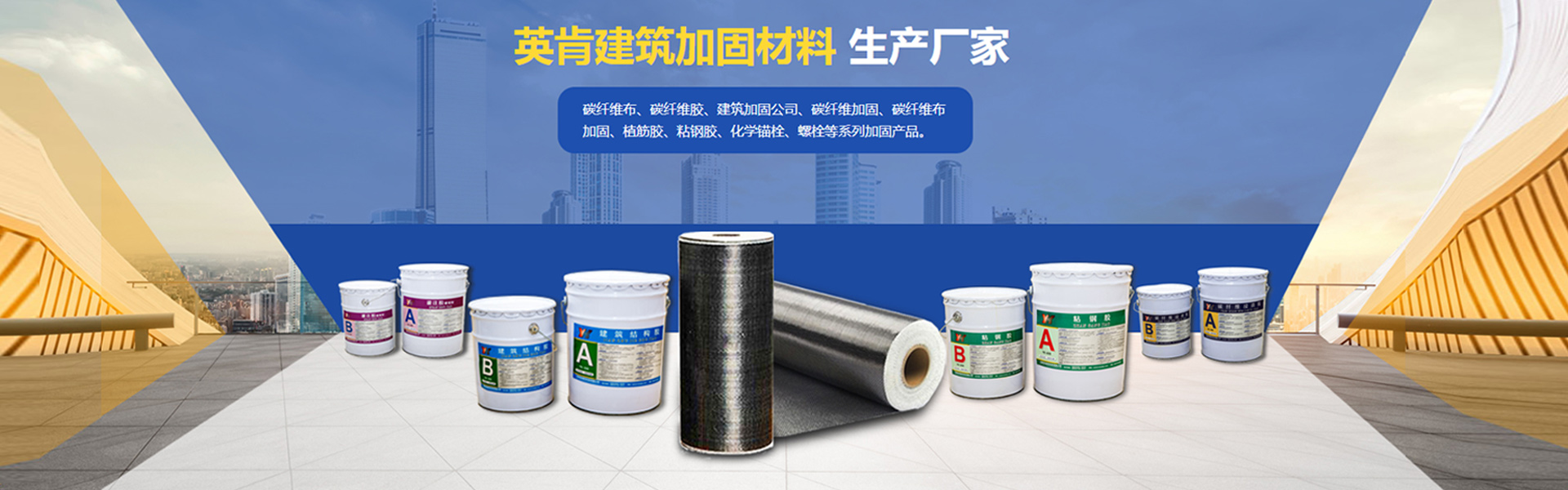
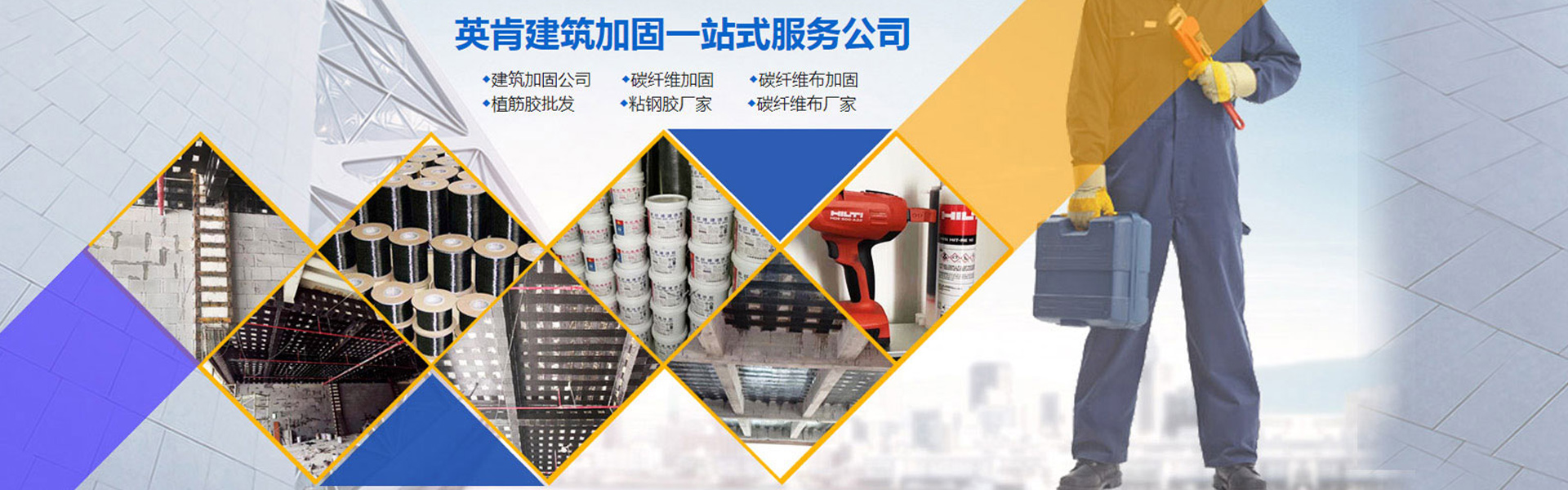




Our company holds reinforced qualifications and accepts projects such as: rebars reinforcement, steel plate bonding, crack repair and reinforcement of buildings, carbon fiber reinforcement of buildings, seismic reinforcement of school campuses, bridge repair and reinforcement, tunnel reinforcement, factory building reinforcement, floor crack reinforcement, hotel renovation reinforcement, carbon fiber reinforcement of structural beams and columns, steel angle wrapping and grouting reinforcement of columns, etc.; produces: rebars adhesive, steel plate bonding adhesive, grouting adhesive, joint filling adhesive, carbon fiber adhesive, carbon fiber cloth, sealing adhesive, and repair adhesive. We eagerly await your visit for business negotiations and collaboration!
Key Techniques for Reinforcing Concrete Structures with Carbon Fiber Fabrics: (1) Ensure that the resin fully penetrates the carbon fiber material, bonding each fine fiber down to the micron level together, so that they can collectively bear stress; (2) Achieve a strong bond between the carbon fiber composite material and the existing structure, creating new structural components capable of bearing stress. Main Materials for Reinforcing Concrete Structures with Carbon Fiber Fabrics: (1) Carbon fiber fabric; (2) Carbon fiber fabric配套resin.
Carbon fiber reinforcement applications: bending and shear reinforcement for concrete beams, bending reinforcement for slabs, seismic reinforcement for columns, etc.; strengthening and reinforcement for factory buildings, skyscrapers, school buildings, and other industrial and civil constructions; reinforcement and strengthening for road and bridge, water conservancy, nuclear power, and energy infrastructure, etc.
Enshi Carbon Fiber Fabric _ 300g Carbon Fiber Fabric Manufacturer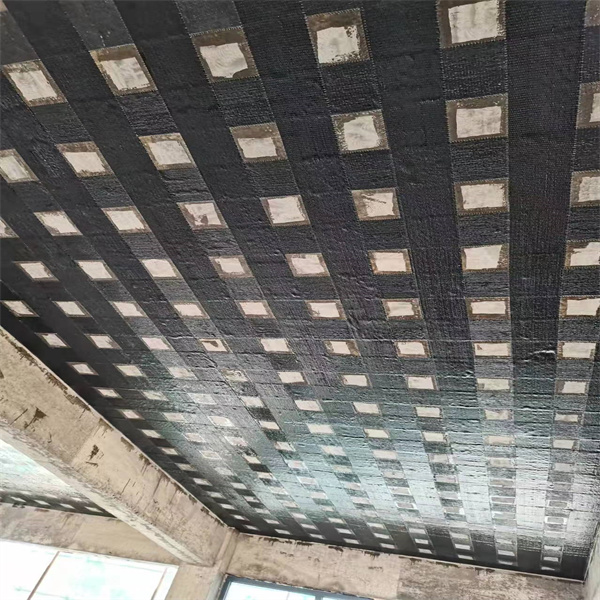
When it comes to building reinforcement, the first thing that comes to mind for many is the use of rebar bonding, which is one of the methods for reinforcing structures. During the process of bonding rebars to a building, the bonding adhesive is an indispensable reinforcement material that plays a crucial role in the reinforcement. There are specific requirements for the bonding adhesive when reinforcing a building, as it is an integral part of the reinforcement construction.
Reinforcement epoxy not only needs to be of high quality but also must be used in conjunction with reinforcing materials. How do you choose the right reinforcement epoxy for bonding during the anchoring process? Let's delve in and find out together:
One, Performance of Grout Adhesive
The superiority of the performance of the grout adhesive is a factor that must be considered when making a purchase. Because there are many low-quality grout adhesives on the market that do not meet expectations in terms of application, only high-quality grout adhesives can ensure the effectiveness of the reinforcement.
Section 2: The Environmental Friendliness of Reinforcement Adhesives
Over the years, the "environmental concept" has gained increasing attention. Many property owners now demand the use of eco-friendly reinforcement materials when anchoring reinforcement, as some buildings have been constructed without eco-friendly materials, leading to the generation of a large amount of harmful gases post-construction. This not only affects the living environment of the owners but also their health. Therefore, the choice of reinforcement adhesive must possess environmental properties to ensure that the living environment post-construction remains unaffected.
Three, Quality of Anchor Adhesives The quality of anchor adhesives on the market varies greatly, as does the price. The selection of anchor adhesives must be accurate, as high-quality adhesives ensure the quality of reinforcement, allowing for better performance during construction and improving project efficiency.
Carbon Fiber Reinforcement Construction Process (Detailed construction methods can be found in the "Technical Zone" column of this site): Unload → Base Treatment → Apply Primer → Leveling → Paste → Protect. Prior to reinforcement unloading, the components to be reinforced should be unloaded as much as possible. Base Treatment. For areas with deterioration such as spalling, hollowing, honeycombing, and corrosion on the concrete surface, these should be chiseled out. After removal, larger areas of poor quality layers should be repaired with mortar. The crack areas should be sealed first. Use concrete corner machines, sandpaper, and other tools to remove floating cement, oil stains, and other impurities from the concrete surface. The concrete base of the components should be polished smooth, especially the protruding areas on the surface should be ground flat, and the corners for粘贴 should be chamfered and polished into an arc shape (R≥30mm). Use a blow dryer to clean the concrete surface thoroughly and keep it dry.
Our company will adhere to the quality policy of "building a project, establishing a reputation, securing a market, and casting an engineering" by assigning a project management team with high technical qualifications and scientific management to carry out construction. We will use advanced construction equipment and excellent construction techniques to optimize the construction plan. Construction will be organized strictly in accordance with local technical regulations, equipped with adequate machinery and equipment, and staffed with disciplined, technically proficient work teams to enhance the company's work quality and efficiency, ensuring both the project timeline and quality.
Enshi Carbon Fiber Fabric - 300g Carbon Fiber Fabric Manufacturer
