
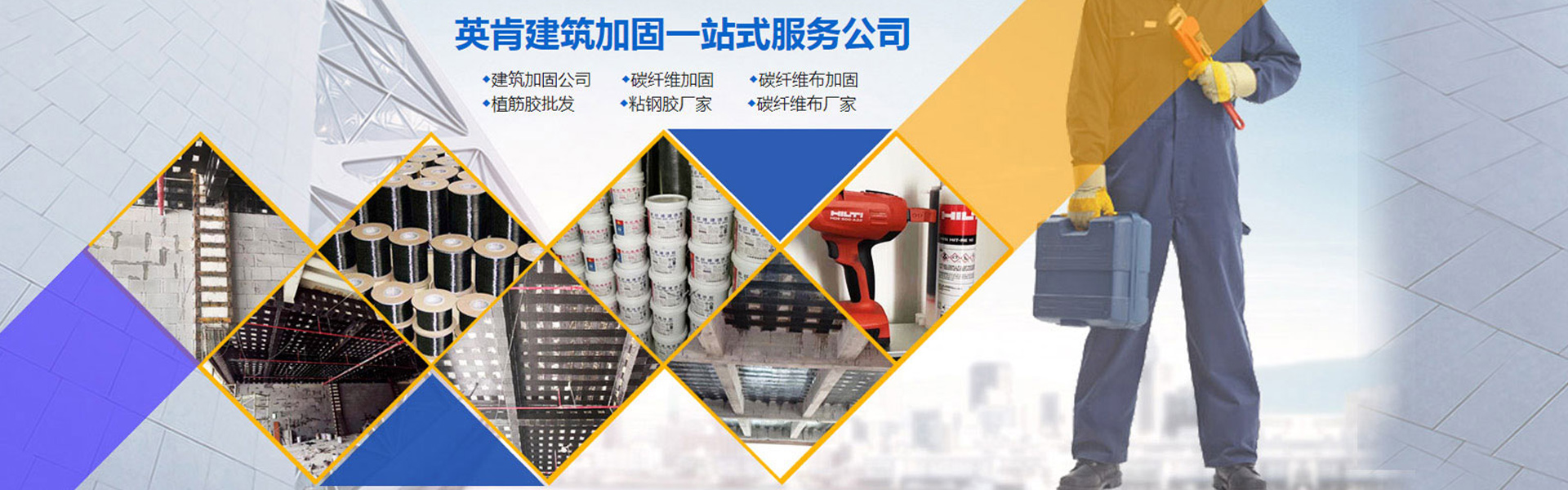


Carbon fiber reinforced repair structure technology is a new type of reinforcement technique, primarily used for the reinforcement and repair of concrete structures. Compared to traditional methods such as increasing the concrete cross-section or reinforcing with steel-reinforced concrete, carbon fiber offers advantages such as space-saving, ease of construction, no need for on-site fixed equipment, easy quality control, minimal increase in structural dimensions and weight, excellent corrosion and durability, and more. Additionally, this method can significantly extend the service life of buildings and reduce reinforcement costs. Therefore, as a groundbreaking reinforcing material, carbon fiber is highly favored and attracts considerable attention. Product Applications:
Increase the load-bearing capacity of the building and extend its service life.
2. Modify the original building's usage function;
3. Material reinforcement for aged materials
4. Enhance the strength of reinforced concrete.
5. Structural reinforcement for construction cracks and similar issues.
6. Due to harsh conditions, post-construction reinforcement and repairs are required.
7. Other Applications: Sports equipment, industrial products, home life, automotive, and many other fields.
Anyang Reinforcement Carbon Fiber Fabric Price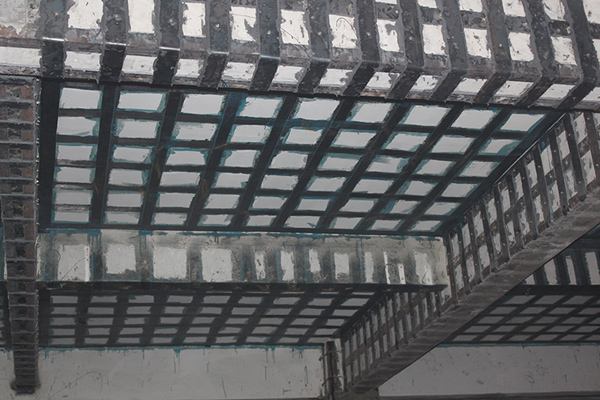
Carbon fiber reinforcement has firmly established its position as an unshakable strengthening solution, with its widespread applications ranging from bridge reinforcement to machinery equipment reinforcement. The presence of carbon fiber reinforcement is ubiquitous, although it is still in its early stages compared to steel structural reinforcement and wooden structural reinforcement. However, the carbon fiber reinforcement in its early stages is already capable of competing with them.
We believe the application of carbon fiber reinforcement will become more widespread in the future. There are already clear standards for the application of carbon fiber in reinforcement. Carbon fiber materials used for construction must meet these standards before being used on-site. Carbon fiber materials must not be exposed to wind, sun, or rain during transportation. In case of rain, it is crucial to ensure the integrity of the construction materials to a great extent.
Apply primer adhesive. Mix the base agent and hardener in a ratio of 3:1 (or other specified ratio) by sequentially placing them in the container, measured with a spring scale, and then uniformly stirred with an electric mixer. Determine the amount based on the actual site temperature and strictly control the application time. Generally, use it up within 1 hour. Apply the base adhesive evenly to the concrete surface using a roller brush. After the adhesive cures (curing time depends on the site temperature, touch-dry as a guide), proceed to the next stage of construction. The general curing time is 2-3 days. Leveling. Fill in concave areas of the concrete surface and fill in areas with height differences at template joints, etc., to minimize height differences. At the corners, the surface should also be treated into a smooth arc with a radius not less than 30mm. Bond carbon fiber fabric. Cut the carbon fiber fabric according to the required size and number of layers. Mix and apply the surface adhesive (same method as the base adhesive), then apply it evenly to the areas to be bonded, applying more to overlaps and concrete corners. Bond the carbon fiber fabric, remove the release paper after confirming the correct bonding area, and roll it repeatedly with a special roller along the fiber direction to remove bubbles and ensure the adhesive is fully absorbed by the fabric. Repeat the above steps for multi-layer bonding, and proceed to the next layer when the surface of the fabric is touch-dry. Apply the surface adhesive evenly to the surface of the final layer of carbon fiber fabric. The overlap length of the fabric along the fiber direction should be no less than 100mm, and the ends of the fabric should be fixed with transverse fiber fabric or steel bonding for protection and reinforcement. The surface of the reinforced carbon fiber fabric should be protected with plaster or fire-resistant paint.
Our company has qualified carbon fiber reinforcement, with top-quality products that have passed inspections. We are a manufacturer specializing in carbon fiber reinforcement construction and carbon fiber sheet reinforcement materials. We also hold special construction qualifications and can provide materials or undertake construction projects.
Anyang Reinforcement Carbon Fiber Fabric Price
