

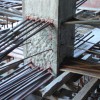
Carbon fiber reinforced repair technology is a new type of strengthening technique, primarily used for reinforcing and repairing concrete structures. Compared to traditional methods such as increasing the concrete cross-section or reinforcing with steel-reinforced concrete, carbon fiber offers space-saving, easy construction, no need for on-site fixation, easy-to-maintain construction quality, minimal increase in structural size and weight, excellent corrosion and durability, and other features. Additionally, this method can significantly extend the service life of buildings and reduce strengthening costs. Therefore, carbon fiber, as a groundbreaking reinforcing material, has gained widespread preference and attention.
Applications of Carbon Fiber Fabric:
Beam, column, and floor structure reinforcement for buildings
Bridge, pier, and deck structural reinforcement
Tunnel and chimney structural reinforcement
Corrosion protection and reinforcement for beach buildings.
Qidong 300g Carbon Fiber Fabric - How much is 1 square meter of 300g carbon fiber fabric?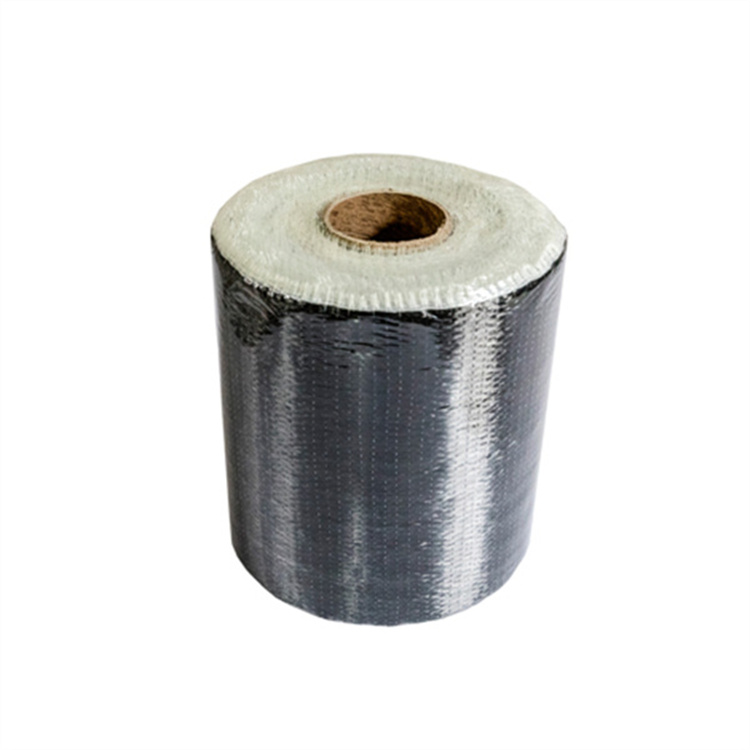
Carbon Fiber Reinforcement Highlights: The product weight of carbon fiber fabric is relatively low. When used, it wraps around the outer surface of the component, causing no heavy burden to the component and not affecting its appearance, even enhancing it. Carbon fiber fabric reinforcement can also be applied in multiple layers. This flexible application method maximizes the performance of the carbon fabric, with a relatively simple process.
Apply primer glue. Mix the activator and base agent in a ratio of 3:1 (or other proportions) sequentially in the container, measured by a spring scale, and stir evenly with an electric mixer. Determine the amount based on the actual ambient temperature at the site and strictly control the application time. Generally, it should be used up within 1 hour. Apply the primer glue evenly on the concrete surface with a roller brush. After the glue has cured (curing time depends on the ambient temperature at the site, with finger touch dryness as the standard), proceed to the next stage of construction. The general curing time is 2-3 days. Leveling. Fill in concave areas of the concrete surface and fill in areas with height differences at template joints, etc., to minimize height differences. Also, round off the corners to a smooth arc with a radius not less than 30mm. Apply carbon fiber tape. Cut the carbon fiber tape to the required size and number of layers as per the design. Mix and apply the surface adhesive (same application method as the primer), then apply it evenly to the areas to be bonded. Apply more adhesive in overlap areas and at concrete corners. Peel off the release paper after bonding the carbon fiber tape, and use a special roller to repeatedly roll over the fiber direction to remove bubbles and ensure the adhesive fully penetrates the fiber tape. Repeat the above steps for multi-layer bonding and proceed to the next layer once the surface of the fiber tape is finger touch dry. Apply the surface adhesive evenly on the surface of the final layer of carbon fiber tape. The overlap length of the carbon fiber tape along the fiber direction should not be less than 100mm. Secure the ends of the fiber tape with transverse fiber tape or steel bonding for protection and reinforcement, and then protect the surface of the reinforced fiber tape with plaster or fire-retardant coating.
We specialize in supplying German-imported Hilti RE500 anchoring adhesive, Hilti rebar bonding adhesive,粘贴胶, and imported Hilti glue guns, among others. Our products are of superior quality, diverse in types, widely available for sale, and technologically advanced. Our customer service is highly satisfactory. Should you be interested in our products, please leave an online message or call for more information.
Qian Dong 300g carbon fiber fabric – How much is 1 square meter of 300g carbon fiber fabric?
