

公司主营:Southeast Asia and Domestic
18842233322
企业资质
Liaoning Calcium Carbonate Powder
2023-10-23
During the grinding process of calcium carbonate powder, it undergoes a cyclic process of "crack formation → crack propagation → crack fracture → crack formation." As the crushing process cycles, the particle size of calcium carbonate decreases, with the surface of the micro-particles forming an increasing number of unsaturated valence bonds and structurally charged units. This places the particles in a sub-stable, high-energy state. The specific surface area of the powder increases, and the molecular force between particles gradually intensifies. When the molecular force reaches a certain level, agglomeration begins to occur, becoming more pronounced as the particle size decreases, until a dynamic equilibrium between crushing and agglomeration is achieved, at which point the apparent particle size of the crushed calcium powder remains unchanged. The agglomeration of the powder affects equipment productivity, increases energy consumption per ton, and exacerbates dust pollution. More importantly, the broad particle size distribution of the product is a common and critical issue in the calcium carbonate industry.
Modified Method for Heavy Calcium Carbonate Powder
Consider the application field, processing method, and blending object when selecting different modifiers and modification methods. However, Western companies place more emphasis on modifying heavy calcium carbonate during the crushing process (by adding grinding aids). During the crushing process, the minerals undergo reverse dissociation, exposing unsaturated particles.
These particles have a high degree of unsaturation and strong reactivity, allowing them to interact with water on their surface, undergo hydrolysis, and form active sites. The modification of grinding aids utilizes the strong reactivity of the particles on the surface of heavy calcium carbonate during the grinding process. Practice shows that this is the ideal time to alter the hydrophilic and lipophobic properties of the powder, reducing the surface polarity, which significantly improves the dispersibility and compatibility of the modified heavy calcium carbonate within the matrix. Unlike traditional modification methods, the modification of grinding aids is performed when the powder surface is highly reactive, i.e., during the cyclic crushing process, through numerous layers of coating. This completely eliminates the source of secondary agglomeration, while also eliminating thermal agglomeration energy and electrostatic attraction, effectively ensuring stable and durable dispersibility and fluidity.
Figure 1: Illustration of abrasive agent molecules adsorbing on the crack surface
Powdered Calcium Carbonate Crushing Process
The abrasive aid quickly and effectively coats the surface of the powder and adsorbs at defects, forming a stable interface and reducing the concentration of surface defects in the powder, improving the sphericity of the powder and enhancing the crushing efficiency and particle size distribution. However, the surface and internal structure of the abrasive aid directly affect the molecular interface characteristics of calcium carbonate powder/abrasive aid, the surface charge and surface defects of the calcium carbonate powder, and the dynamic balance between crushing and agglomeration. Simultaneously, it achieves thorough coating of the calcium carbonate powder, significantly improving the activation rate, ensuring the appropriate activation degree and stability, thereby promoting the refinement and functionalization of calcium carbonate powder preparation.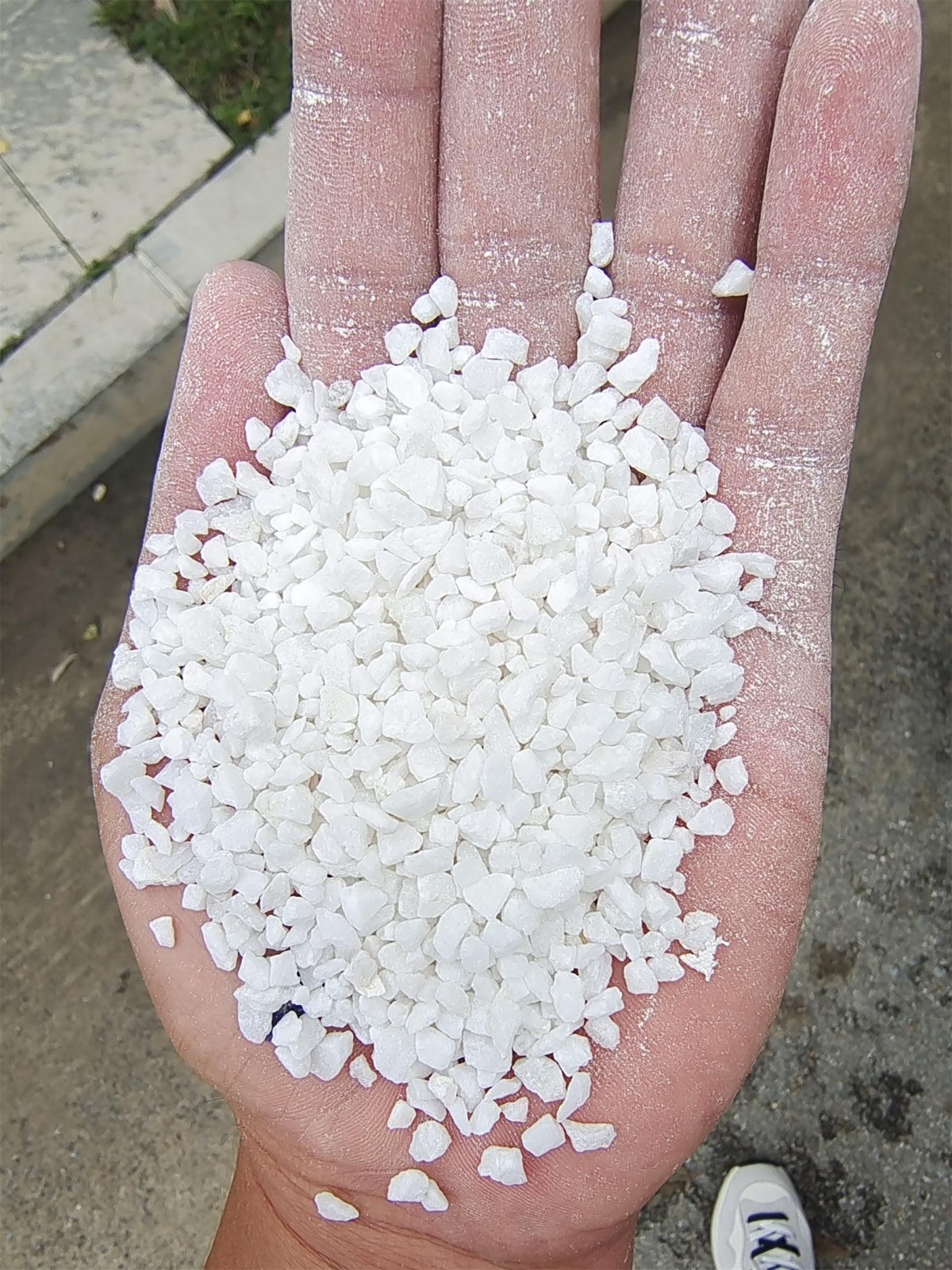
孙先生 (Mr.)
18842233322
18842233322
1367666444@qq.com
Liaoning Province, Haicheng City, Pailou Town, South Iron Industrial Area
b2b.china9.net © Zhongshang 114 Hebei Network Technology Co., Ltd.Address: Room 6009, Oriental New World Center, No.118 East Zhongshan Road, Qiaoxi District, Shijiazhuang City, Hebei ProvincePlatform Service Hotline: 4006299930
