

High-Efficiency GLS Water-Gas Heat Exchanger Unit Pump Station Design and Installation—Instructions
1. Key Features of High-Efficiency Cartridge Heat Exchangers
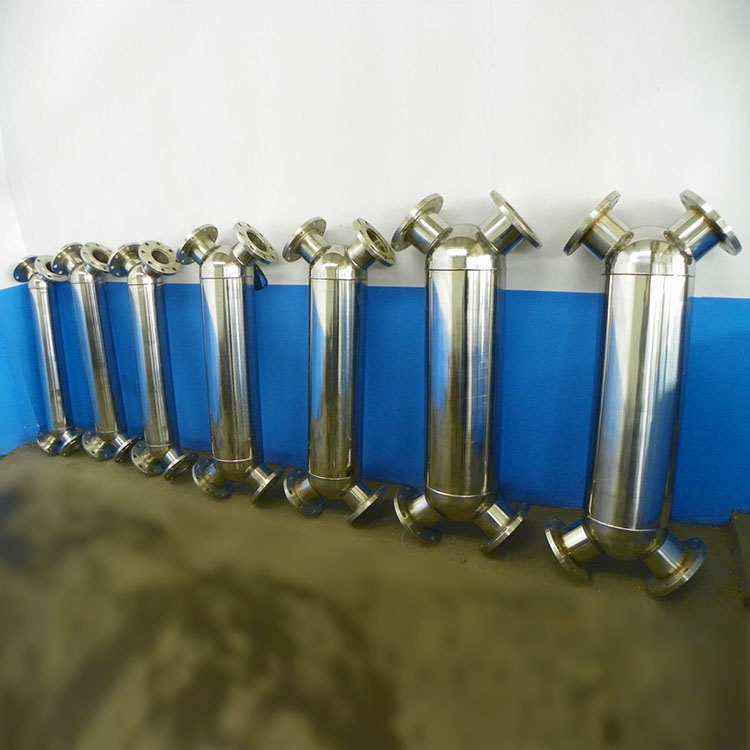
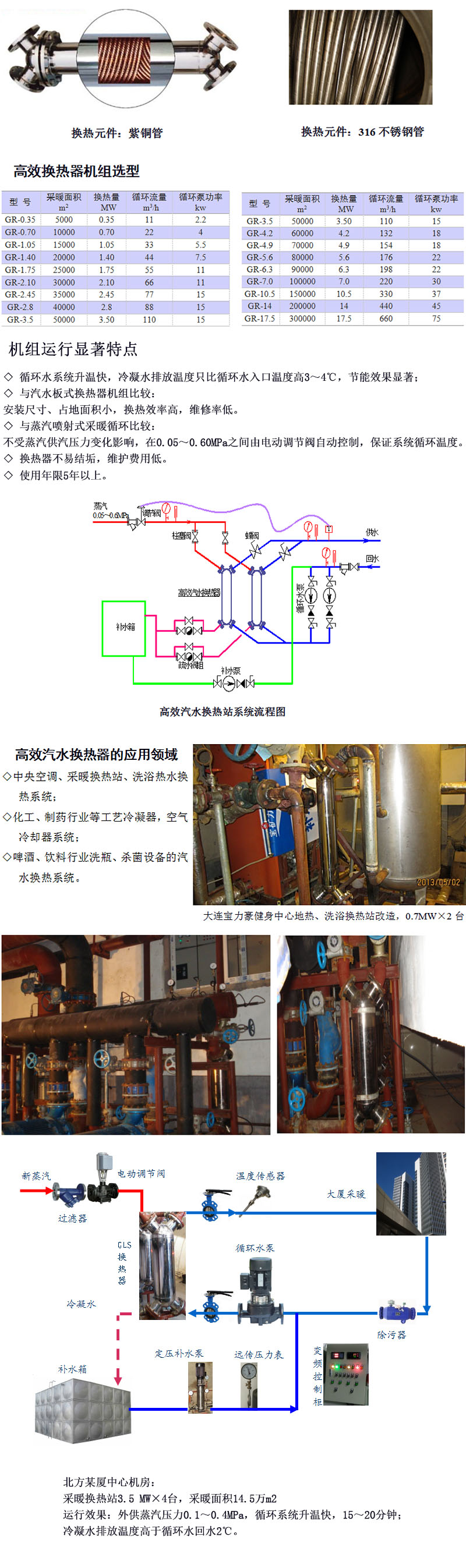
Based on the principle of turbulent frequency and asymmetric design methods, the structure is unique, featuring high-temperature resistance, high-pressure resistance, and high heat exchange efficiency. Steam flows through the tube side, while circulating water flows through the shell side; the condensate gas from the chemical process flows through the tube side, and cooling water flows through the shell side. The threaded copper tubes and stainless steel tubes of the heat exchanger can withstand high temperatures of up to 400°C and high pressures of 1.6MPa (316 stainless steel, Pg1.6MPa, hydrostatic test 2.0MPa). The tube bundle materials are all selected and designed in strict accordance with national pressure grade standards, capable of adapting to various different operating conditions of the users. The large capacity is 13L, significantly less than the national standard of 25L. All products are焊接 processed according to standards. The volume and installation dimensions of this heat exchanger are 1/3 to 1/8 of traditional tube-and-shell heat exchangers, occupying less space.
The heat exchanger has a heat transfer coefficient of 13,000 W/m²·°C (11,000 Kcal/m²·°C). The recirculating water system heats up quickly, is resistant to scaling, and is unaffected by changes in the external steam supply pressure. It operates normally even at very low steam supply pressures, meeting heating requirements. The condensate discharge temperature is 3 to 4°C higher than the incoming recirculating water temperature, and saves 10 to 15% of fresh steam compared to other types of steam-water heat exchangers.