
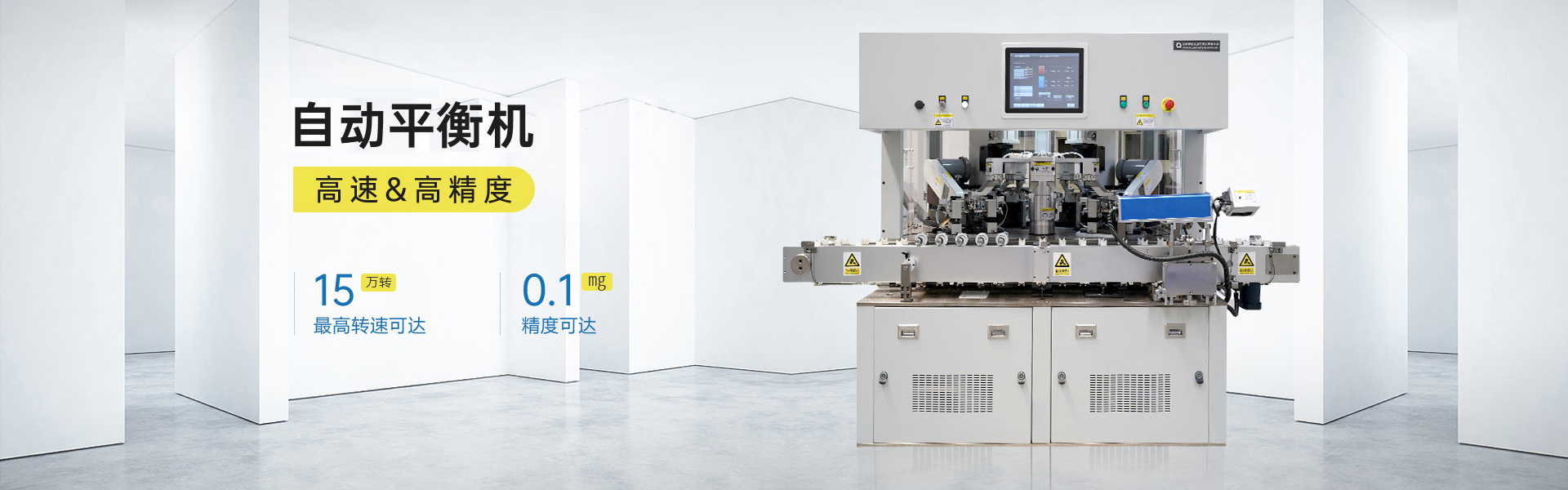



The quality of a balancing machine is generally determined by its measurement frequency, product production capacity, type of product rotor, the time required for measurement and correction, and its overall capabilities.
How can you choose the right dynamic balancing machine from among the many available? With some knowledge of dynamic balancing machines, you can start selecting a good one. Keep reading for the answers, and you'll have a clear idea in mind.
Throughout our recent development, we have summarized the criteria for distinguishing high-quality dynamic balancing machines. To assess the quality of a dynamic balancing machine, one needs to consider its balancing accuracy, stability, efficiency, and practical application effects. The experienced technicians at Sedek Balancing Machines have compiled several key points for your reference:
I. Determination of Balancing Machine Precision
Assuming the outer circumference of the rotor is used as the workpiece's datum face:
1. Conduct benchmarking; refer to the manual for different equipment benchmarking procedures.
After setting the target, measure the unbalance amount of the workpiece using the balancing machine software.
For the left alignment face, an unbalance of 30g at an angle of 80° requires trimming; for the right alignment face, an unbalance of 20g at an angle of 130° needs trimming. At this point, use two 10g weights as verification test weights, adding each to the 80° on the left and the 130° on the right. Then, re-measure the unbalance; if the left unbalance increases by approximately 90% of the weight of the 10g weights, and the right unbalance increases by approximately 90% of the weight of the 10g weights, it indicates that the balance machine's accuracy meets the requirements and there is no issue with the machine. Otherwise, there is a fault in the balance machine equipment.
When selecting a balancing machine, it's also crucial to consider the parameters of the balancing correction workpiece. We need to know the size values of the workpiece requiring dynamic balancing, as well as the dimensions and weight of the workpiece.
The workpiece shape: The balancer equipment specifications are chosen for a balance effect between 1/2 and 1/3 of the middle mark.
2. Workpiece Weight: Must meet technical parameters such as the support distance between the swing arm of the balancing machine.
Section 3: Rotor Dynamic Balance Testing
Evaluating the quality of a balancing machine is crucial, with one vital indicator being the small value of unbalance achieved after the rotor is tested and processed; this results in a significant reduction in vibration and noise during operation. Choosing a satisfactory balancing machine involves more than just considering its appearance; it also requires understanding its precision and balancing effectiveness.
