



VI: Corporate Visual Identity System
Purpose: To visually convey the brand philosophy and image, enhancing consumers' visual memory.
Key Points: Differentiation, Standardization, Uniformity, Sustainability.
VI can be explained in just three sentences.
It looks pretty impressive.
Why do most small and medium-sized enterprises in China lack a VI system?
Continue for three sentences:
One,Design fees can range from tens of thousands to even hundreds of thousands, too costly for small businesses to afford.
TwoThe design is ready but can't be implemented.
ThreeThe company's in-house designers have no clue on how to execute.
Businesses without a VI system can generally be categorized into the three scenarios mentioned above.
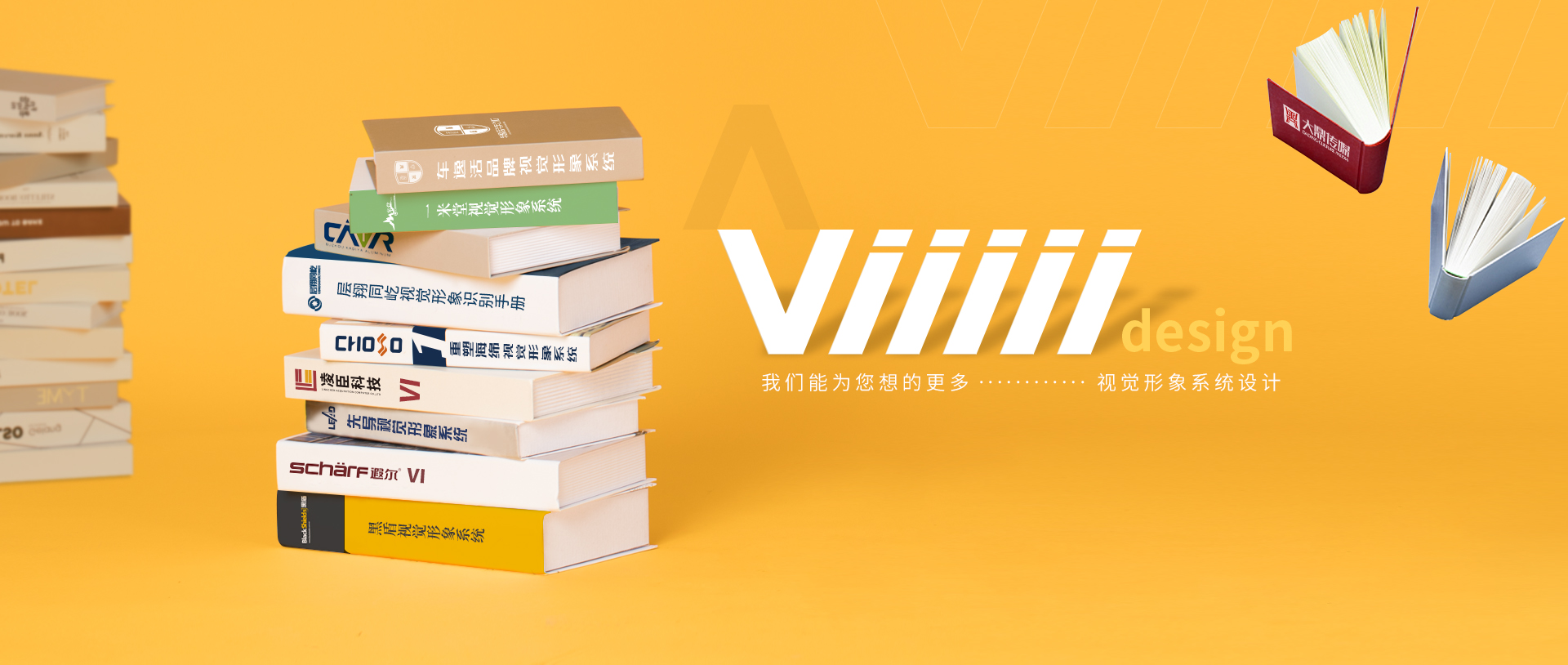
The brand's visual identity system must be crafted to reflect the brand's positioning and philosophy, resulting in a promotional brochure design that effectively communicates visually.
But for most consulting design companies, from positioning to logo design, VI design, and a series of other services, the sample design and printing costs can easily reach hundreds of thousands, even millions, making it unaffordable for most small and medium-sized enterprises.
Visual Identity (VI) has been in China for several decades. Some brand-conscious companies have invited professional design firms to create unified brand images, but the execution has been poor. VI is meant to standardize all visual representations of a brand. Once established, the company's designers must adhere to the VI guidelines to uniformly design all the visual elements displayed, thereby creating a sustained stimulus for consumers.
Small and medium-sized enterprises often find themselves jumping from one project to another—today it's a website, tomorrow a brochure, the next day packaging, and so on. Without a standardized VI (Visual Identity), designers have no guidance, leading to a fragmented visual image.
Many of our clients have designed their VI systems early on. However, often they end up with just a business card, while the rest of the designs remain dormant in the VI manual.
The issue arises after the completion of the VI system design, where the design company failed to properly implement the VI system for the enterprise. This has resulted in the brand designers being unable to effectively execute the VI design, leaving the VI system as a mere castle in the air, unable to be realized on the ground.
▲ Another very realistic question is, does a brand actually need a brand image?
Of course!
Brand image is more than just a logo; it's the overall impression and temperament a brand conveys. Humans obtain 83% of their information visually, making us visual creatures, and whether something looks good or not directly determines whether we like it or not.
This is common knowledge, but why do so many businesses still lack a brand image?
The crux lies in the limited channels available for small and medium-sized enterprises to express themselves.
Small and medium-sized enterprises often lack substantial advertising budgets and extensive retail chains, resulting in limited touchpoints with customers.
Typically, small and medium-sized enterprises primarily engage with customers through sales representatives, websites, office spaces, and physical stores. This results in a low return on investment for visual identity (VI) systems. To put it in perspective, if a brand allocates a 1 billion yuan advertising budget annually, a cohesive visual identity is undoubtedly crucial. For such businesses, investing several million yuan in designing a brand's visual identity is well worth it.
For small and medium-sized enterprises, the return on investment for brand image design is not as high, often leading to the situation we previously mentioned, where a complete Visual Identity system is designed but only a business card is produced.
But not taking this step will forever prevent a brand from becoming one. There are countless examples of successful brands through album design, such as Three Squirrels, Luckin Coffee, One Cup, and Haidilao. No successful brand would be visually chaotic.
More and more brands are joining the ranks in the visual branding movement.
▲ "Pay attention! Take notes quickly!"
Small and medium-sized enterprises must start with pragmatism when building a brand. Here are some suggestions for the广大 entrepreneurs:
1. A brand positioning is a must; brands without their own philosophy will certainly be eliminated in the future.Localization can be crafted by your own team, or if capable, you may consult with a professional design company to refine brand symbols and create a design portfolio through market research.
2. When designing a logo within a budget, it's crucial to create a VI basic system.The VI Basic System mainly includes logo design, standard Chinese and English fonts, standard colors and auxiliary colors, as well as auxiliary graphics.
3. After completing the foundational VI design, it is mandatory for the design firm to conduct a detailed brand induction and presentation within the company. All employees must understand the philosophy conveyed by the new brand design and its implementation.Under the guidance of the VI foundation, the company's in-house designers are largely capable of completing most design work while maintaining consistency.
4. The key focus for designing the VI application is that it must be practical!Some design firms often create unnecessary content to boost design budgets, as VI applications are charged per item. During the design of VI applications, small and medium-sized enterprises must design according to need, focusing only on the required elements, such as business cards, websites, brochures, posters, office spaces, mascots, and other key points of customer contact. Although we are small to medium-sized brands, maintaining consistency across these elements gives an impression of sophistication. Unnecessary elements should not be designed.
Avoid the awkward situation of using only a business card for your VI design.
5. Most importantly, designing a VI is an investment in your own brand.Entrepreneurs, think of it as a facelift for your brand. That few hundred thousand in design fees suddenly becomes more acceptable. After designing the Visual Identity (VI), the brand must consistently maintain a unified visual image. Avoid the trap of being sporadic, as customers won't remember anything.
Building a brand is challenging, but making it a reality is the key.
