




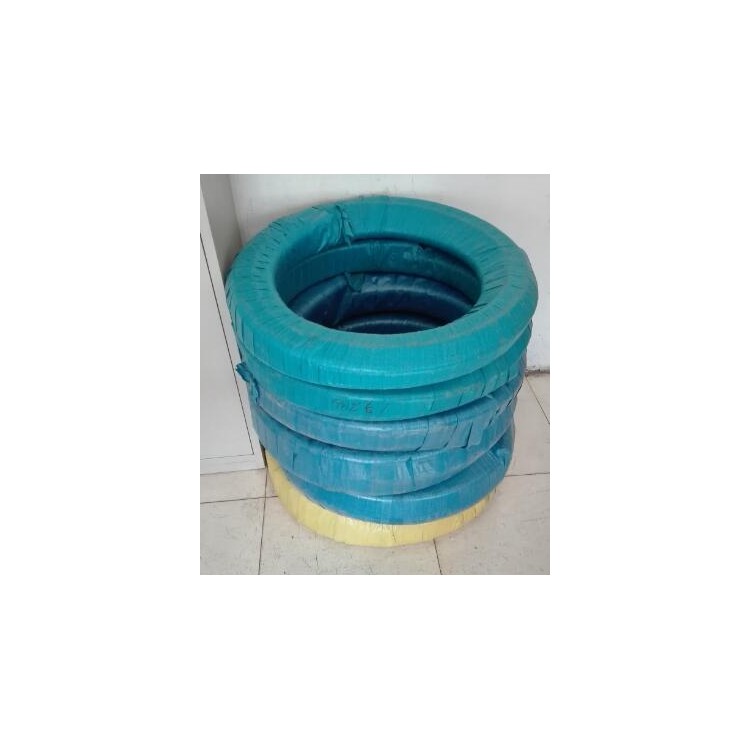
The main structure of the sandblasting hose includes the feeding system, circulation system, temperature control system, and electronic control system. Specific components consist of the main machine housing, workpiece conveying device, spiral conveying device, nozzle swinging device, nozzle assembly, cyclone separator, and dust removal system.

Technical specification for sandblasting hose:
Only standard products can provide users with peace of mind. Next, let's discuss its technical standards.
In terms of operating temperature, the sandblasting hose typically operates at -20 to 70 degrees Celsius.
Sandblasting hose is primarily used for the conveyance of fluids containing solid particles such as grains, sand, cement, slurry, concrete, and gypsum. It is suitable for various tunneling, well shaft, and cavern engineering operations. The inner and outer liners of sandblasting hoses are typically made of wear-resistant materials, with NBR (butadiene rubber copolymer), SBR (oiled styrene-butadiene rubber) being the most common, or there are some imported hoses that use PARA rubber (tri-leaf rubber) for better performance. Its applications are extensive, mainly in the sandblasting industry, as well as in cement, metallurgy, mining, port wharves, municipal construction, transportation, and other sectors. Its main characteristic is wear resistance, and it can be seen in any need for wear-resistant piping.

Sandblasting hoses are generally categorized as light-duty and heavy-duty based on the degree of wear and tear on the conveyed medium due to the工况 and material particle size. Hoses with spiral steel wires are suitable for vacuum environments. Light-duty sandblasting hoses are commonly used in environments such as ship sandblasting and fluid sandblasting operations; they typically feature an inner rubber made of wear-resistant NBR (Natural Rubber) and an outer rubber wrapped with a composite tape. Heavy-duty sandblasting hoses are used in environments involving sandblasting with gravel, fine cobblestones, mud, and more.
