




- AllProduct Category
-
Hardened Alloy Balls
Titanium Balls
GCr15 Bearing Steel
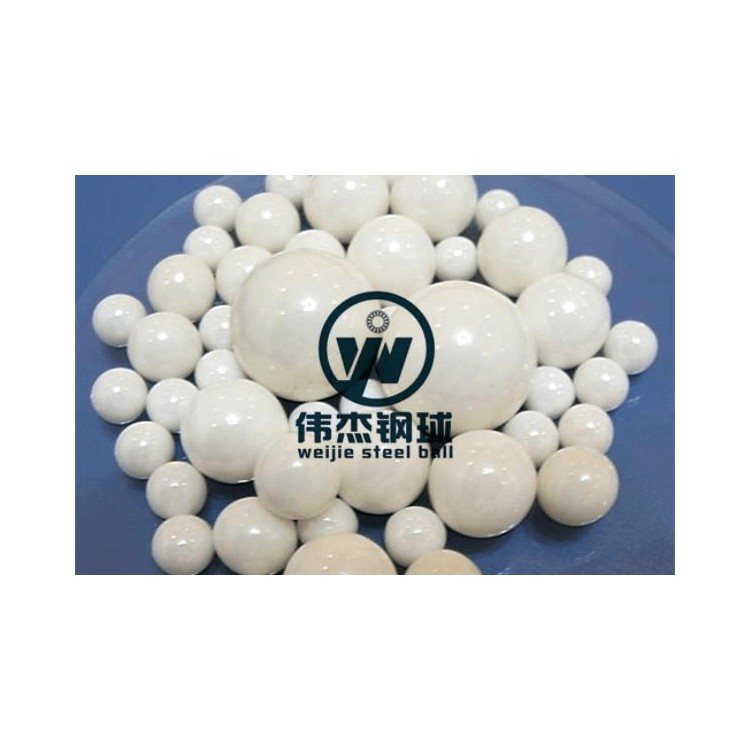
Zirconium Oxide Balls - Ceramic Balls
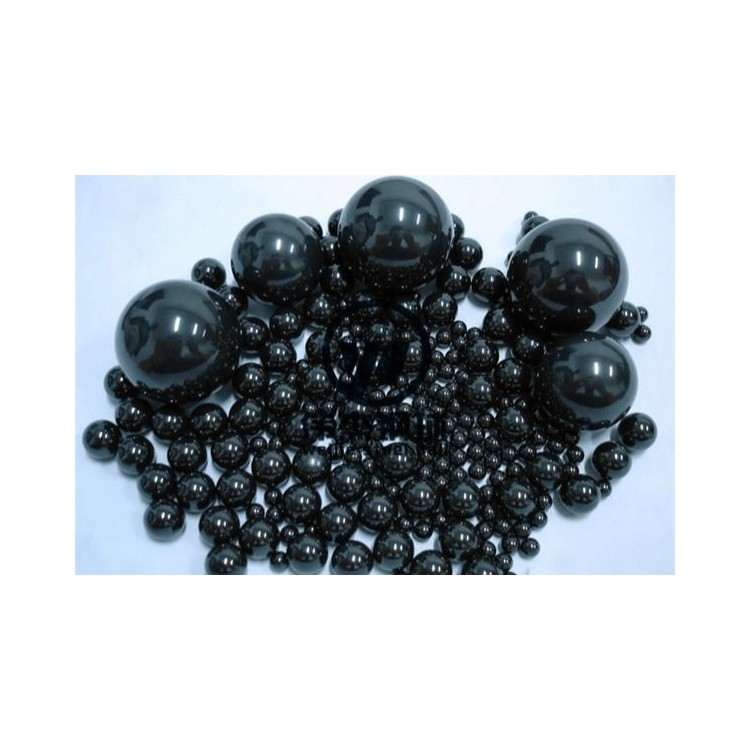
Silicon Nitride Balls - Ceramic Balls
1015 Carbon Steel Ball
High-Precision Glass Balls
C110/112 Copper Balls
Disc Golf/Ball Mill Media
Polished Stainless Steel Balls
440C Stainless Steel Balls
420 Stainless Steel Balls
316 Stainless Steel Balls
304 Stainless Steel Balls
304 Stainless Steel Balls
201 Stainless Steel Balls
Hardened Alloy Balls


详情描述
●● The main advantages of zirconium oxide balls over steel balls are:
1. 23% lighter than steel balls, reducing the centrifugal force, crushing, and wear on the groove during high-speed and accelerated operation of the bearing.
2. Low friction coefficient, excellent rotational flexibility.
3. Withstanding high temperatures up to 750℃.
4. Rustproof, capable of operation under oil-free lubrication conditions.
5. More resistant to chemical corrosion than steel.
6. Metal-free contamination.
7. Non-magnetic
8. Electrical insulation.
●●Application:
Zirconia ceramic balls are primarily used as valve balls, full ceramic bearings, measuring balls, track balls, and fine grinding balls. They are suitable for high-temperature, corrosion-resistant, insulating, non-magnetic, and lubrication-free applications, making them an ideal material to replace steel balls in corrosive environments.
Zirconium oxide ceramic spheres are now successfully used for valve balls in equipment such as high-pressure homogenizers, diaphragm pumps, metering pumps, oilfield sucker rods, and high-pressure spray guns.
●● Product Features: Density up to 6.05 g/cm³.
Product Specifications: 0.4mm to 50.8mm (1/64" to 2"), various sizes available.
●● Available grade range: G5 to G40.
●●Note:
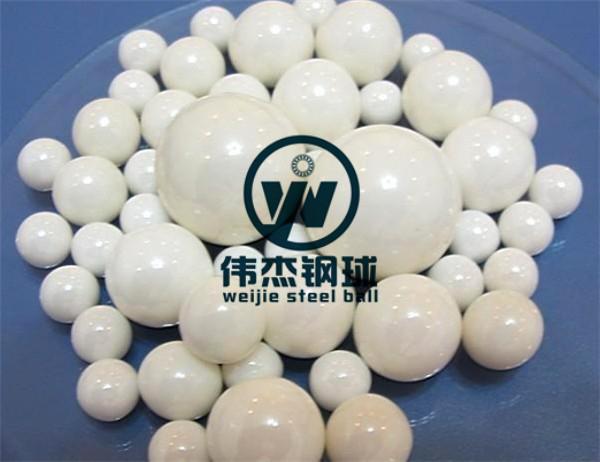
1) Primarily white zirconium oxide balls
2) We have a large stock available to meet immediate shipping requirements.
3) Can accommodate various non-standard dimensions.
4) Zirconia has a thermal expansion coefficient of 10.5×10^-6/°C, which is close to that of metals, making it well-suited for配合 with them. However, its dimensional stability varies significantly with temperature, and the rolling fatigue failure mode is typically destructive fracturing. In critical applications, it is less stable than silicon nitride materials.
询价单


