
公司主营:Polymer Material Composition Analyzer_Ne邻苯四项Detector_ROHS2.0 Ten-Item Analyzer
18550531168
Product Center
Company Qualification
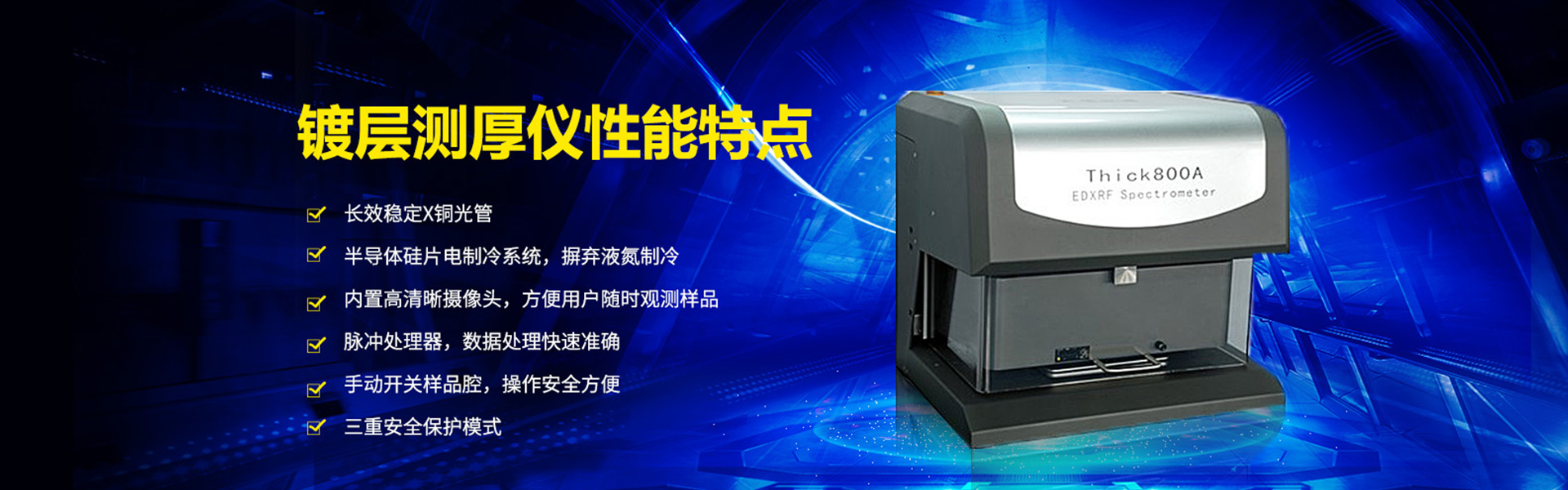
Open-Ended Domestic Metal Coating Thickness Gauge Metal Coating Film Thickness Measurement


Details Introduction
Coating Thickness Gauge is a newly designed instrument meticulously crafted for coating thickness measurement. Mainly used for: measuring the thickness of metal coatings, determining electroplating solution and coating content; as well as testing the contents of gold, platinum, silver, and various ornaments.
1. Performance Advantages
Precise 3D Platform
Sample Observation System
Image Recognition
Easily accomplish deep groove sample testing
Four microporous focusing collimators, automatic switching
Dual protective measures for seamless collision prevention
Utilize large-area high-resolution detectors to effectively reduce detection limits and enhance testing accuracy.
Fully automatic intelligent control, one-touch operation!
Power-on automatic exit from self-check and reset
The lid opens automatically to reveal the sample platform, lifting the Z-axis testing platform for easy sample placement.
Close the lid, lower the Z-axis test platform, and automatically complete focusing
Directly click on the panoramic or partial view images to select test points
Click the "Test Interface" button on the software, and it will automatically complete the test and display the results.
2 Technical Specifications
Element analysis range includes any metal coating between sulfur (S) and uranium (U)
An analysis of up to five coatings can be performed simultaneously.
Ultra-thin and testable down to 0.005μm
Analysis content is generally 2ppm to 99.9%
Coating thickness is generally less than 50μm (varies by material type).
Multiple selectable analysis and identification models
Mutual matrix effect correction model
Multivariate nonlinear recycling program
Long-term job stability with high reliability
Temperature range适应from 15℃ to 30℃
Power: AC 220V, 5V; recommended to configure an AC purification and voltage stabilizing power supply
Instrument Dimensions: 576(W) x 495(D) x 545(H) mm
Weight: 90 kg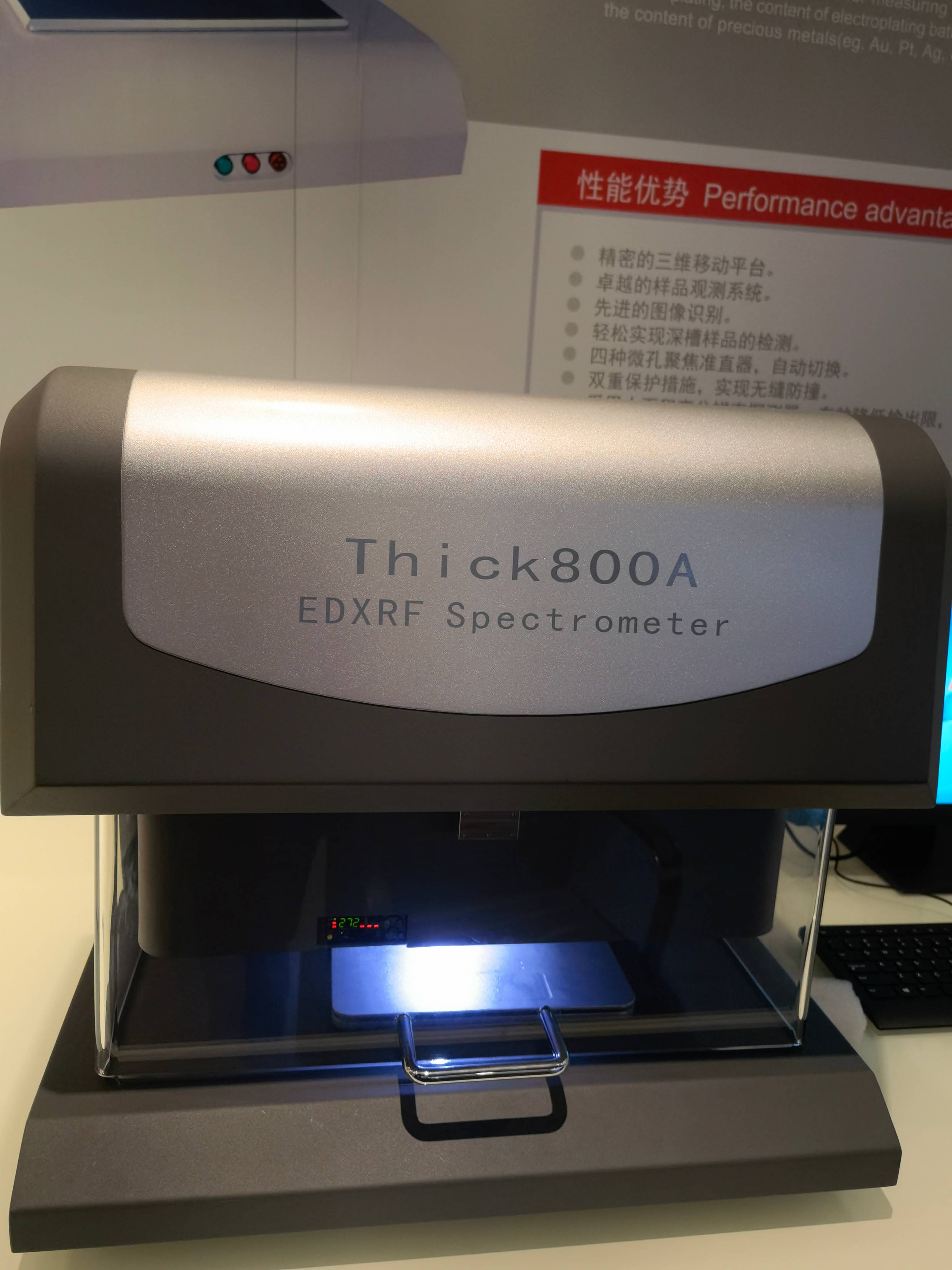
Analytical Element Range: Sulfur (S) to Uranium (U)
Simultaneous detection elements: Up to 24 elements, up to five layers of plating
Detection Limit: Up to 2ppm, thin testable to 0.005μm
Analysis Content: Typically 2ppm to 99.9%
Coating Thickness: Generally within 50μm (varies by material) Repetition: Up to 0.1%
Stability: Up to 0.1%
SDD detector: as low as 135eV resolution
Micro孔径 technology adopted, with a small hole diameter of 0.1mm and a small light spot of 0.1mm.
Sample Observation: Equipped with two industrial high-definition cameras for panoramic and close-up views
Collimator: 0.30.05mm, Φ0.1mm, Φ0.2mm
0.3mm four collimator combinations
Instrument dimensions: 690(W) x 575(D) x 660(H) mm
Sample Room Dimensions: 520(W) x 395(D) x 150(H) mm
Sample Bench Dimensions: 393(W) x 258(D) mm
X/Y/Z-axis speed: Rated speed 200mm/s, Speed 333.3mm/s
X/Y/Z platform repeat positioning accuracy: less than 0.1 um
Operating Environment Humidity: ≤90%
Operating temperature: 15℃ to 30℃
Performance Advantages
Precise 3D platform
Sample Observation System
Image Recognition
Effortlessly test deep groove samples
Four micro孔 focused collimators, auto-switch
Dual protection measures for seamless collision prevention
Utilizing large-area high-resolution detectors, it effectively reduces detection limits and enhances testing accuracy.
Fully automatic intelligent control, one-touch operation!
Auto-power-on with automatic exit from self-check and reset
The lid opens automatically, releasing the sample stand, and the Z-axis testing platform rises for easy sample placement.
Close the lid, lower the Z-axis test platform, and automatically complete focusing.
Directly click on the panoramic or partial image to select test points
Click the Test Button on the software interface for automatic completion of the test and display of the results.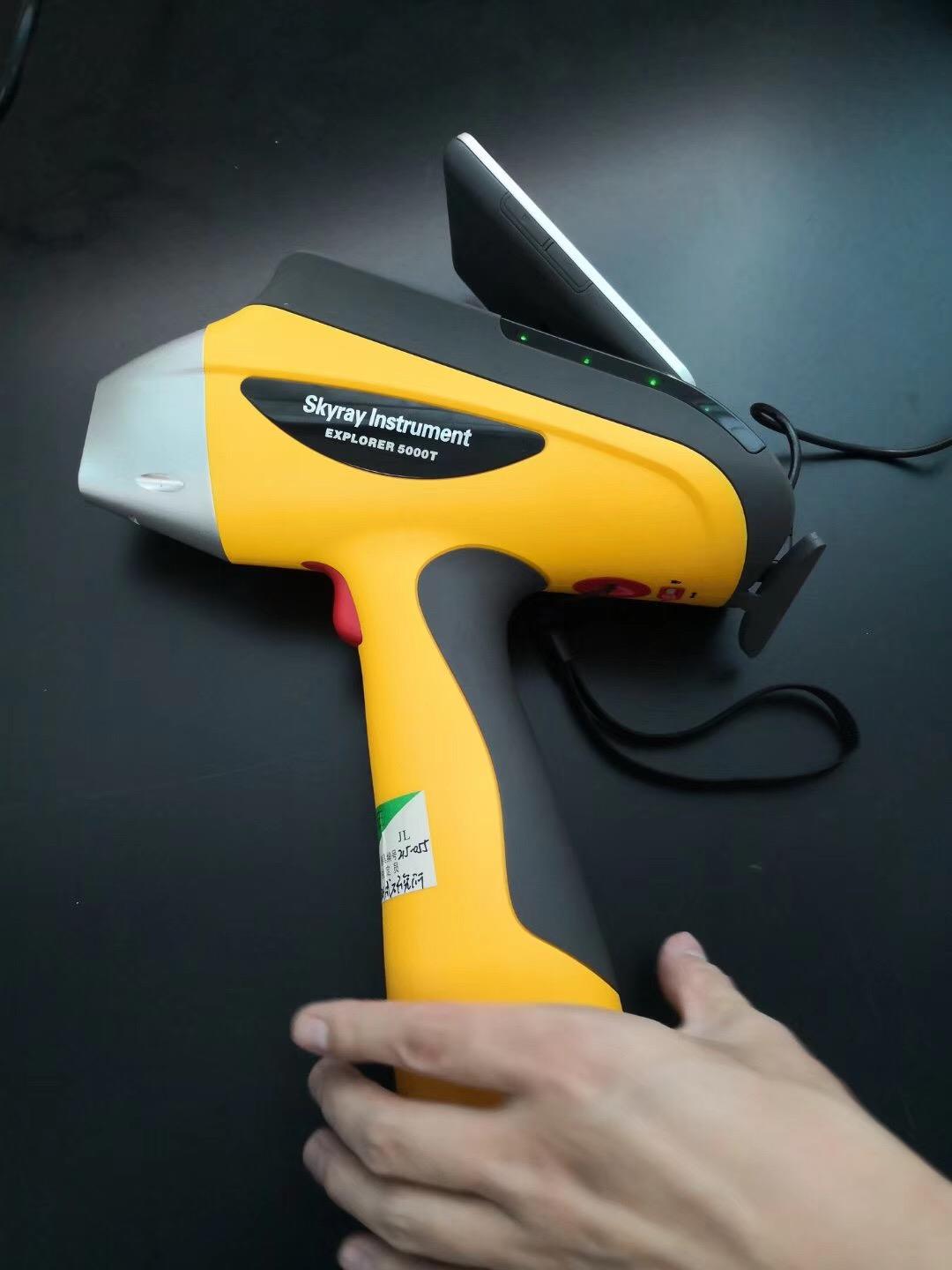
A specifically tailored, effective testing solution for the electroplating industry, based on our robust research and application capabilities.
Coating Thickness Measurement: Effective Quality Control of Coating Thickness
Electroplating Solution Analysis: Test the composition and concentration of the electroplating solution to ensure coating quality
Online Water Quality Monitoring: Effectively monitors the content of harmful substances in industrial wastewater generated by electroplating, ensuring compliance with discharge standards.
RoHS harmful element testing: Strict quality control for electroplating products to meet RoHS standards
Heavy metal and槽液contaminant detection: Effectively detects the heavy metal content in electroplated products, as well as industrial wastewater and waste generated by electroplating processes.
The Energy Dispersive X-Series in electroplating inspection industry, applications for the aforementioned five requirements:
(1) Capable of analyzing coating film thickness and electroplating solution analysis.
(2) Quick testing for RoHS harmful elements, heavy metal detection, tank liquid impurity testing, and online water quality monitoring can assess if heavy metals in the testing environment exceed the permissible limits.
Simultaneously features the following characteristics
Rapid: Sample coating thickness can be measured in just 1 minute and meet the required measurement accuracy.
Convenience: Some models of the X-ray Fluorescence Spectrometer use imported international electro-cooled semiconductor detectors, offering superior energy resolution over 135eV and higher test accuracy. Plus, they don't require liquid nitrogen cooling or regular refilling, making operation more convenient and their operational costs lower than those of similar products.
No damage: The sample shows no changes in any form before and after the test.
Intuitive: Real-time spectral charts, allowing for intuitive display of element content.
Wide testing range: X-ray Fluorescence Spectrometer, a physical analysis method that is independent of the chemical bonding state of the sample. It can also analyze elements belonging to the same group chemically, and vacuum can be used for testing from Na to U.
High Reliability: Due to the absence of human interference during the testing process, the instrument boasts high analysis accuracy, repeatability, and stability. Consequently, its measured reliability is even greater.
Meets Various Requirements: The testing software is designed for the WINDOWS operating system, offering ease of use and powerful functionality. It can monitor instrument status, set instrument parameters, and provides a variety of analytical methods. The flexible and diverse methods for creating working curves cater to the testing needs of different customers and sample types.
High cost-performance ratio: Compared to chemical analysis instruments, X-ray fluorescence spectrometers have an advantage in overall operating costs, making them more accessible to a wider range of companies and manufacturers.
Easy to operate with minimal technical requirements, simple and convenient to use, and also straightforward to maintain.
What factors affect the accuracy of a coating thickness gauge?
1. Description of Influencing Factors
The magnetic property thickness measurement of the matrix metal using the magnetic method is affected by the magnetic changes in the matrix metal (in practical applications, the change in the magnetism of low-carbon steel can be considered slight). To avoid the influence of heat treatment and cold working factors, the instrument should be calibrated using a standard sheet with the same properties as the matrix metal of the test piece; calibration using the piece to be coated is also possible.
The electrical properties of the matrix metal, such as its conductivity, can affect the measurement. The conductivity of the matrix metal is related to its material composition and heat treatment method. Calibration of the instrument is performed using a standard sheet with the same properties as the matrix metal of the specimen.
Each instrument has a critical thickness for the matrix metal. Above this thickness, measurements are unaffected by the matrix metal thickness. The critical thickness values for this instrument are listed in Appendix 1.
The instrument is sensitive to abrupt changes in the surface shape of the specimen. Therefore, measurements near the specimen's edge or internal corners are unreliable.
The curvature of the e-shaped specimen affects the measurement. This effect is always distinctly noticeable as the curvature radius decreases. Therefore, measuring on the surface of the bent specimen is unreliable.
The deformation probe for the f specimen will deform the soft coating layer specimen, thus reliable data can be obtained from these specimens.
The surface roughness of the base metal and the coating layer can affect measurements. Roughness, it influences. Rough surfaces can cause systematic and random errors. To overcome random errors, the number of measurements should be increased at different positions during each measurement. If the base metal is rough, it is also necessary to calibrate the instrument's zero point by taking several positions on a base metal specimen with similar roughness that has not been coated; or by dissolving the coating layer with a solution that does not corrode the base metal, and then recalibrate the instrument's zero point.
The strong magnetic field generated by various electrical equipment surrounding the g magnetic field will severely interfere with magnetic thickness measurement work.
The instrument is sensitive to adherent substances that hinder the close contact between the measuring head and the surface of the covering layer. Therefore, adherent substances must be removed to ensure direct contact between the instrument's measuring head and the surface of the item being tested.
The pressure applied by the pressure probe on the specimen can affect the measurement reading, therefore, it is essential to maintain a constant pressure.
The orientation and placement of the measuring probe can affect the measurement. During measurement, the probe should be kept perpendicular to the surface of the sample.
刘小姐 (Mr.)
18550531168
18550531168
2845938008@qq.com
860 Qingyang North Road, Zhou Town
b2b.china9.net © Zhongshang 114 Hebei Network Technology Co., Ltd.Address: Room 6009, Oriental New World Center, No.118 East Zhongshan Road, Qiaoxi District, Shijiazhuang City, Hebei ProvincePlatform Service Hotline: 4006299930
