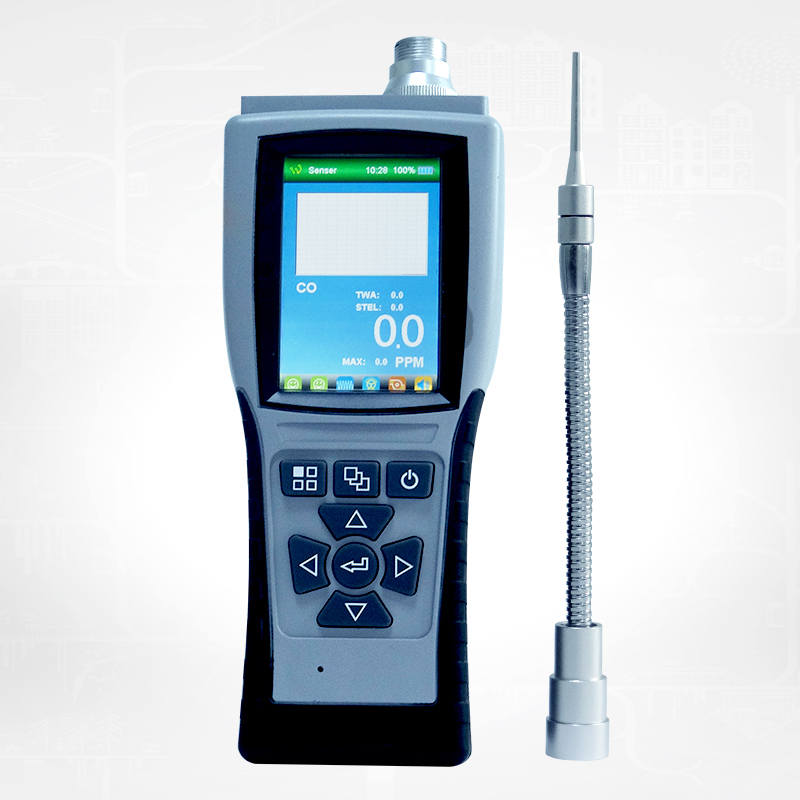


Composite gas detectors typically consist of sensors, controllers, displays, and alarm devices. The sensor is the core component of the detector, capable of detecting different gases based on their characteristics and converting the detection results into electrical signals. The controller is responsible for processing and analyzing the data collected by the sensor and determines whether an alarm should be triggered based on pre-set thresholds. The display is used to show real-time concentration data of various gases, while the alarm device emits audible and visual alarm signals when abnormal concentrations are detected, prompting appropriate actions.
The working principle of a composite gas detector is based on the chemical reactions between different gases and the sensor. Inside the sensor, there are typically chemicals that are specific to different gases. When the target gas passes through the sensor, it triggers a chemical reaction and generates an electrical signal. The intensity of this signal is measured to determine the gas concentration. Since different gases have different chemical properties, the appropriate sensor type must be selected based on the specific monitoring requirements.
The composite gas detector has a wide range of applications, suitable for various industrial sites, laboratories, chemical plants, mines, and petrochemical environments. In industrial production, it can be used to monitor harmful gas concentrations in industrial exhaust emissions, ensuring safety for workers and the environment. In laboratories, it can detect harmful gases generated during experiments, safeguarding the health of laboratory personnel. In hazardous environments such as mines and petrochemicals, it can monitor concentrations of flammable and toxic gases, ensuring worker safety.
Selecting a composite gas detector requires considering various factors, such as monitoring range, sensor type, accuracy and stability, response time, equipment reliability, and maintenance costs. First, determine the specific gas types and quantities to be monitored based on your monitoring needs, then select the appropriate sensor type and controller. Additionally, consider the equipment's operating environment, working conditions, performance, and reliability.