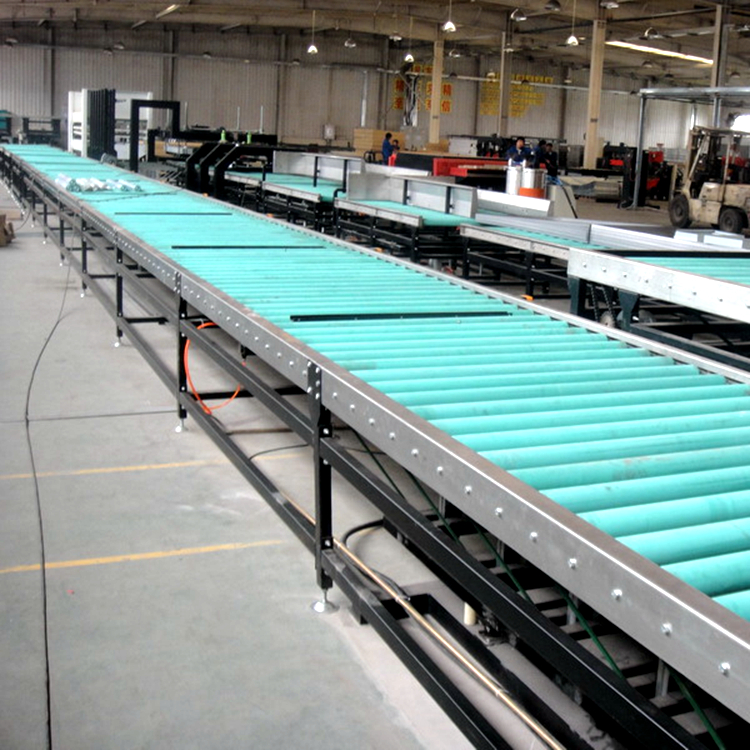
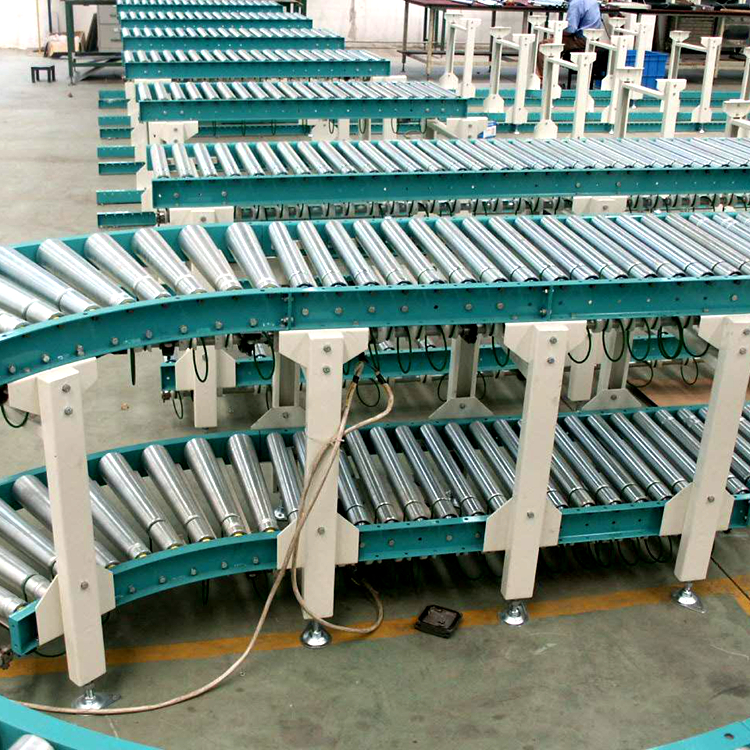
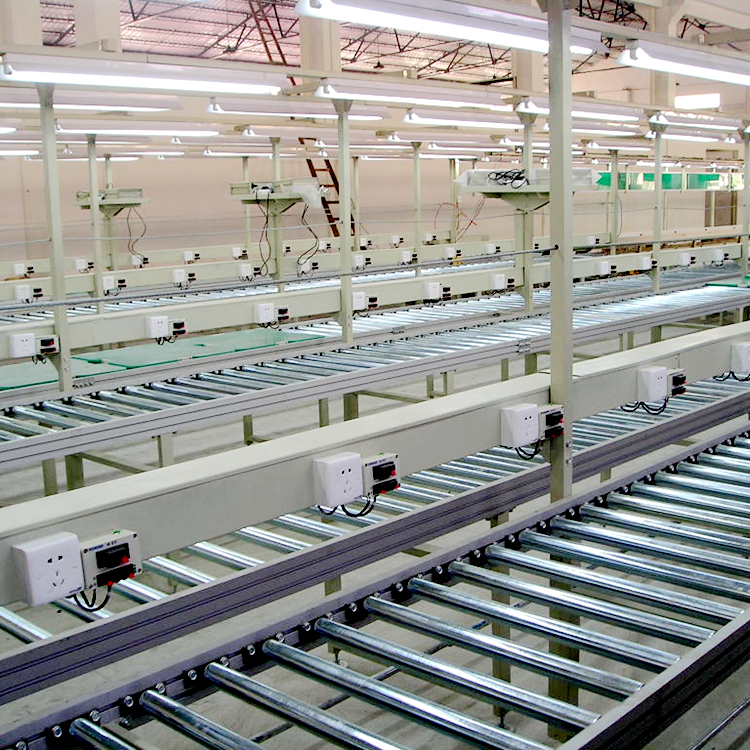
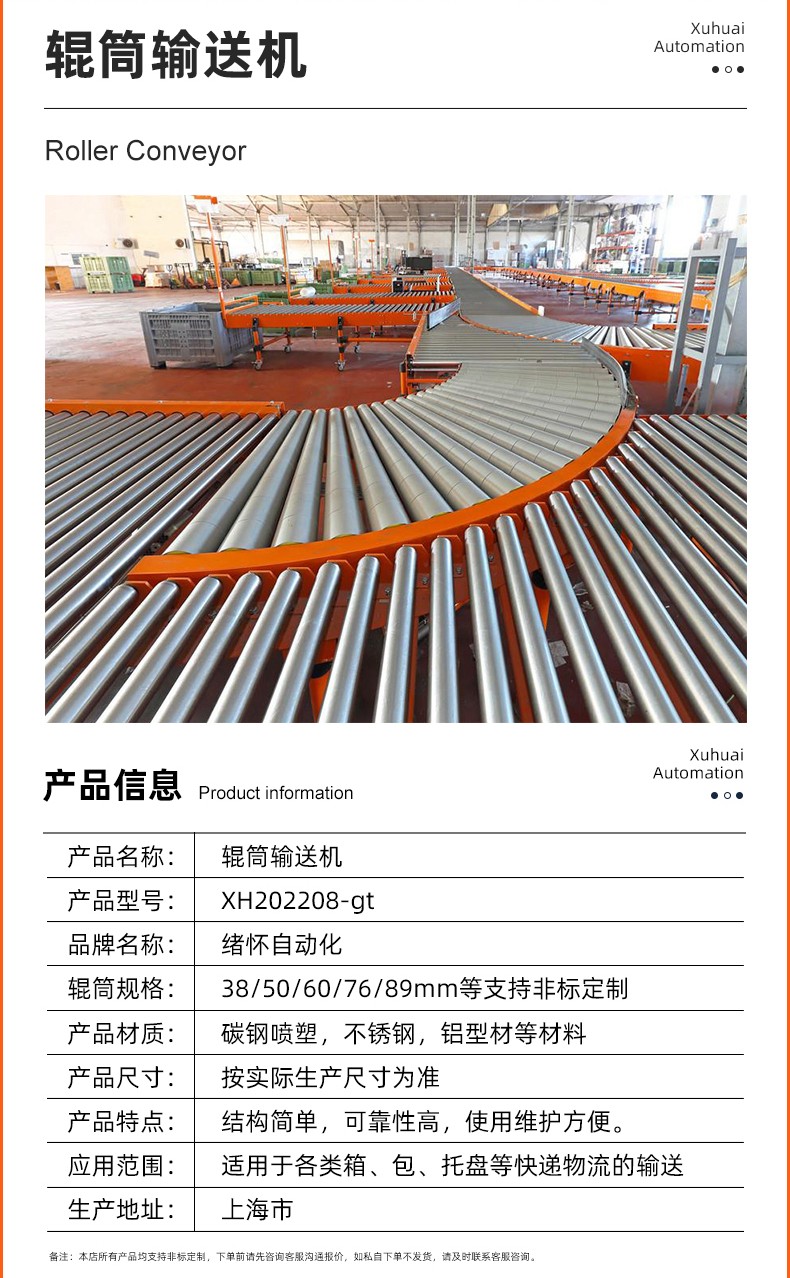
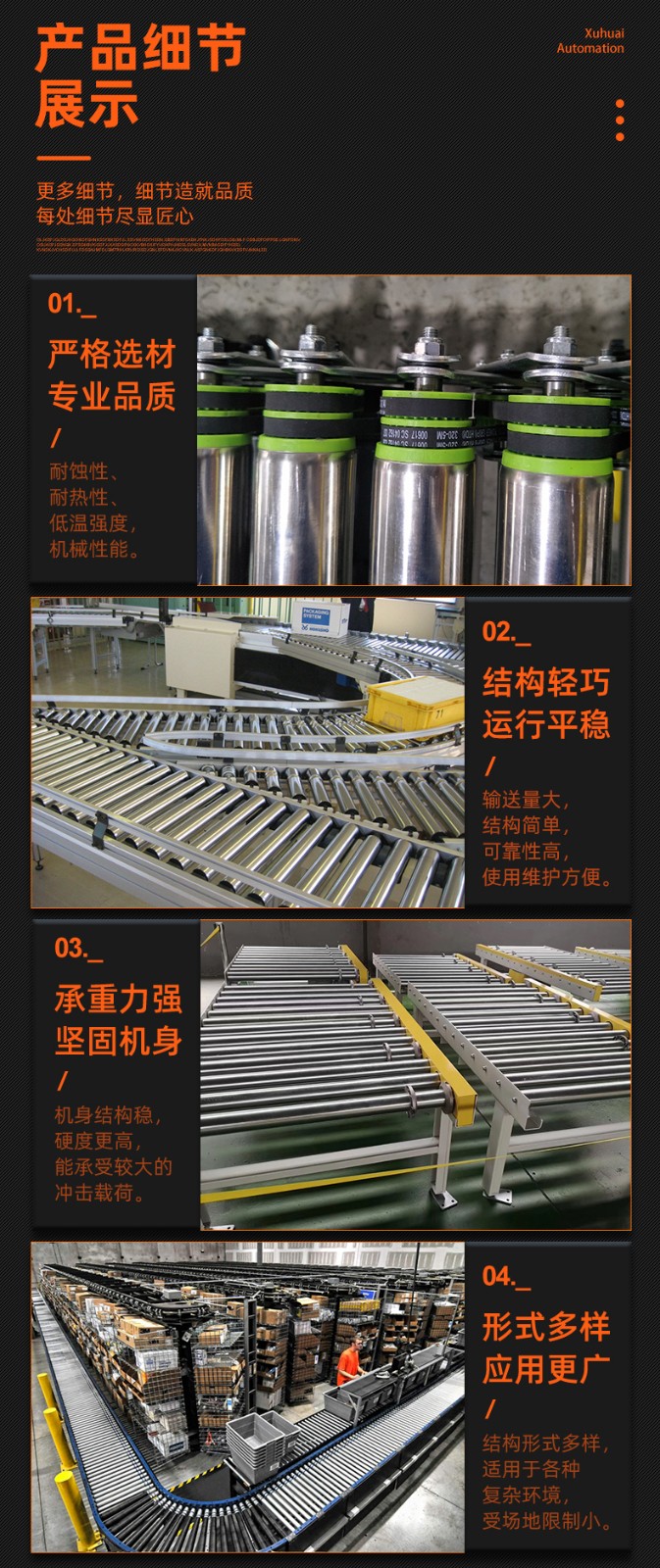
The rubber-coated roller conveyor is an essential component and part of the conveying system. The rubber coating on the roller effectively improves the operation of the conveying system, protects the metal roller from wear, prevents slippage of the conveyor belt, reduces friction from the bracket, and synchronizes the rotation of the roller with the conveyed items. The rubber-coated roller conveyor has a simple structure, high reliability, and easy operation and maintenance. The roller conveyor is suitable for conveying flat-bottomed items and is mainly composed of driving rollers, frames, brackets, and drive units. It features large conveying capacity, high speed, smooth operation, and the ability to achieve concurrent and分流conveying of multiple product types.
Basic Information of Coated Roller
Roller Diameter Options: 25mm, 32mm, 38mm, 42mm, 50mm, 57mm, 60mm, 76mm, 80mm, 89mm.
2. Roller Material Options: Galvanized carbon steel, Chrome-plated carbon steel, Rubber-coated carbon steel, Aluminum alloy, Stainless steel, ABS, etc.
Roller Type Selection: Non-powered Rollers, Single Chain Rollers, Double Chain Rollers, "O" Belt Rollers, Conical Rollers, Grooved Rollers.
3. Roller Mounting Methods: Spring Push-in, Internal Threaded Axle, Full Rabbet, Through Axle Pin Holes.
4. The rubber-coated materials can be made of natural rubber, nitrile rubber, chloroprene rubber,三元乙丙橡胶, polyurethane, and others.
5. Bonding Methods: Cold Vulcanization and Hot Vulcanization.
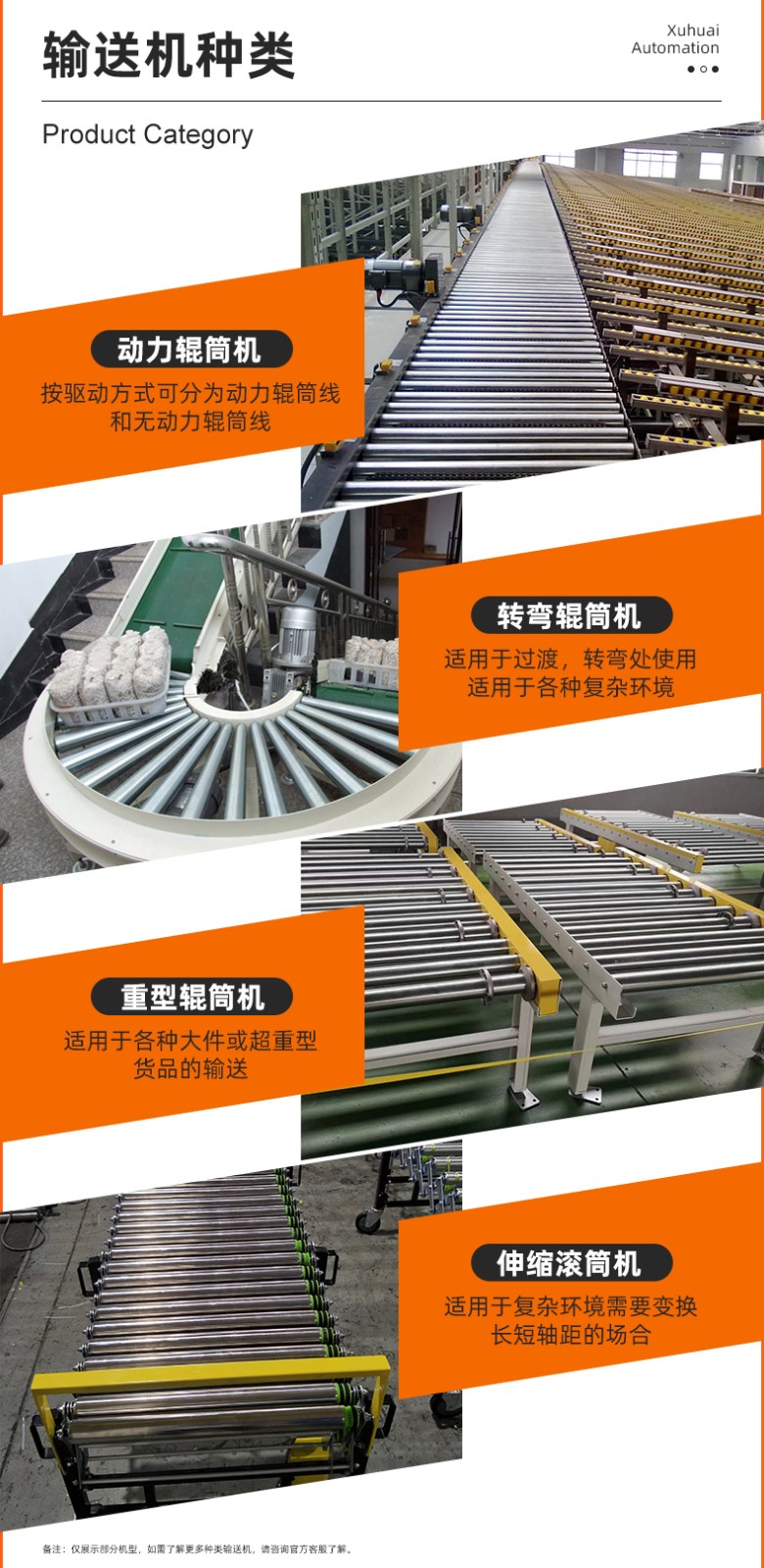
The structure of the rubber-covered roller conveyor can be divided into powered roller lines and non-powered roller lines according to the driving method, and into horizontal conveying roller lines, inclined conveying roller lines, and bending roller lines according to the layout form.
.jpg)
.jpg)