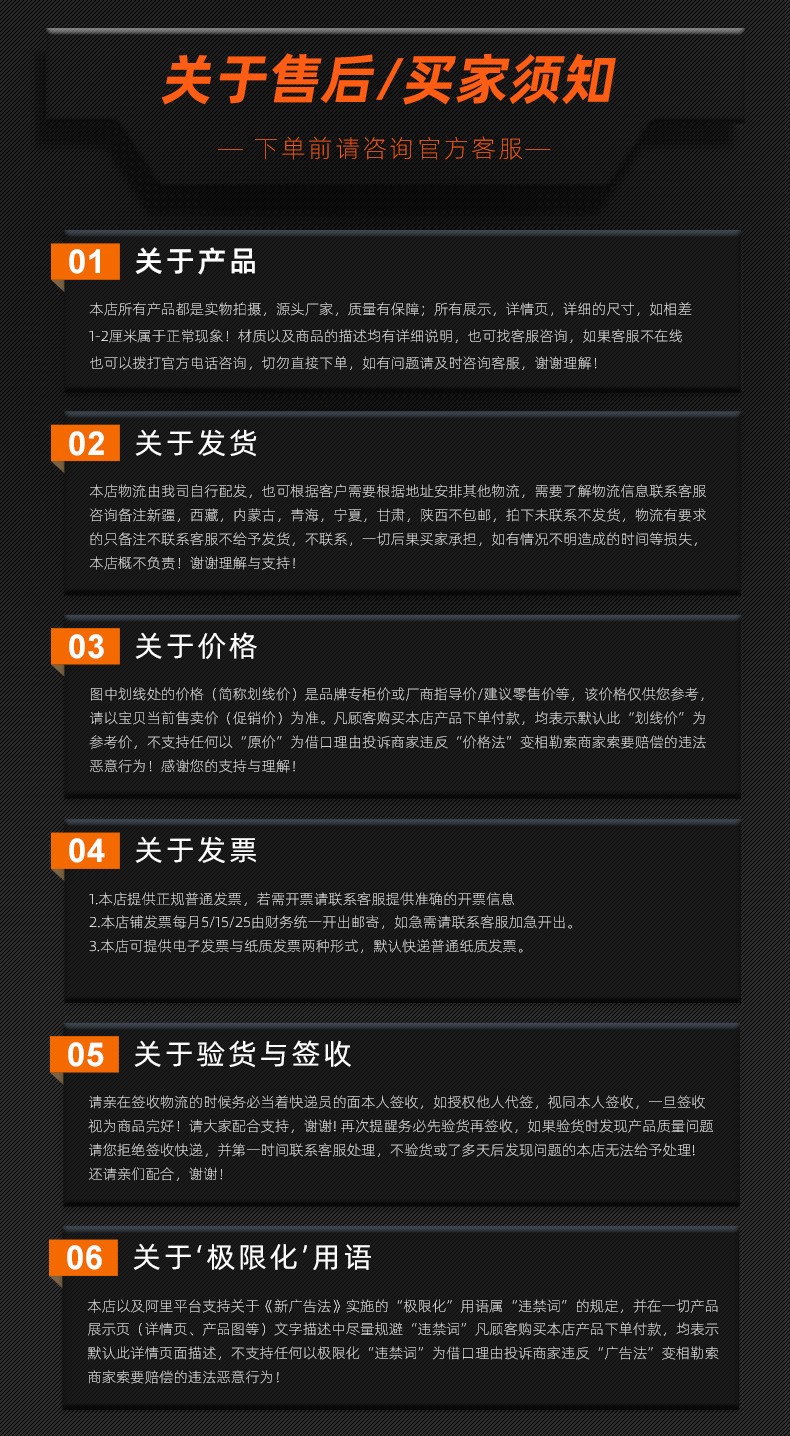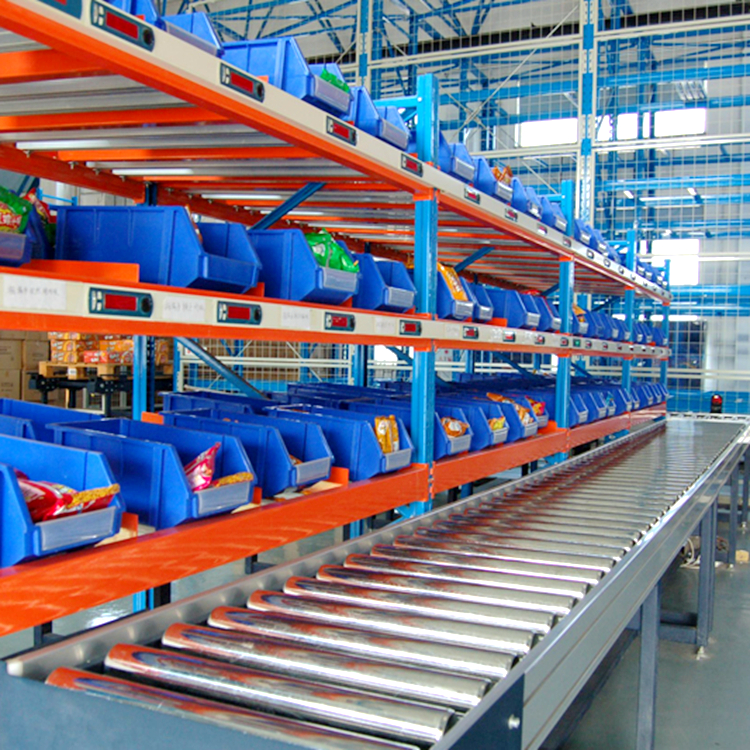
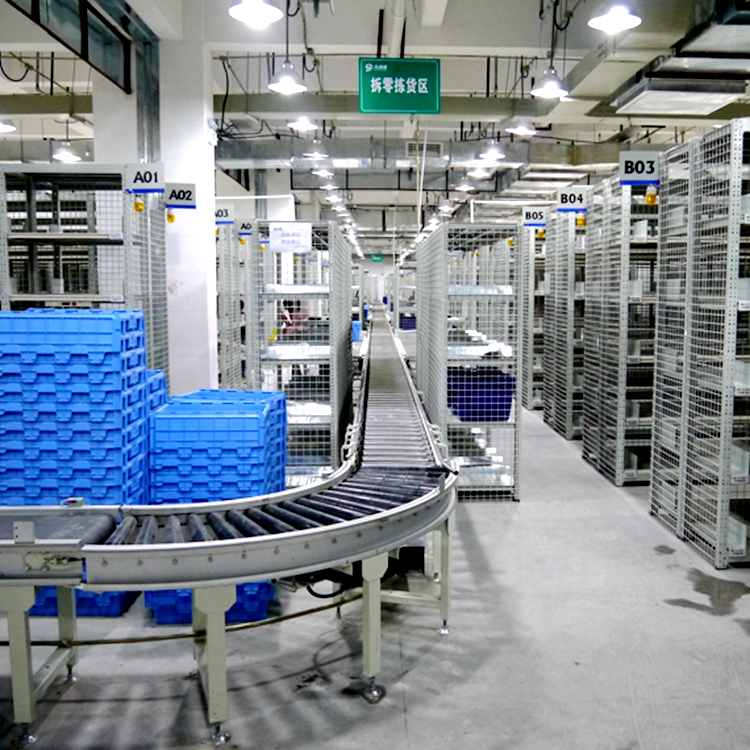
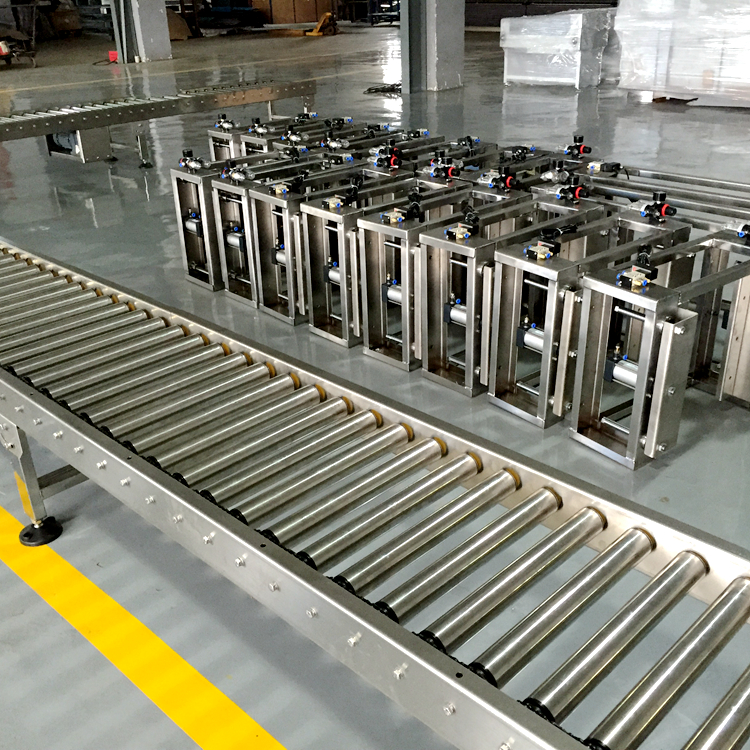
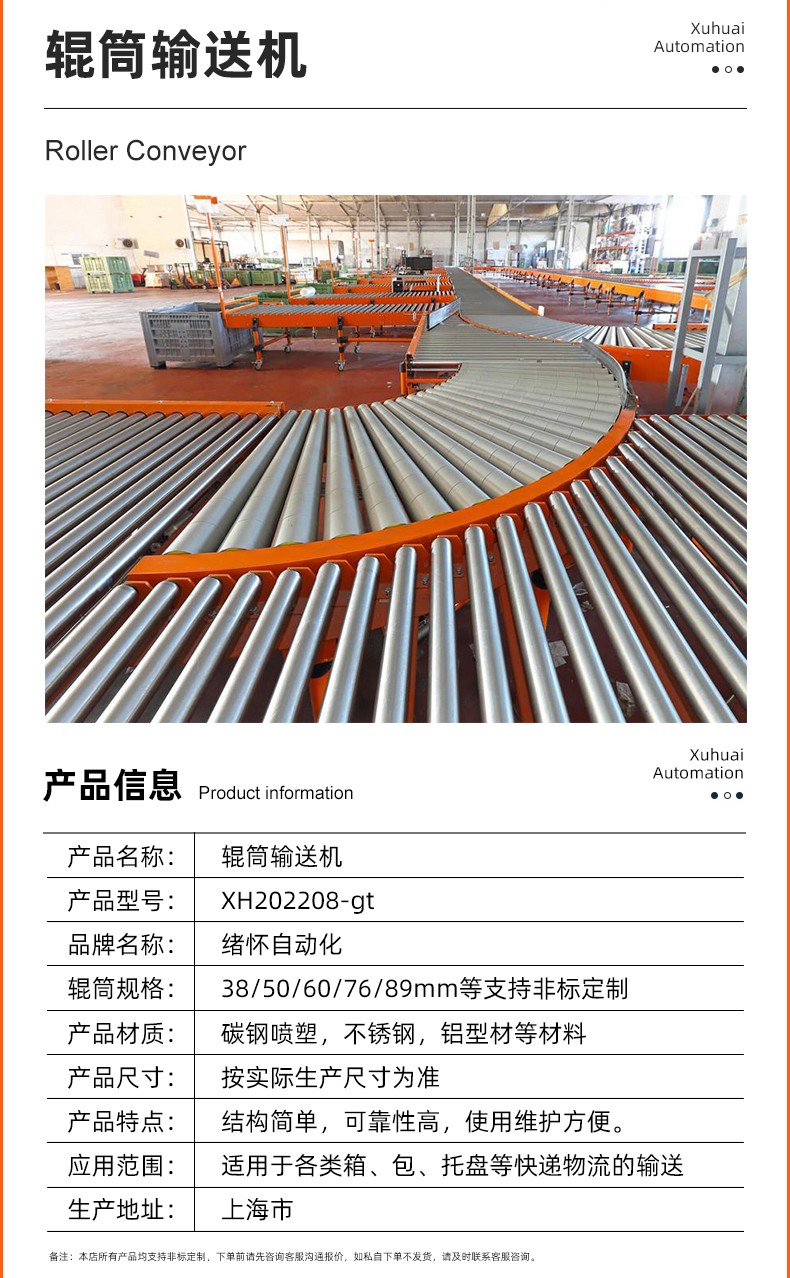
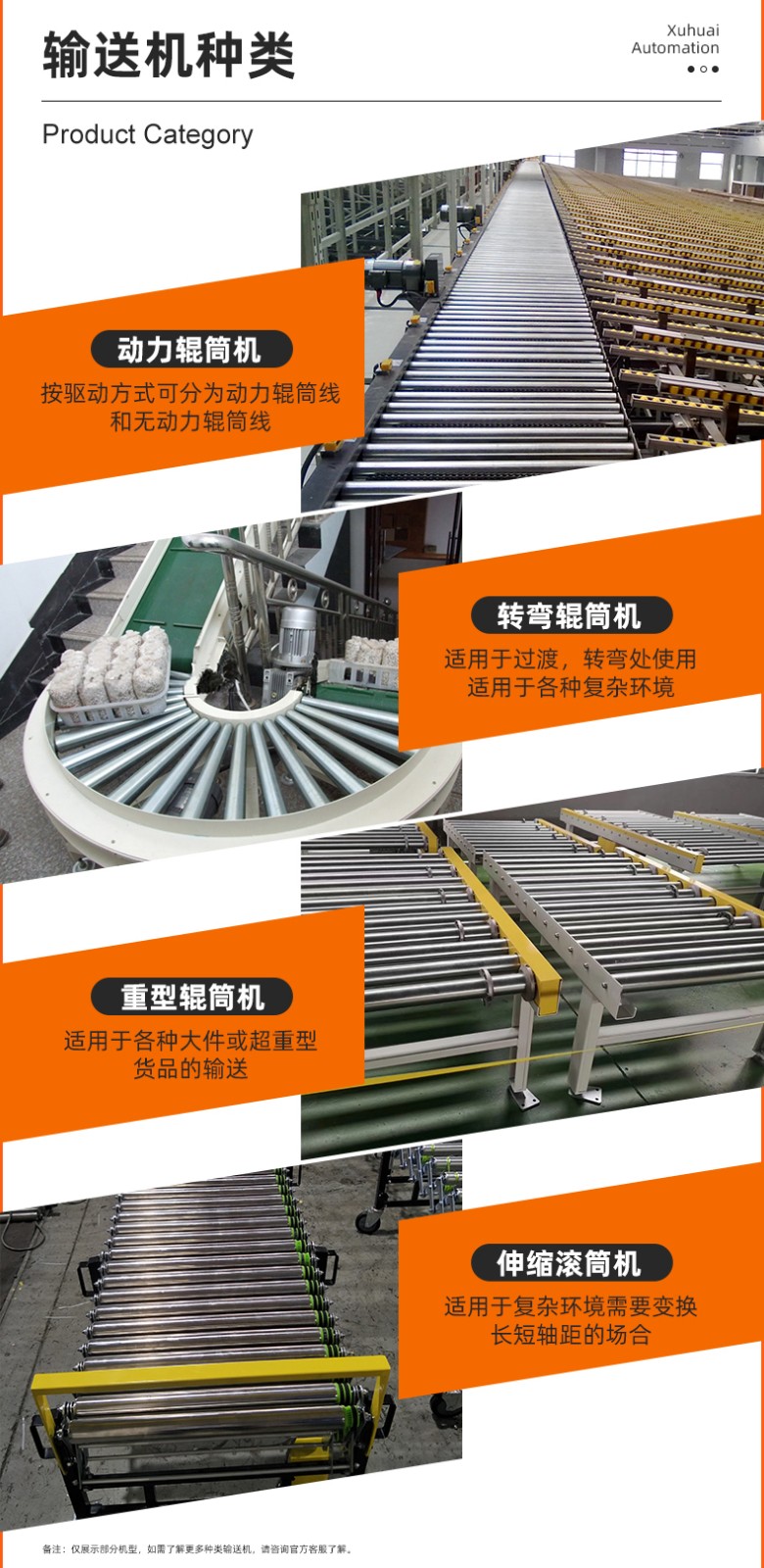
The powered roller conveyor, also known as the power-free roller conveyor, comes in two types: long roller conveyors without power and short roller conveyors without power. The surface shapes of the rollers in long roller conveyors include cylindrical, conical, and curved. The cylindrical long roller conveyors are widely used. The curved sections of the roller conveyors use conical rollers or double-row cylindrical rollers to facilitate turning of items. Short roller conveyors can reduce the spacing between rollers and are lighter in weight.
The powered roller conveyor is usually slightly inclined. When the items are heavy and the route is long, to ease the effort in pushing the items, the slope can be set at 1~1.5%. For items to slide on their own, the slope can be increased to 2~3%. Many factors affect the self-sliding slope, and most often, an appropriate angle is determined through experimentation. For routes shorter than 10 meters and items lighter than 200 kilograms, a level route can be arranged. Self-sliding roller conveyors are not easy to control the descent speed of items, so their length is generally not very long.
The width of the powered roller conveyor is 100 to 150 mm wider than the item width. The smaller curve section has a radius of 3 to 4 times the roller width. The roller spacing is 1/3 to 1/4 of the item length, and can be 1/4 to 1/5 of the item length for higher smoothness requirements during transportation. The roller diameter is determined by the load size.
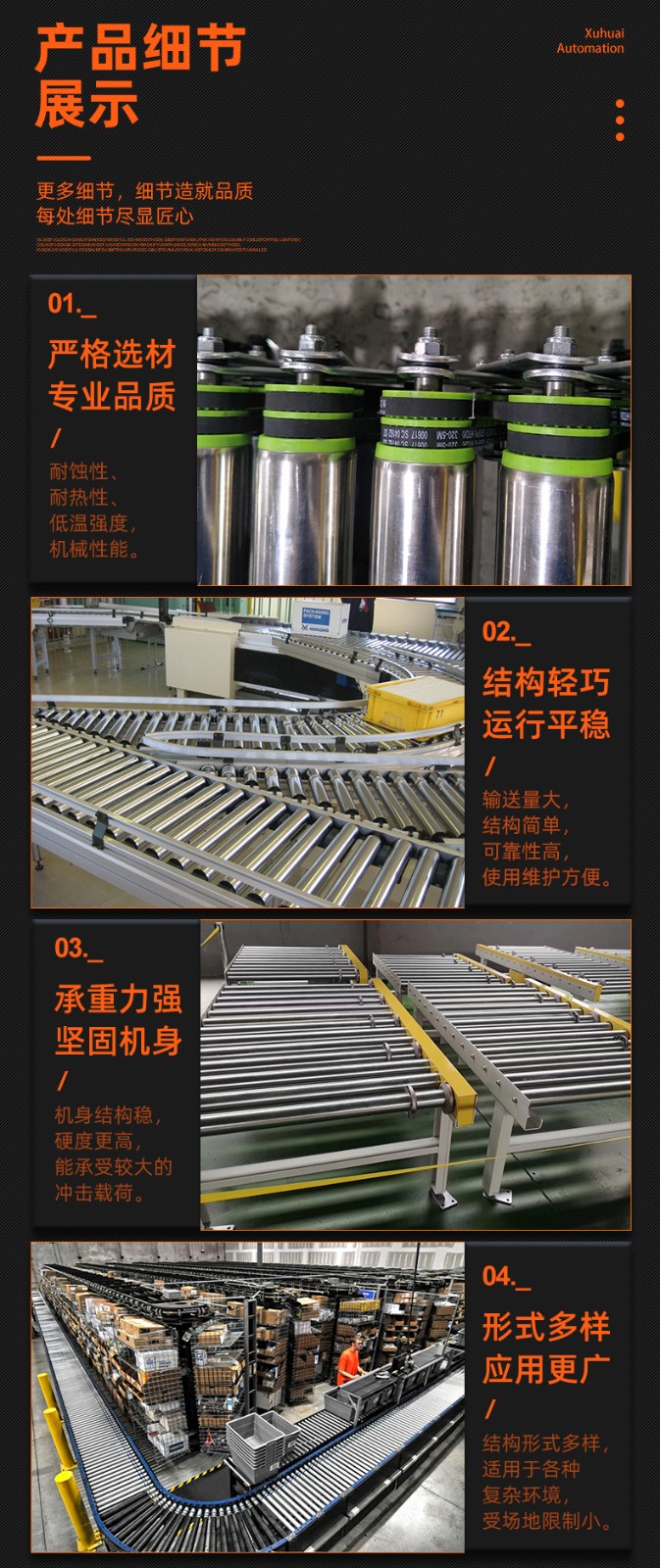
The powered roller conveyor equipment is primarily used for transporting various boxes, bags, pallets, and packaged goods. Some loose materials and small items must be placed in pallets or周转boxes for transfer. Additionally, the powered roller system is capable of handling materials with high circumferential loads or very heavy individual pieces, which can be achieved through the use of stackable roller conveyors. The powered roller conveyors also feature a simple structure and high reliability.
.jpg)