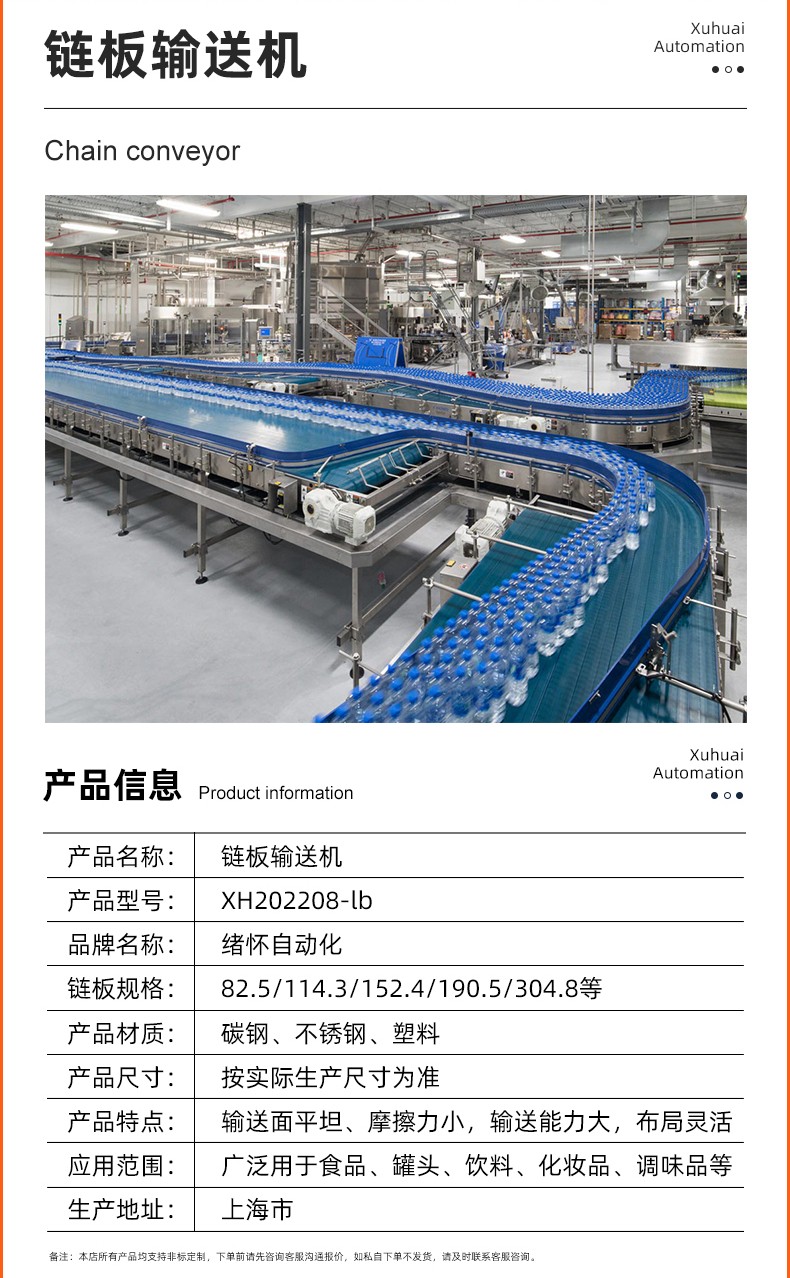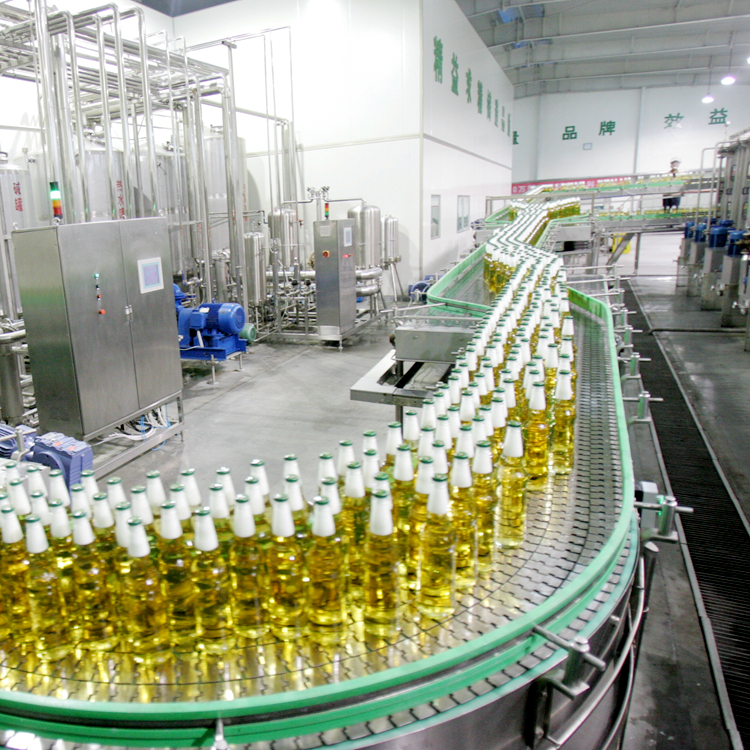
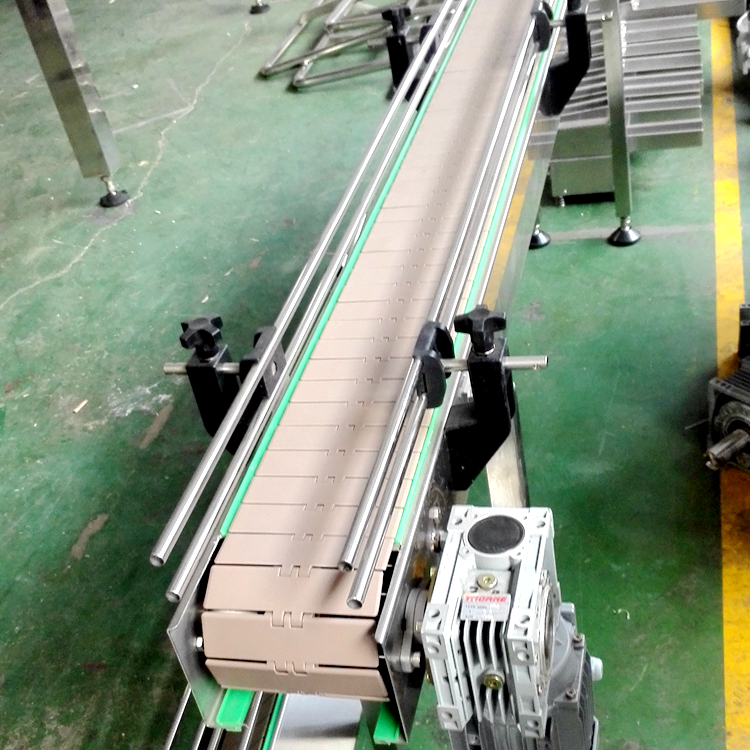
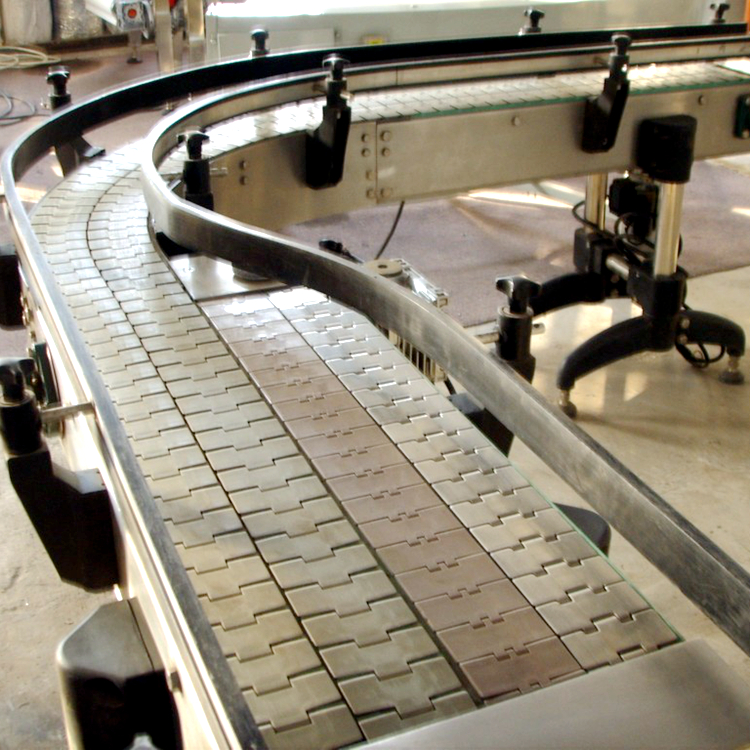
Chain conveyor systems are widely suitable for automatic conveying, distribution, and post-processing packaging lines in industries such as food, canned goods, edible oils, pharmaceuticals, beverages, cosmetics, detergents, paper products, seasonings, dairy, and tobacco. The chain conveyor belts can meet the single-line conveying requirements for equipment like beverage labeling, filling, and cleaning. They can also satisfy the large material supply needs of sterilizers, bottle racks, and cold bottle machines. The heads and tails of two chain conveyor machines can be designed as overlapping mixed chains, keeping bottles (cans) in a dynamic transition state, ensuring no bottle buildup on the conveying line, and accommodating pressure-free and pressure-assisted conveyance for both empty and filled bottles.
Chain Plate Specifications:
Direct-feeding chain plate widths: 63.5, 82.5, 101.6, 114.3, 152.4, 190.5, 254, 304.8; Unit: mm
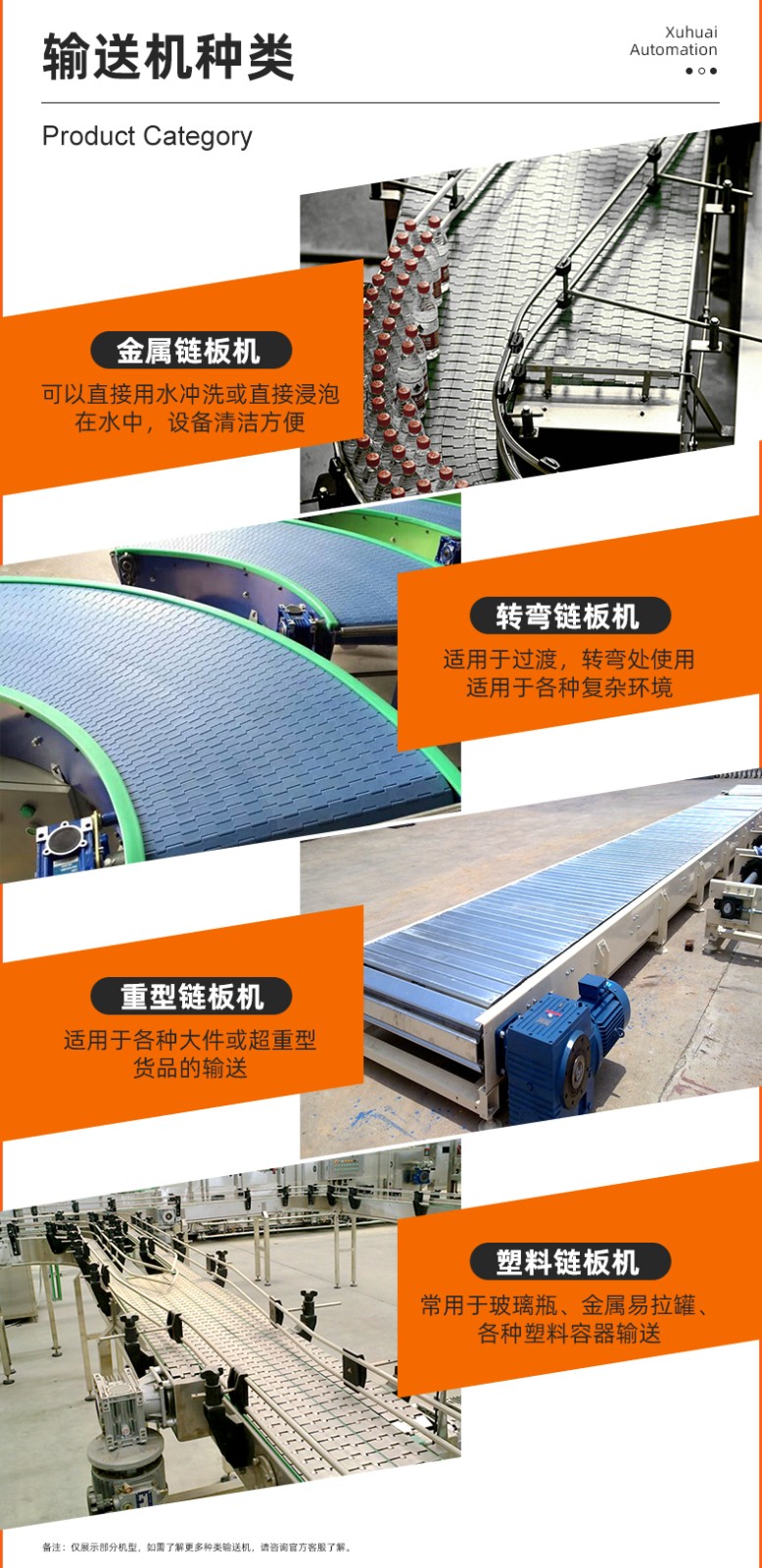
Bend conveyor belt widths available: 82.5, 114.3, 152.4, 190.5, 304.8. Unit: mm
Chain Plate Material: Carbon steel, stainless steel, and plastic steel. Different widths and shapes of chain plates can be selected according to the product requirements to meet flat conveying, flat bending, lifting, and descending needs.
Key Features of Beverage Chain Conveyor Line:
1. The conveying surface of the chain plate conveyor is flat and smooth with minimal friction, ensuring a stable transition of materials between the conveyor lines.
2. Accurate and stable conveying speed, ensuring precise synchronized feeding.
3. Chain plate conveyors can generally be cleaned by direct water rinsing or immersion in water. Equipment cleaning is convenient, meeting the sanitation requirements of the food and beverage industry.
4. Flexible equipment layout. Horizontal, inclined, and curved conveyance can be completed on a single conveyor line.
5. The equipment features a simple structure and easy maintenance.
6. Chain plates are available in materials such as stainless steel and engineering plastics, with a wide variety of specifications and types. They can be selected based on the material to be conveyed and process requirements, meeting the diverse needs of various industries.