


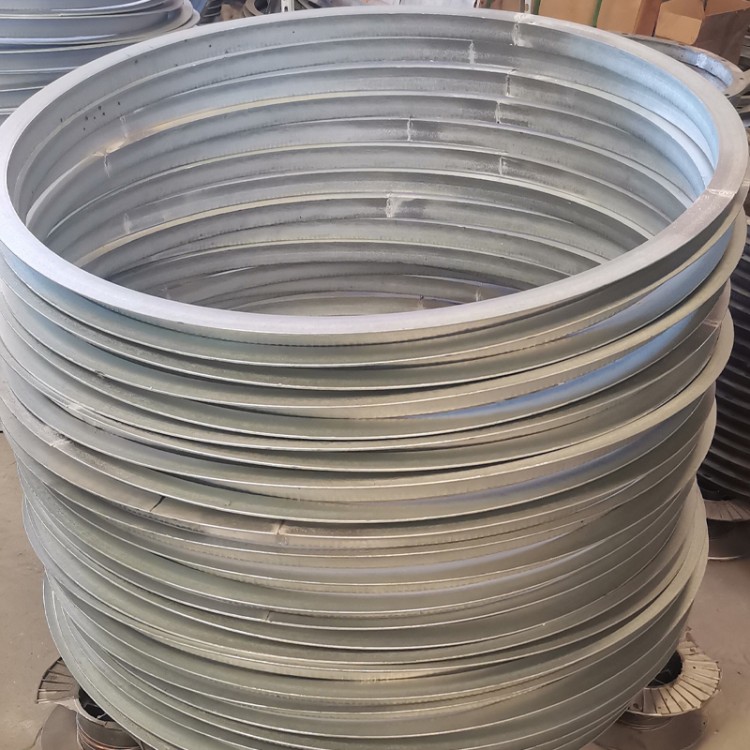
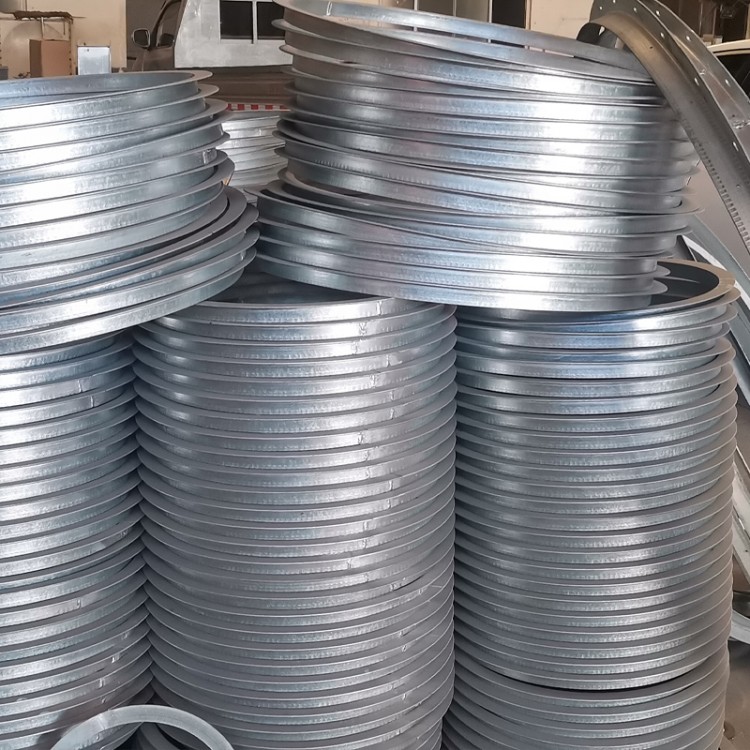
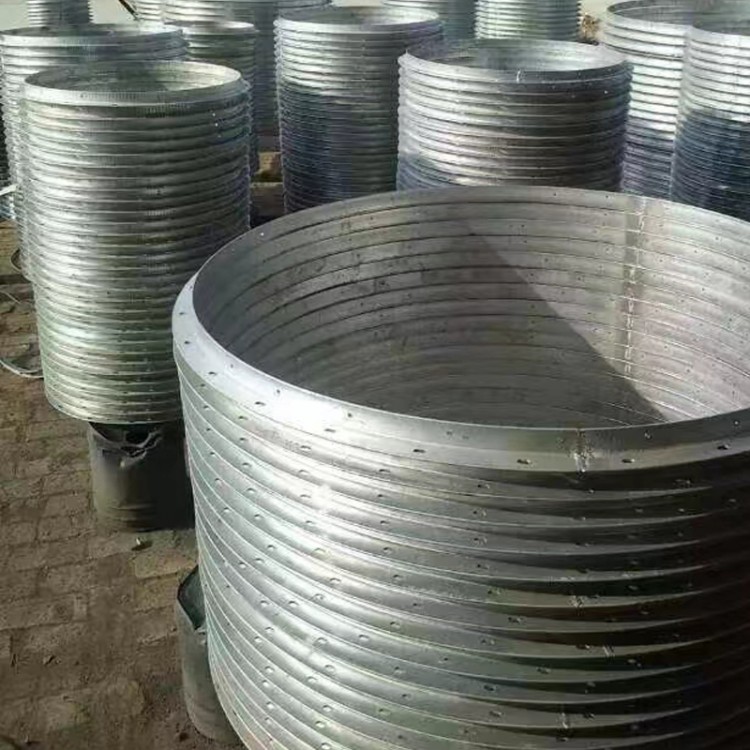
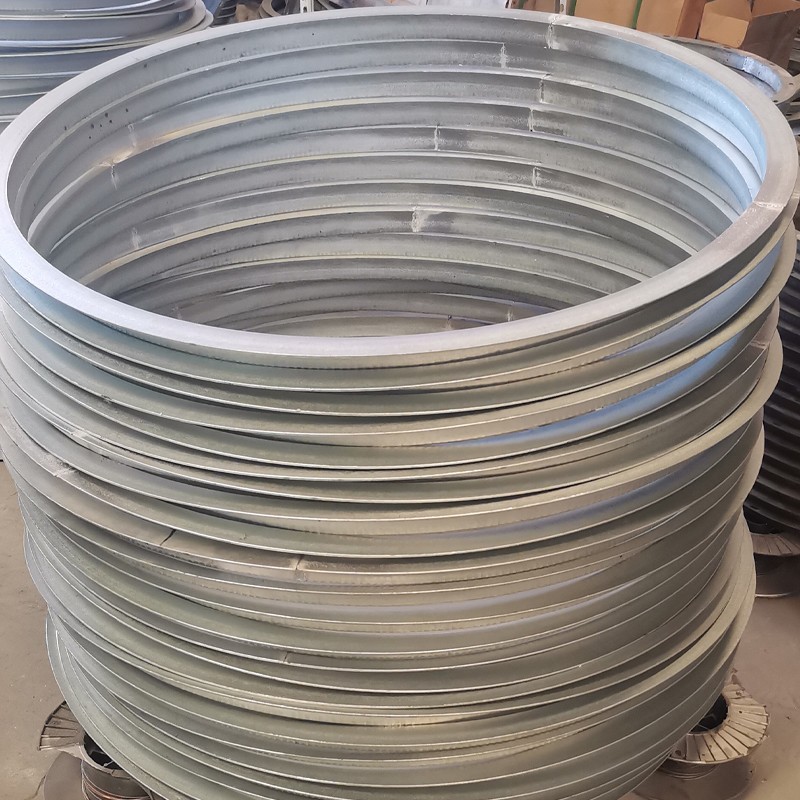
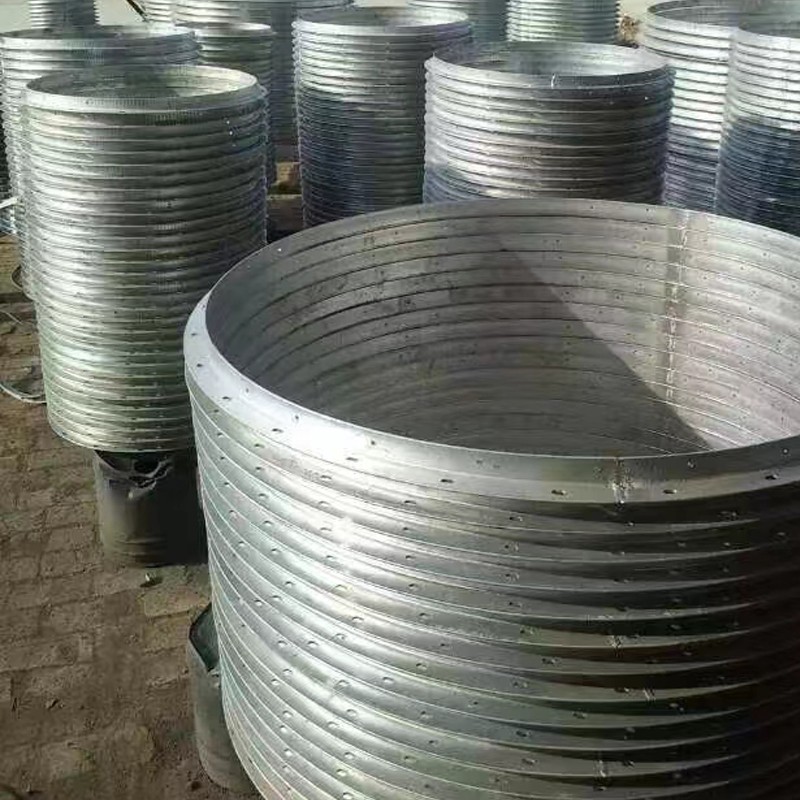
Flanges, also known as raised face plates or hub plates, are components used for connecting shafts to each other, typically for joining pipe ends; they are also used on equipment inlets and outlets, such as reducer flanges. A flange connection or flange joint refers to a detachable connection consisting of a flange, a gasket, and bolts, forming a combined sealing structure. Pipe flanges are the flanges used in piping systems within equipment, referring to the equipment's inlets and outlets. Flanges have holes for bolts, which secure the two flanges together, and are sealed with a gasket. Flanges come in threaded (screwed) connections, welding flanges, and clamp flanges. Flanges are always used in pairs; low-pressure pipelines can use threaded flanges, while those above four kilograms of pressure use welding flanges. Two flange disks are joined with a sealing pad and then fastened with bolts. Flange thickness varies with pressure, as do the bolts used. Equipment like pumps and valves, when connected to pipelines, have corresponding flange shapes, also known as flange connections. Any connection piece that uses bolts to join two flat surfaces and seal them is generally called a "flange," such as in the connection of ventilation pipes. Such components can be referred to as "flange-type parts." However, this type of connection is only a part of a device, like the connection between a flange and a pump, so it's not appropriate to call the pump a "flange-type part." Smaller equipment like valves can be called "flange-type parts."
Flange connections involve securing two pipes, fittings, or equipment to separate flange plates first, then adding a flange gasket between them and fastening them together with bolts to complete the connection. Some fittings and equipment come with a flange plate already attached, which also falls under flange connections. Flange connections are an important method in pipeline construction. They are convenient to use and can withstand high pressure. In industrial pipelines and residential settings, you may not see flange connections when the pipe diameter is small and the pressure is low. However, in boiler rooms or production sites, flange connections are prevalent on pipelines and equipment.
According to the connection method, flange types can be categorized as: flat welding flanges, socket welding flanges, blind flanges, threaded flanges, flange covers, loose fit socket welding flanges, flat welding ring loose fit flanges, ring groove flanges, large diameter flat flanges, large diameter long neck flanges, L-shaped blind flanges, and socket welding ring loose fit flanges, etc.
