


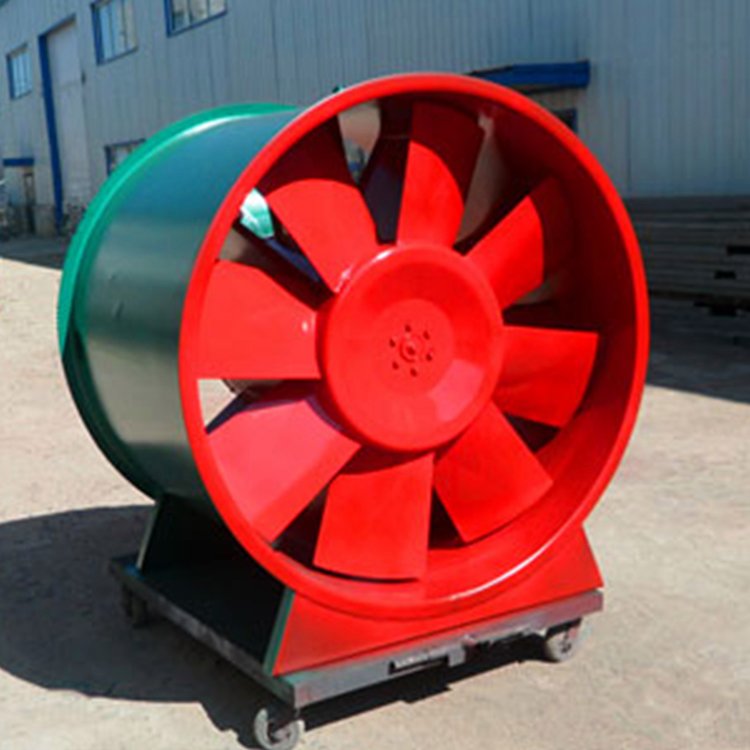
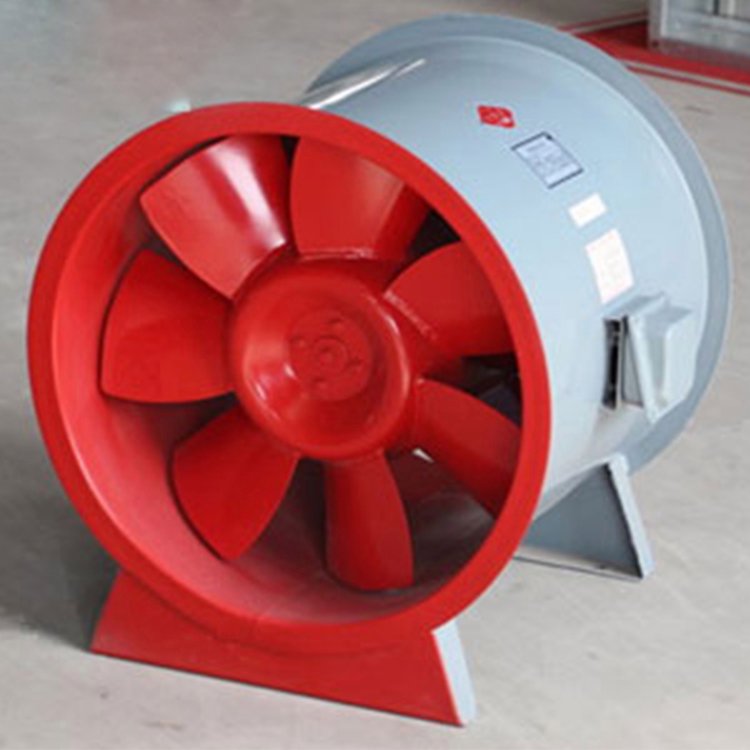
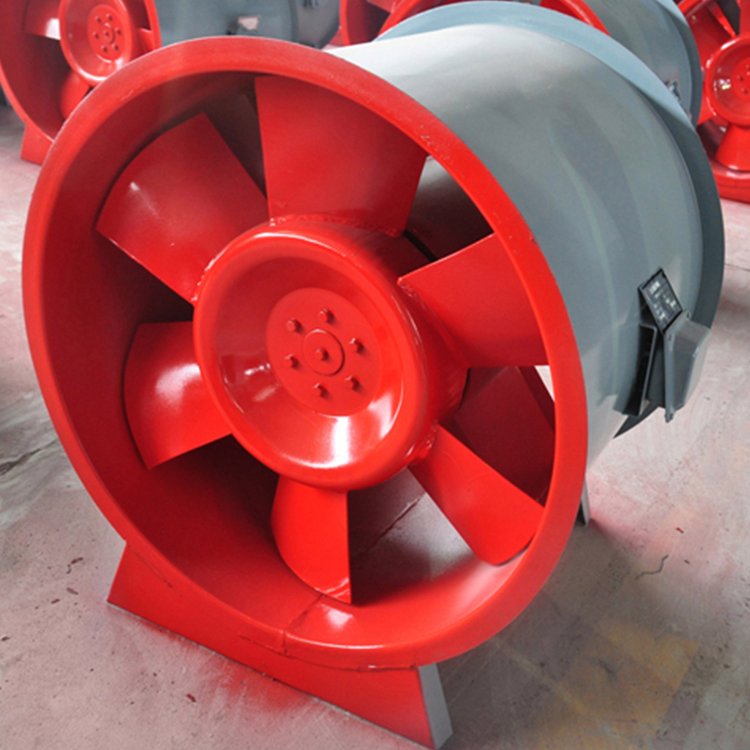

Fire Suppression High Temperature Exhaust Fan Overview
1. Application: The GYF fire-fighting high-temperature exhaust axial fan test conforms to GB50045-95 "Code for Fire Protection Design of Civil Building Design" and GB50067-97 "Code for Fire Protection Design of Parking Garage, Repair Garage, and Parking Area Design." It is a new type of energy-saving fire-fighting exhaust fan. This fan can be used for fire and smoke exhaust in various buildings, as well as for exhaust and ventilation in high-rise buildings, general buildings, underground parking garages, mine tunnels, etc. For example, it can be used for ventilation and air exchange in underground storage areas during normal operation, and can switch to high-volume smoke exhaust as needed.
2. Structural Form: Axial flow blade type: Includes GYF-I (Single Speed) and GYF-SI (Dual Speed); two types of fire smoke exhaust fans.
The blade design is of oblique flow type: featuring two fire and smoke exhaust fans, the GYF-II (single-speed) and GYF-S2 (dual-speed).
If the user has high noise requirements, a GYF-BX silencing type fire exhaust fan can be produced. The fan can also be made in a vertical configuration, installed on the roof for fire exhaust purposes.
The GYF fireproof high-temperature exhaust axial flow fan consists of five main components: (1) impeller (2) motor (3) inner circulating fan impeller (4) guide vanes, inner cylinder, and conduit hole (5) outer cylinder.
3. Installation and Usage:
1) Vertical, horizontal, and suspended installations are available. The fan base must naturally fit with the foundation plane, no forced connection by knocking is allowed, and the weight of the piping should not be placed on the fan components.
2) Prior to installation, carefully inspect the impeller and housing for any damage or deformation due to transportation. If any are found, repair them before installation.
3) Check if the connecting bolts are loose, if the motor insulation is good, and if there are any obstructions inside the fan pipeline that may hinder rotation.
4) After the fan installation, a trial operation must be conducted. Any abnormal rubbing, collision, or vibration should be eliminated immediately.
