


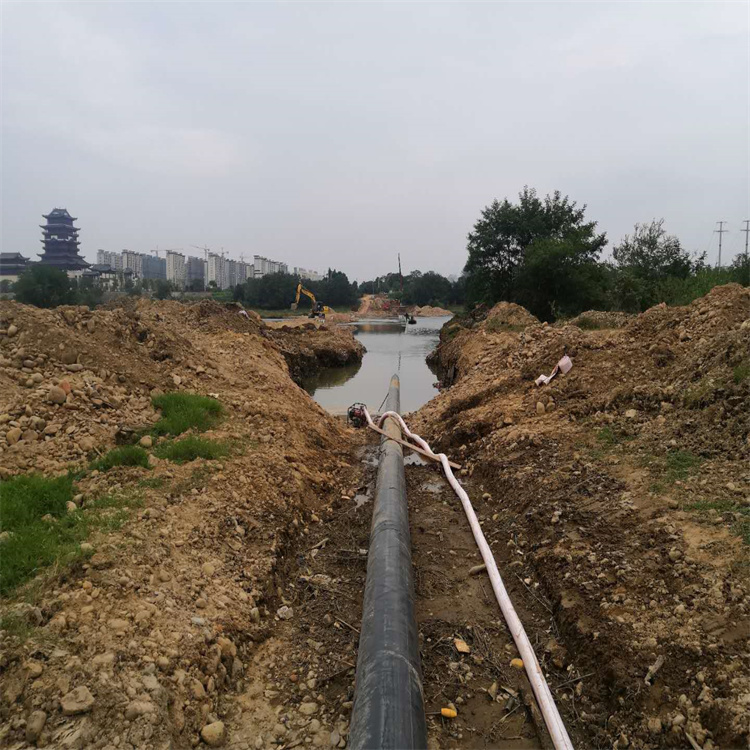


The installation of drainage pipes is a process involving multiple steps and precautions. Below is a clear, itemized, and summarized procedure for the installation of drainage pipes:
I. Preparations
Design Drainage System: Design a rational drainage system based on the structure of the building and the areas requiring drainage, determining the pipeline layout, diameter, and material, etc.
Preparation: Clear the construction area, prepare the required materials and tools, such as pipes, connectors, bolts, rubber washers, diving equipment, lifting equipment, etc.
II. Installation Process
Ground Treatment: Punctures holes along the pipeline path on the ground according to design requirements, to facilitate subsequent pipeline installation work.
Lay drainage pipes: Install the drainage pipes section by section according to the designed pipeline alignment. During the installation process, ensure the connections are secure to prevent leaks. For buried pipes, also make sure the pipes are sufficiently covered with soil to meet frost and pressure resistance requirements.
Install brackets and secure pipes: Mount brackets and secure pipes onto the laid drainage pipes to ensure stability and safety. For vertical pipe installation, pay attention to align the tee outlet with the horizontal pipe direction and maintain a distance of 20-50mm between the outer edge of the vertical pipe socket and the facing.
Connect drainage equipment: Attach the drainage pipes to the corresponding drainage devices, such as the sewer or kitchen sink, etc.
Fastener Installation: At pipe connection points, such as between pile caps and piles, and pipe supports and clamps, use bolts and nuts for securing to ensure stable pipe connections.
Sealing Treatment: For interfaces requiring sealing, such as between flange joints and pipes, use rubber rings and rubber gaskets for tight compression to ensure tightness.
3. Post-Production Inspection and Testing
Inspect Installation Quality: Ensure all connections are secure, seals are tight, pipes are level, brackets are sturdy, etc.
Conduct ball run test: For drainage main and horizontal trunk pipelines, perform a ball run test with a ball diameter not less than 2/3 of the drainage pipeline diameter. The ball run rate must meet the standard to ensure the pipeline is unobstructed.
System Testing: After the installation of the drainage pipes is completed, conduct system testing. Check if the drainage system is functioning properly and for any leaks or other issues by releasing water or using other methods.
4. Cautionary Notes
Adhere to safety regulations: Strictly follow safety operation procedures throughout the installation process to ensure the safety of personnel and equipment.
Control Material Quality: Select reliable pipes and fittings to ensure the service life and safety of the pipeline system.
Be mindful of environmental protection: During construction, take care to protect the surrounding environment and avoid polluting soil, water sources, etc.

