
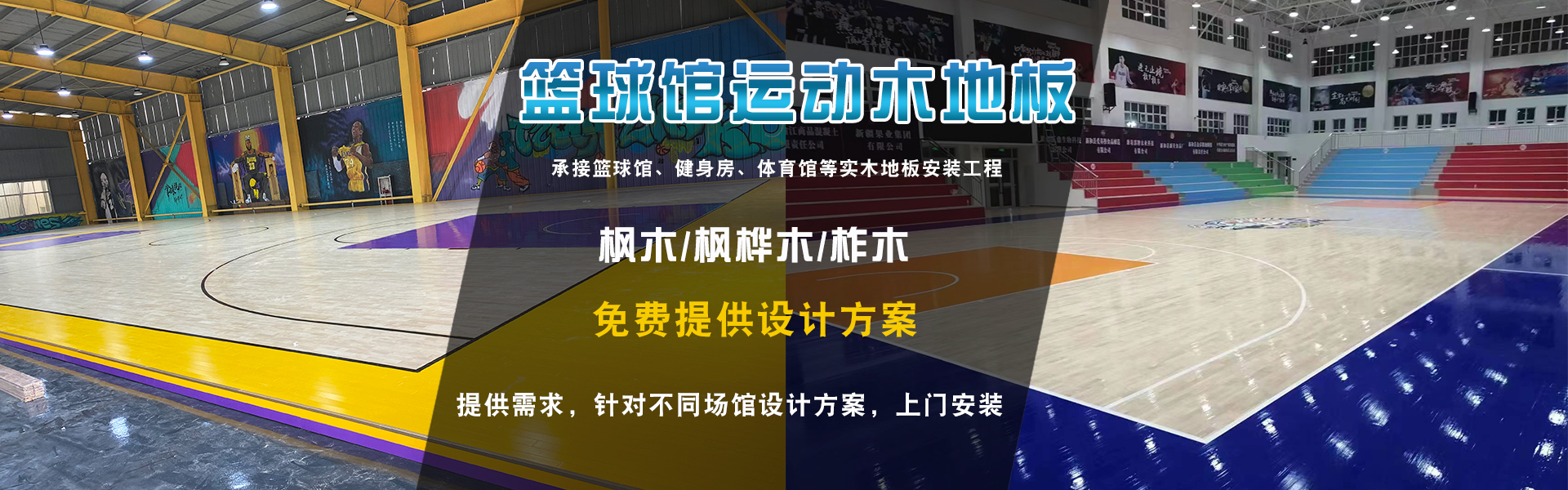
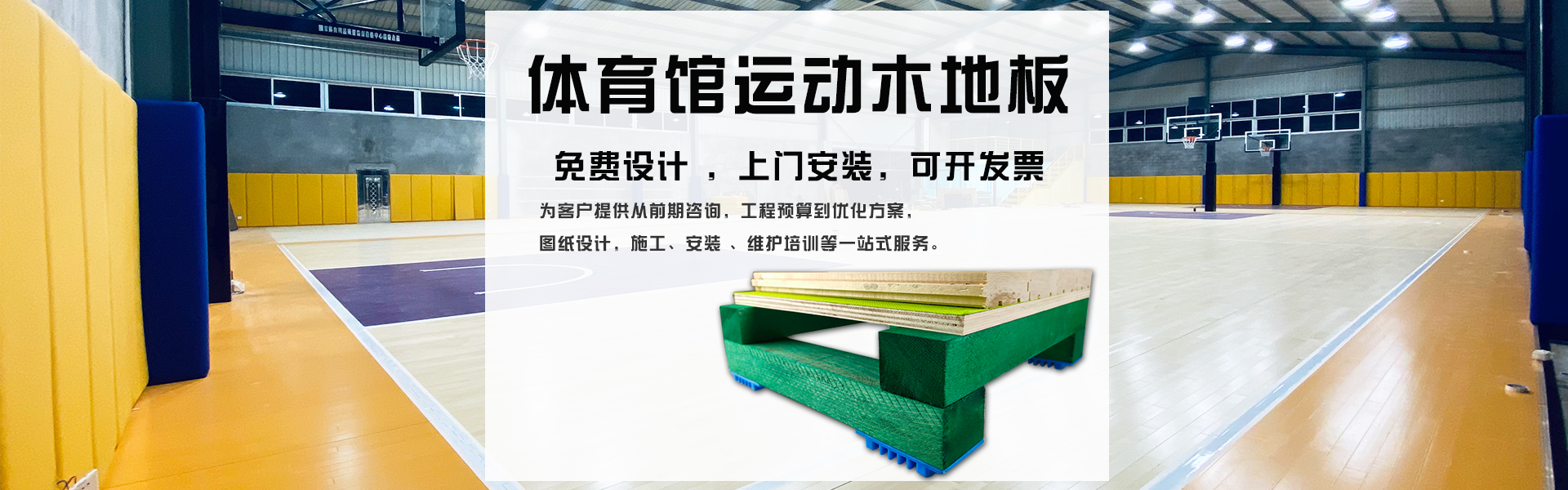

Below, we provide an in-depth introduction to basketball wooden floors.
One: Appearance: The basketball wooden floor boasts a natural aesthetic appeal and a solid, gentle sound. The heartwood and sapwood of mature maple trees have minimal differences, resulting in less color variation. The maple has a soft color and tight grain, with subtle undulations on its surface that scatter light, providing athletes with a comfortable visual experience. Additionally, for basketball and volleyball courts, the natural light color and bright finish, as well as home team logos, create a striking yet harmonious contrast.
Basketball Court Wooden Flooring
The basketball wood flooring is an organic structure composed of various wood fibers and cell bubbles, featuring shock-absorbing capabilities. The inherent characteristics of the sports wood flooring, coupled with the support of the auxiliary structure beneath the surface layer, meet the requirements of various types of sports activities.
Material: The hard maple used for basketball court flooring boasts high density and strength, as well as excellent wear and shock resistance. Its hardness is 12% higher than red oak and 7% higher than white oak. Maple from North America north of latitude 35°, due to its shorter growth period and longer winters, has a dense grain that is less prone to cracking. Under friction, it becomes shiny and smooth, displaying strong resistance to impact forces, ensuring durability and resistance to wear. Moreover, it interacts well with various paints. In China's Northeast, such as the areas around the Xing'an Mountains and Changbai Mountains, maple trees thrive in a climate and geographical environment that is highly suitable, and have gradually become the mainstream product for sports wooden flooring domestically.
