
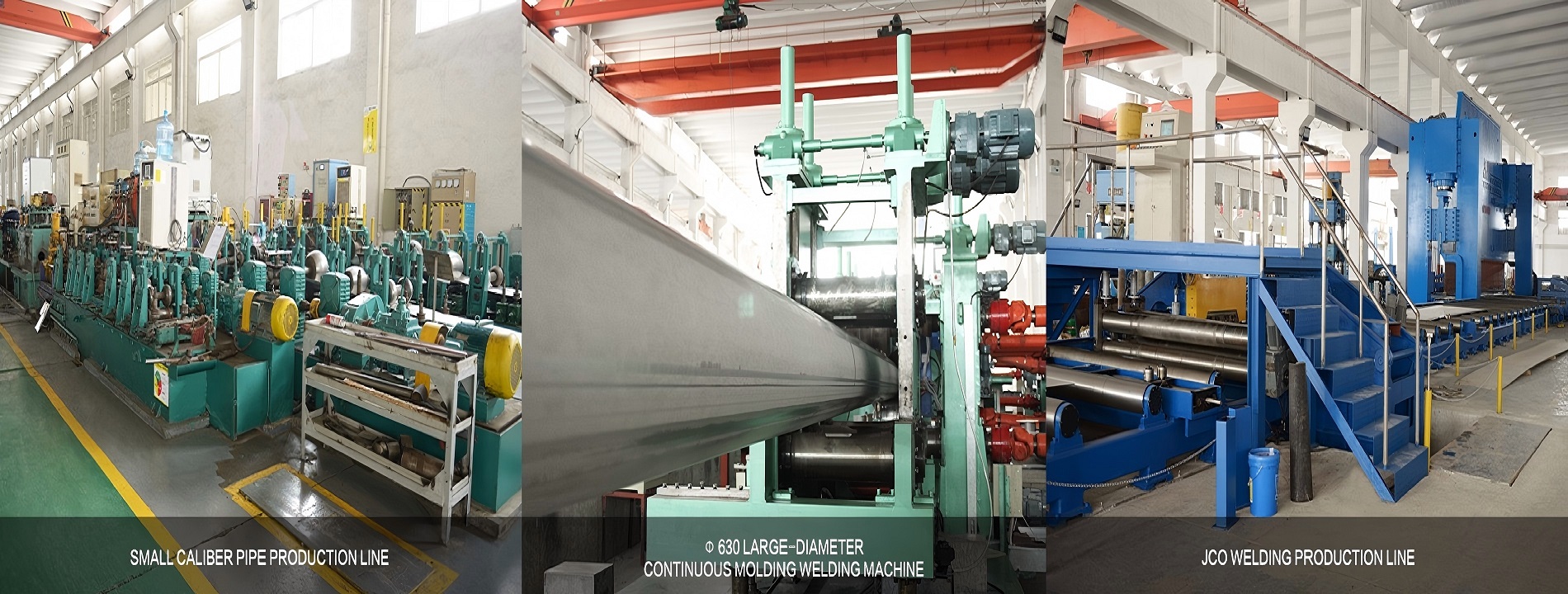
The manufacturing processes for titanium alloy pipes mainly include the following methods:
One: Hot Rolling Process
Hot rolling is an essential method in the production of titanium alloy tubes. The process typically involves several steps:
Raw Material Preparation: Select appropriate titanium alloy billets and perform necessary pre-treatment, such as removing surface defects and absorption layers.
Heating: The billet is heated to an appropriate temperature, typically between 950°C and 1000°C, to achieve good plasticity.
Piercing: Piercing heated billets on a two- or three-roller piercing mill to obtain hollow billets.
Rolling: After piercing, the billet is passed through the rolling mill to further reduce the wall thickness and increase the length.
Cooling and Straightening: Post-rolling, titanium alloy tubes are cooled and undergo necessary straightening processes to ensure dimensional accuracy and shape.
The advantages of the hot rolling process lie in its ability to produce high-strength, low-plasticity titanium alloy pipes with a relatively short production cycle. However, this method also poses some challenges, such as complex equipment, significant investment, and stringent tool requirements.
Section II: Compression Process
Extrusion is another commonly used method for producing titanium alloy tubes. The process typically involves the following steps:
Material Preparation: Select appropriate titanium alloy billets and perform necessary pre-treatment.
Heating: Heat the billet to an appropriate temperature, typically below 950°C, to maintain good plasticity.
Extrusion: After heating the billet, it is placed into the extrusion die and, under pressure, extruded through the mold holes to form titanium alloy tubes.
Cooling and subsequent processing: Cool the extruded titanium alloy tubes and carry out necessary subsequent treatments, such as straightening and cutting.
The advantages of the extrusion process lie in its ability to produce various shapes of titanium alloy tubes with strong adaptability to billets. However, this method also has some limitations, such as relatively slow extrusion speed, as well as higher equipment investment and manufacturing difficulty.
Section 3: Stretching Process
The stretching process is also applied in the production of titanium alloy tubes. The typical process generally involves the following steps:
Material Preparation: Select appropriate titanium alloy billets and perform necessary pre-treatment.
Heating and Stretching: The billet is heated to an appropriate temperature and then stretched on a stretcher to form titanium alloy tubes.
Cooling and subsequent processing: Cool the stretched titanium alloy tubes and carry out necessary subsequent processing, such as straightening and polishing.
The advantages of the stretching process lie in its high flexibility, ease of mold changes, and suitability for small to medium-scale production. However, this method faces certain difficulties in producing low-plasticity, high-strength titanium alloy tubes.
Four: Spin Forging Technique
A spinning process is an advanced method for producing large-diameter thin-walled titanium alloy tubes. The process typically involves the following steps:
Material Preparation: Select suitable titanium alloy billets and perform the necessary pre-treatment.
Rolling Forming: The billet is installed on a rolling machine, where it is gradually deformed and conforms to the mold through the rotation of the roller and feeding movement, ultimately forming a titanium alloy tube.
Cooling and Post-Processing: After the titanium alloy tubes are spun, they are cooled and undergo necessary post-processing, such as cutting and polishing.
The advantages of the spinning process include compact equipment size, light weight, and low investment, while also enabling the production of large-diameter thin-walled titanium alloy tubes beyond the capabilities of conventional rolling and stretching equipment. However, this method demands high precision in the inner diameter size and surface quality of the billets, which may pose certain challenges in large-scale production.
In summary, the manufacturing processes for titanium alloy pipes are diverse, each with its unique advantages and applicable scope. In actual production, the appropriate manufacturing process should be selected based on the specific application scenario and requirements.
