


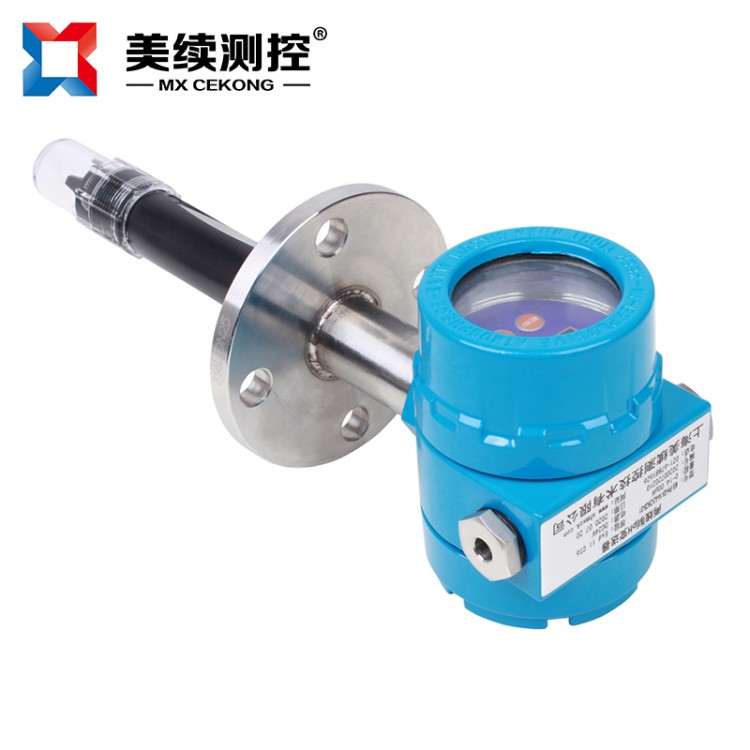
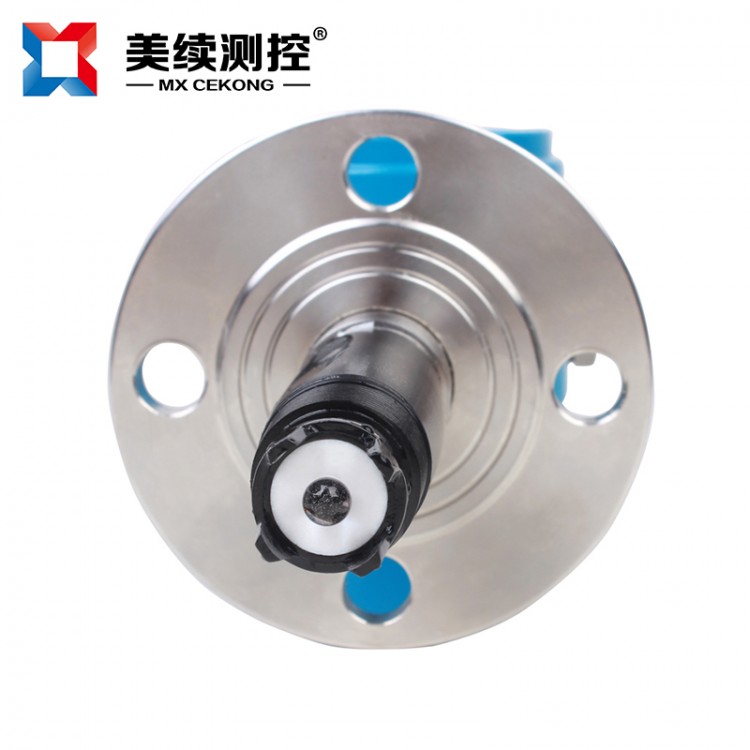
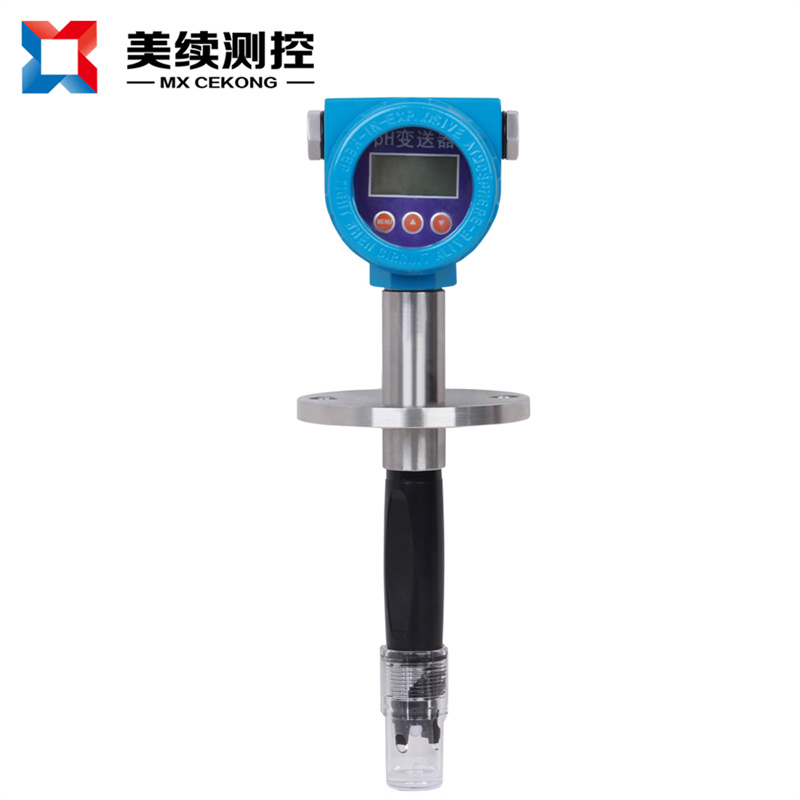
pH Meter: An instrument used to measure the acidity or alkalinity of a solution. The pH meter operates on the principle of a primary cell, with two electrodes of the primary cell.
The electromotive force (EMF) between electrodes, according to the Nernst equation, is related to the inherent properties of the electrodes as well as the concentration of hydrogen ions in the solution. EMF of a primary battery
There is a corresponding relationship between hydrogen ion concentration and pH value, which is the negative logarithm of the hydrogen ion concentration.
The commonly used method for measuring water pH in industry is potential analysis, typically involving a pH meter electrode paired with a separate control instrument.
Using, but it can be麻烦 in situations that require explosion-proof requirements for some chemicals, steel, etc., or where installation is inconvenient.
To better accommodate all-weather working environments, the upgraded Meisu Measurement & Control System features an integrated explosion-proof structure and also includes a local LCD display.
Corrosion-resistant for harsh environments, easy to install, and enables effective pH measurement and water quality detection.
Application Fields
Industrial Automation Applications
Wastewater treatment, wastewater testing
Mining and smelting, papermaking, pulp concentration
Environmental Protection Industry, Desulfurization and Denitrification, Waste Water Evaporation
Sanitary applications, food and beverage processing industry
Hazardous acid, strong alkaline, and chemical wastewater industry
Petroleum & chemical, textile spinning industries
Product Features
Resistant to high temperatures up to 90°C and corrosion from strong acids and alkalis.
The electrode is made of low impedance glass film and can be used for pH measurement under various conditions.
Fast response, excellent thermal stability; good reproducibility, not easily hydrolyzed, basically eliminates alkali error
The electrode itself is cylindrical globe-shaped, with a large contact area and sensitive region, which accelerates response time and enhances signal stability.
Intrinsically Safe Integrated HPH Meter
Model: MX- - PH- - 03
Explosion-proof Integrated pH Meter MX- - pH- - 03
The glass has high impact resistance, more than 35% higher than that of ordinary electrodes.
Excellent waterproofing and strong UV resistance.
Technical Specifications
Measurement Range: 0-14PH, Default with explosion-proof gauge head and LCD display
Overall Precision: ±0.02 pH
Operating Temperature
Standard Operating Temperature 0-80°F (W1 Standard Industrial Electrode); Temperature 0-100°F (W2 PTFE Electrode); Temperature
0-120° (W3 High Temperature Sterilization Electrode)
Response Time: <30sec
Normal Zero Point: 7 ± 0.5PH Sensitive Film Resistor: ≤ 250MΩ Voltage Range: ≤ 0.6MPa
Power Supply: 12-36VDC (wide range DC power supply, standard DC24V)
Output Signal: 4-20mA Current Signal (S2); 4-20mA + RS485 (S3)
Connection Types: G3/4 male thread; DN32; DN50; DN65; DN100, etc. (Flanges available in stainless steel; PP; PTFE)
Output Method: Standard M20*1.5 Internal Thread Electrical Interface
Temperature Compensation: NTC 10K; PT100; PT1000
Slope: ≥98%
Flameproof Grade: Ex d II CT6 Gb
Ordering Guide
Model | Range | Operating Temperature | Output | Mounting Type | Temperature Compensation | Other Requirements
MX-PH-03 0-14PH 80°F 4-20mA DN32 Flange 10K
Order Example: MX-PH-03-W1-S2-DN32-10K

1. Glass electrode sockets should be kept dry and clean, strictly avoid contact with acidic fogs, salt fogs, and other harmful gases, and严禁 getting沾上water solutions to ensure the instrument's high
Input Impedance.
2. The protective cap at the front end of the electrode contains an appropriate amount of 3.3mol/L KCL solution, in which the electrode tip is soaked to maintain the activation of the sensitive membrane and the liquid junction.
3. When using the electrode, remove the transparent protective cap at the front, immerse the glass bulb and the liquid-receiving section into the medium being measured. Please secure it during installation.
Raw material to complete waterproof sealing work, to prevent water from entering the pH electrode, causing a short circuit in the pH electrode cable.
explosion-proof integrated pH meter MX- - PH- - 03
WWW.SHMXCK.COM
4. New electrodes or electrodes that have been unused for a long time must be soaked in distilled water for several hours (or dechlorinated) prior to use. This allows for the reduction of the electrode's uneven potential.
Low to stabilize, reduce electrode internal resistance.
5. During measurement, the electrode bulb should be fully immersed in the solution being tested.
6. Users need to regularly clean the sensitive membrane in front of the electrode. For electrodes that have been used for a longer period, the glass membrane may become transparent or
Attach sediment, then wash with dilute hydrochloric acid and rinse with water.
7. Electrodes should be cleaned when not in use and inserted into protective caps filled with saturated potassium chloride solution.
8. There should be no bubbles in the potassium chloride solution to prevent the measurement circuit from being interrupted.
9. A pH electrode is a consumable item, with an average lifespan of one year under normal conditions due to harsh measurement environments. Improper maintenance can shorten its life.
