


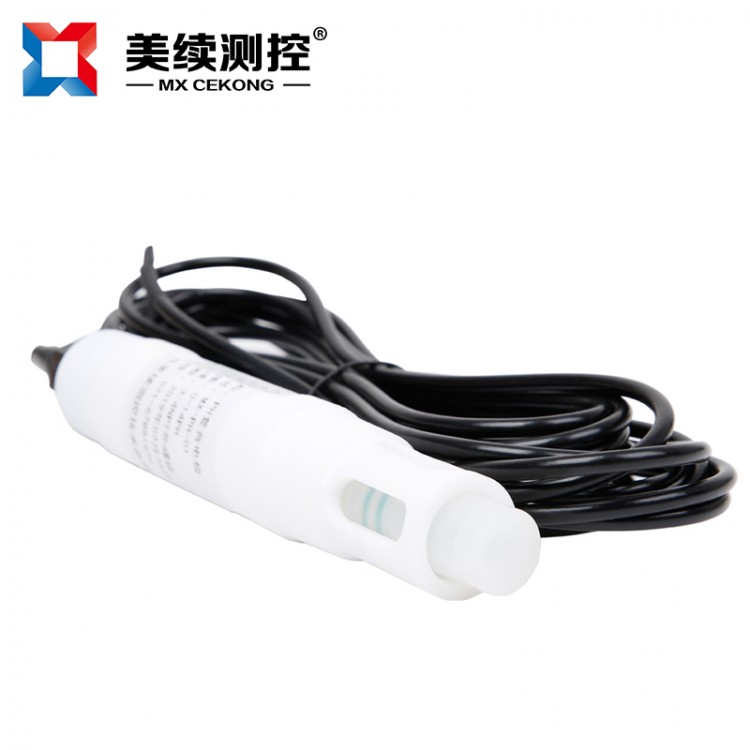
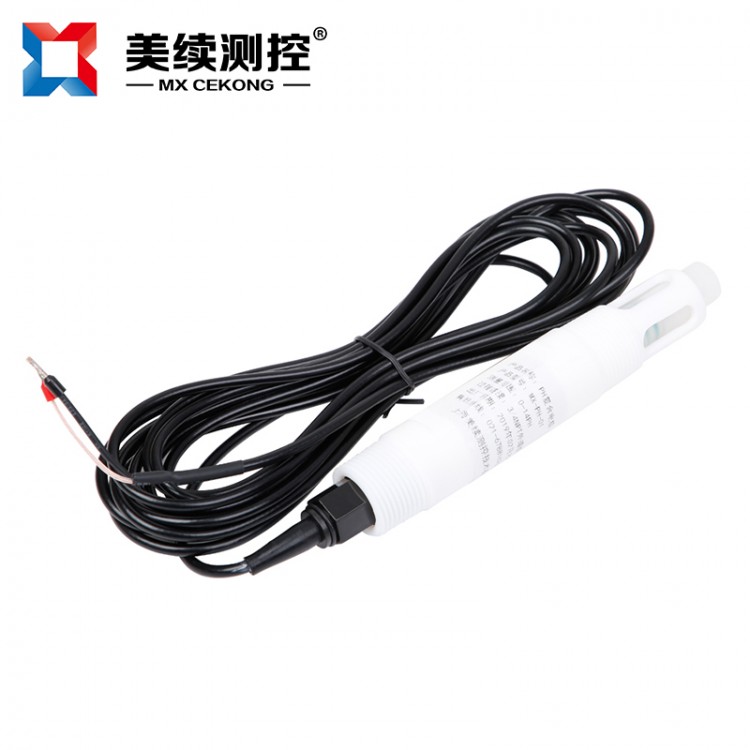
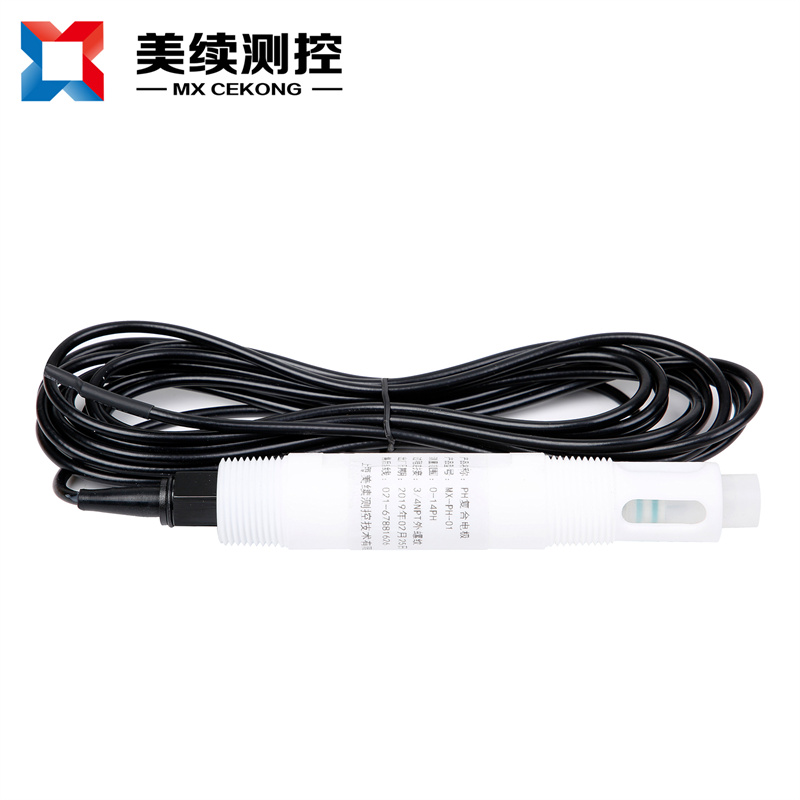
pH Meter: A device used to measure the acidity or alkalinity of a solution. pH meters operate based on the principle of a primary cell, where the electromotive force (EMF) between the two electrodes of the primary cell is determined by the Nernst equation. This EMF is related not only to the properties of the electrodes themselves but also to the concentration of hydrogen ions in the solution. There is a corresponding relationship between the EMF of the primary cell and the concentration of hydrogen ions, with the negative logarithm of the hydrogen ion concentration being the pH value.
Currently, the most commonly used method for measuring water pH in industry is the potentiometric analysis: many electrodes and contacting media are highly corrosive. To better adapt to all-weather working environments, Meisu Measurement and Control has upgraded to a special electrode made of Teflon, which can better withstand strong acids and alkalis, resist corrosion, and is suitable for use in harsh environments. It is also connected to the measurement instrument (MX-PHYB-01). This effectively measures and detects the acidity and alkalinity of the water quality.
Application Fields
Industrial Automation Application Fields
Wastewater treatment, wastewater testing
Mining and smelting, papermaking, pulp concentration
Environmental Protection Industry, Flue Gas Desulfurization and Denitrification, Waste Water Evaporation
Sanitary applications, food and beverage processing industry
Strong acids, strong alkalis, chemical wastewater industry
Petroleum & chemical, textile spinning industries
Product Features
Suitable for various complex environments
Withstanding high temperatures up to 90°C and resistant to erosion from strong acids and alkalis.
The electrode is made of low impedance glass film, suitable for pH measurement under various conditions.
Features fast response, excellent thermal stability; good reproducibility, not easily hydrolyzed, essentially eliminates alkaline errors.
The electrode itself features a cylindrical globe shape, offering a large contact area and sensitive region, which accelerates response time and enhances signal stability.
Glass has excellent impact resistance, up to 35% higher than that of ordinary electrodes.
Excellent waterproof and UV-resistant properties
Technical Specifications
Measurement Range: 0-14PH
Integrated Accuracy: ±0.02 pH
Operating Temperature: 0-90°F
Response Time: <30sec
Normal Zero Point: 7 ± 0.5 pH
Sensitive Film Resistor: ≤ 250MΩ
Pressure Range: ≤ 0.6 MPA
Connection Method: Top and bottom 3/4 NPT pipe threads (other methods with adapter)
Wiring Method: Direct wiring with low-noise waterproof gland
Temperature Compensation: NTC 10K; PT100; PT1000 (default: none)
Slope: ≥98%
