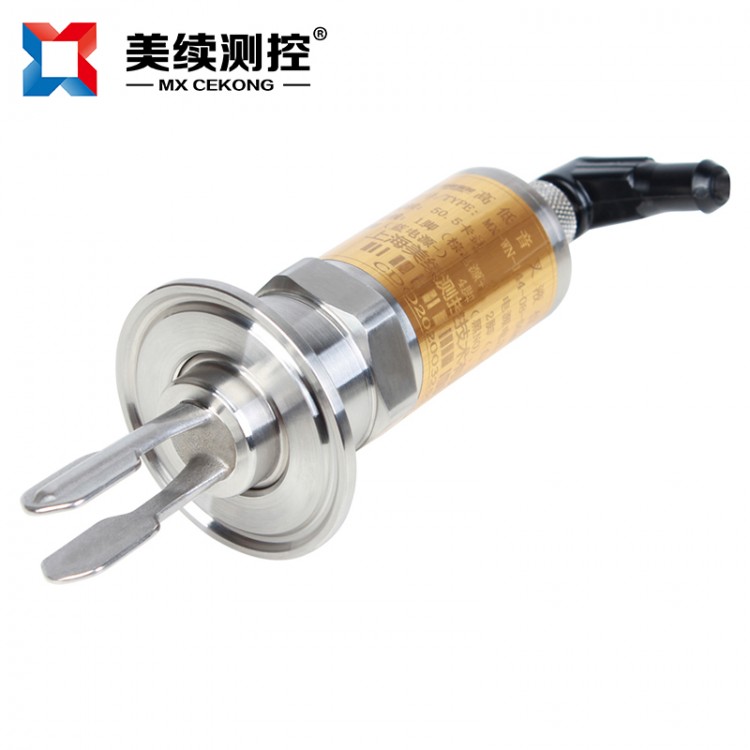
Product Description
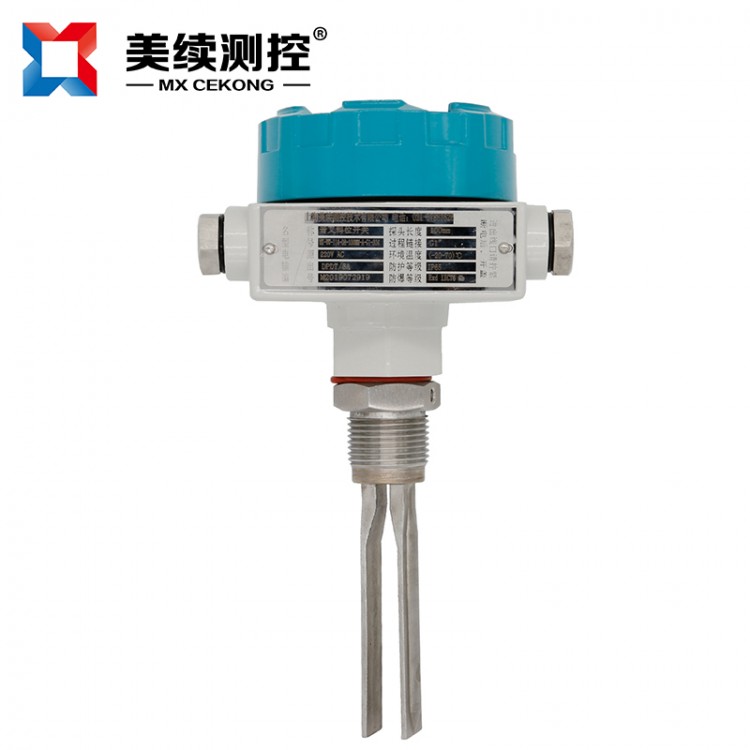
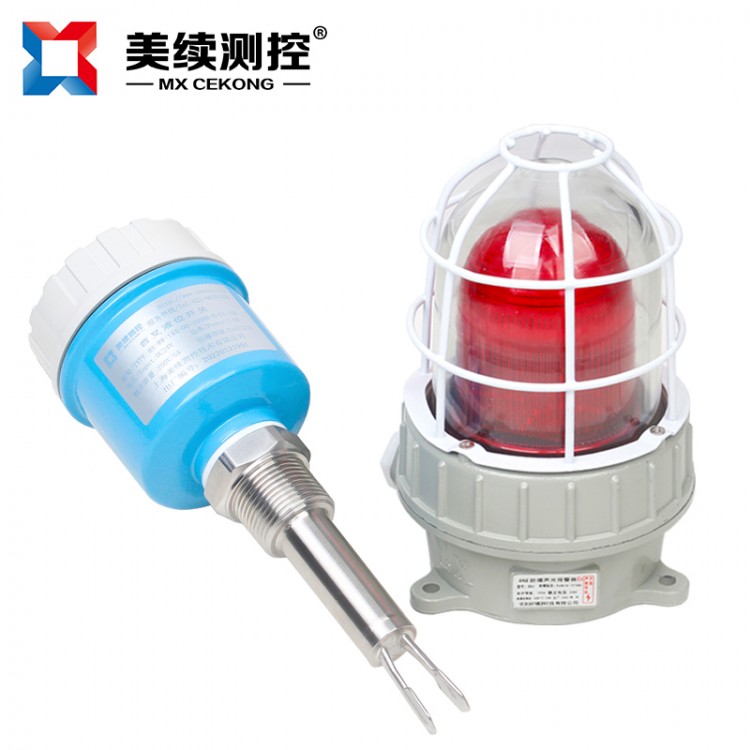
The MX-WW-144-08 Fork Level Switch is specifically designed for liquid level, material level measurement, and control in containers, tanks, and various pipelines. The Fork Level Switch measures the height of materials through vibration principles; the fork generates vibrations by crystal excitation. When the fork is immersed in liquid or solid, the vibration frequency changes. These changes are detected and processed by an intelligent circuit, converting them into a switching signal through a pair of piezoelectric crystals installed on the fork base. When the fork contacts the medium being measured, its frequency and amplitude change, which are then detected and converted into a switching signal by the intelligent circuit. The Fork Level Switch is also known as an "electrical float" and can be used in situations where float switches cannot be used due to structural issues, turbulence, stirring, bubbles, vibrations, and other reasons. As this level switch has no moving parts, it requires no maintenance or adjustment, making it an upgraded version of the float switch. It is widely used in tap water, mineral water, pulp, glue, dyes, sludge, alkali solutions, acid solutions, beer, beverages, petrochemicals, light industry, food, water treatment, liquids that can produce gas, and good-flowing solid powders or granules. It provides upper and lower level alarms and control.

Application Fields
Level Measurement and Control, Hydrological Engineering, Constant Pressure Water Supply
Petroleum, Environmental Protection, Petrochemical Industry
Hydraulic and Pneumatic Control Systems
Food Industry
Automatic Control and Detection System
Liquid Filling, Sewage Sump, Oil Sump
Textile industry, pulp measurement for the papermaking industry.
Product Features
High adaptability: The measured medium's different electrical parameters and density have no effect on the measurement. Scaling, agitation, turbulence, bubbles, vibration, moderate viscosity, high temperature,
High-pressure and harsh conditions have no effect on the detection.
No calibration required: As the detection of the tuning fork level switch is not affected by the electrical parameters and density of the medium being measured, there is no need for on-site calibration regardless of the medium being measured.
Maintenance-Free: Since the detection process of the tuning fork proximity switch is completed by an electronic circuit and has no moving parts, it requires no maintenance once installed and in use.
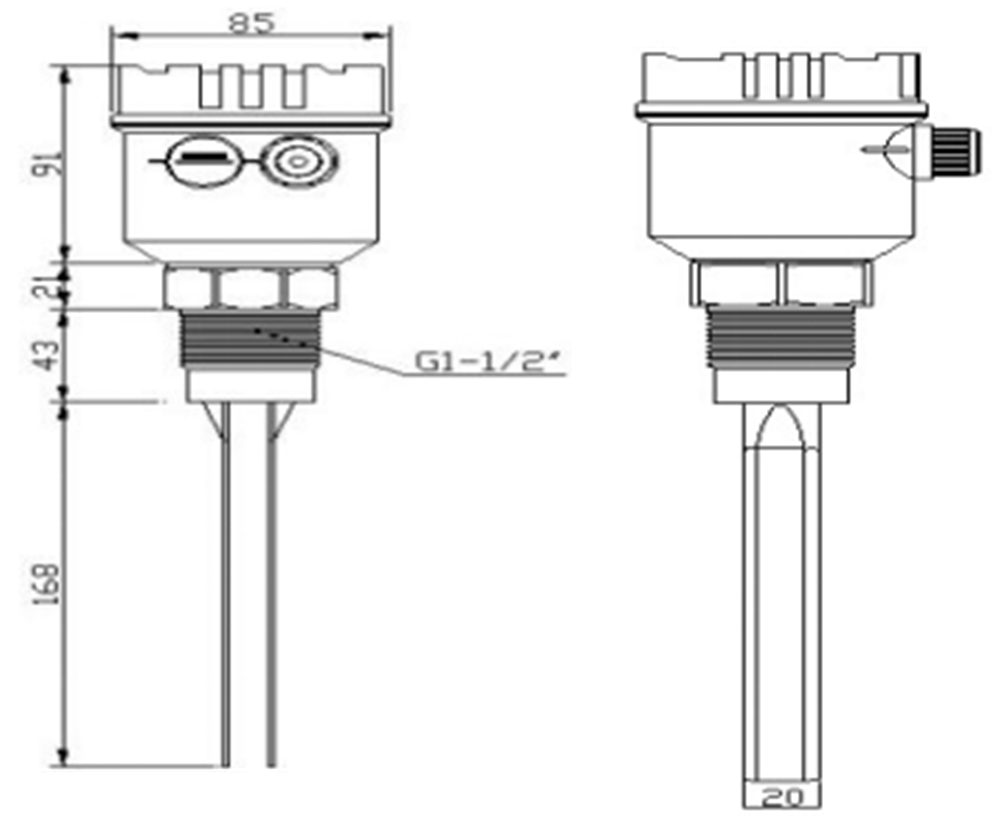
Dimensions
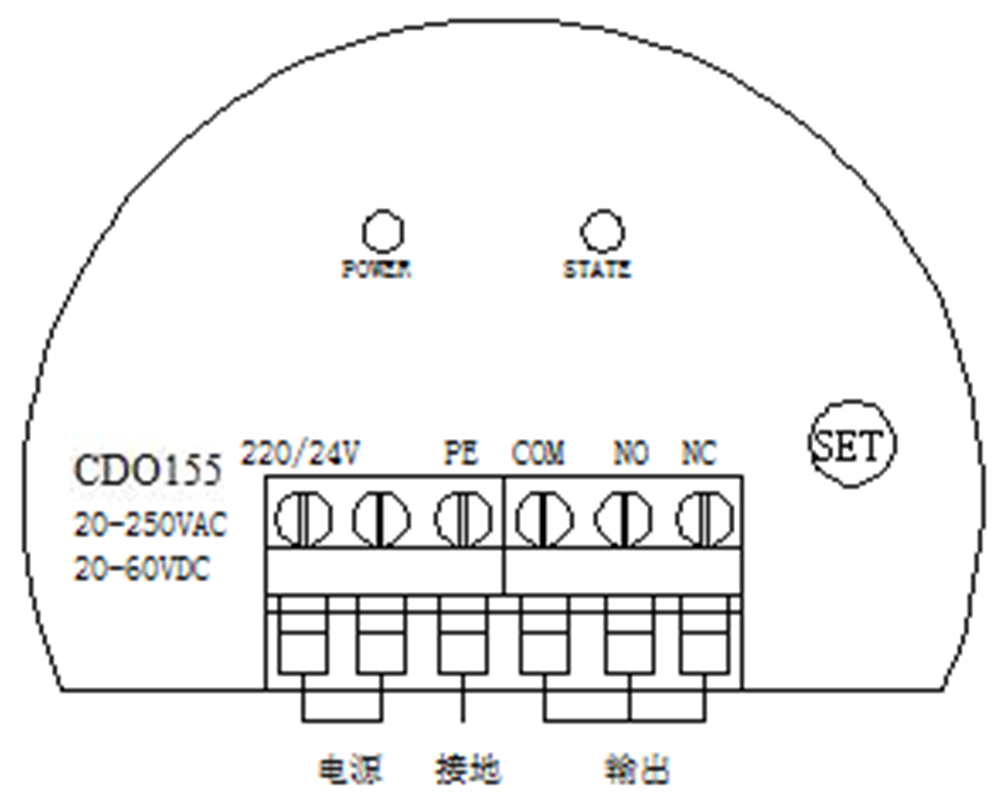
Wiring Terminal
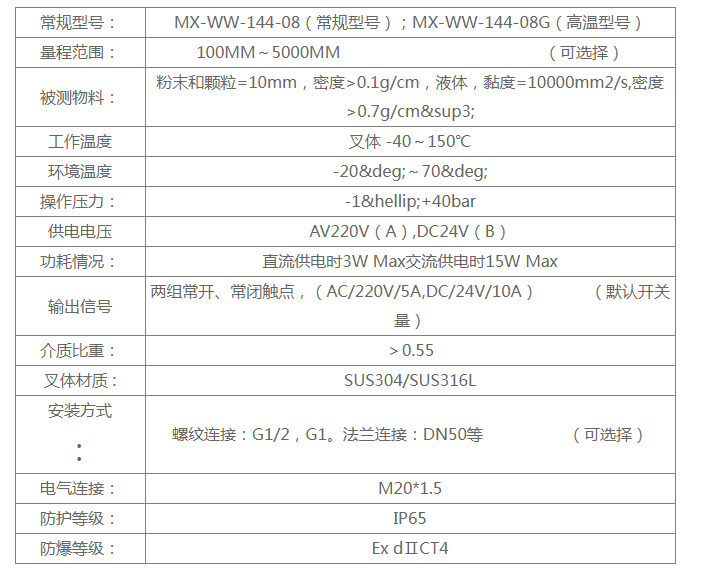
Technical Specifications
Ordering Guide

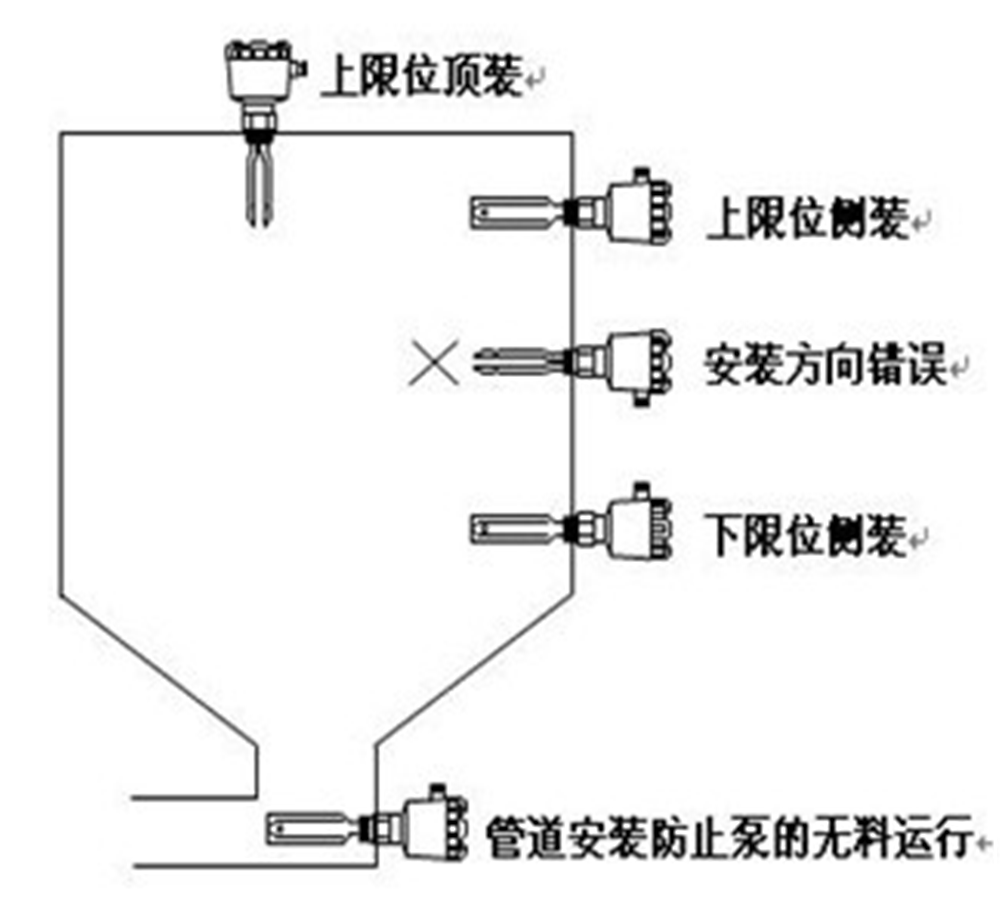
Proper Installation:
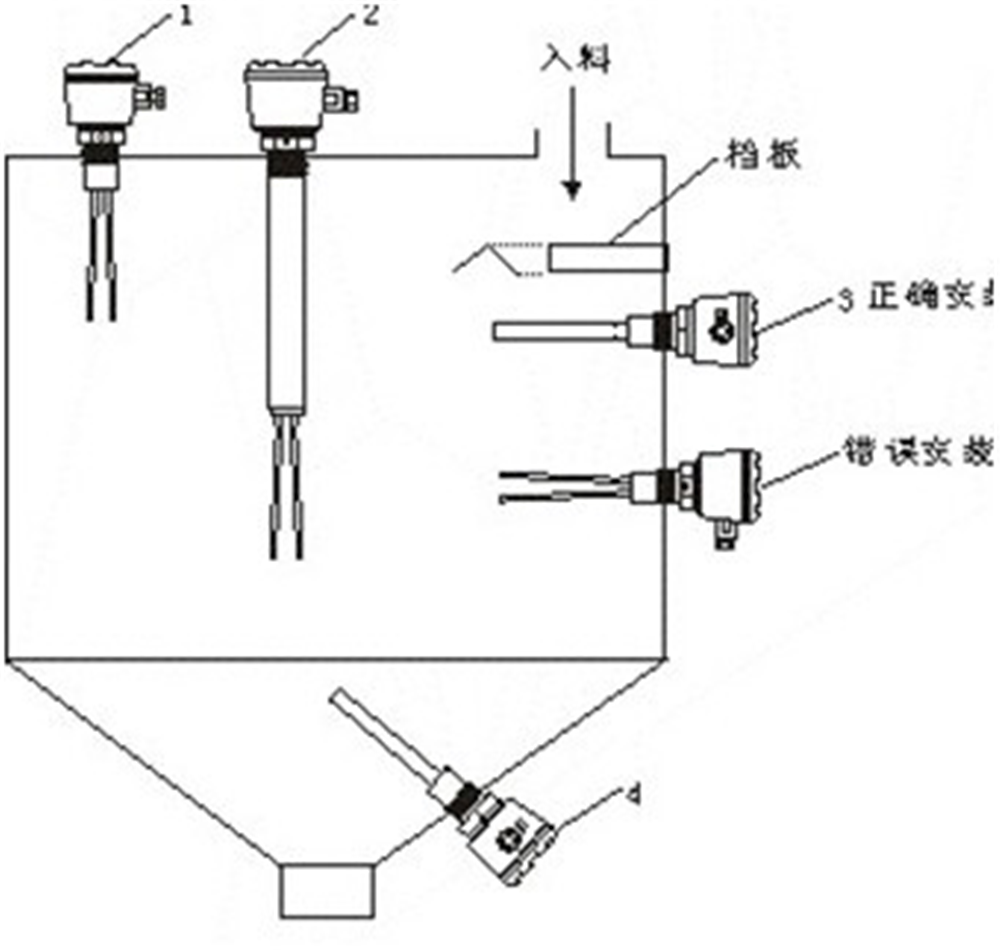
Top-mounted installation, the vibration rod is vertically downward, and can be installed at any position on the top (away from the feed opening).
Install horizontally; incline the vibration rod 15-20 degrees downward to minimize material impact and adherence.
C-Transverse installation, vibrator inclined downward at 15-20 degrees, with a baffle above the material level switch (approximately 10" (250mm) in length, 8" (200mm) in width). This baffle can prevent improper accumulation of material (d) around the material level switch and reduce the impact of material on the switch.
The installation is inside the hopper, ensuring the distance between the bottom of the level switch thread and the bucket wall does not exceed 2.4 inches (60mm), which prevents false alarms due to improper material accumulation.
During side installation, the installation marks must be oriented vertically upwards or downwards, with the probe head tilted downwards by approximately 15 degrees. During pipe installation, the direction marks must align with the direction of the pipe.