


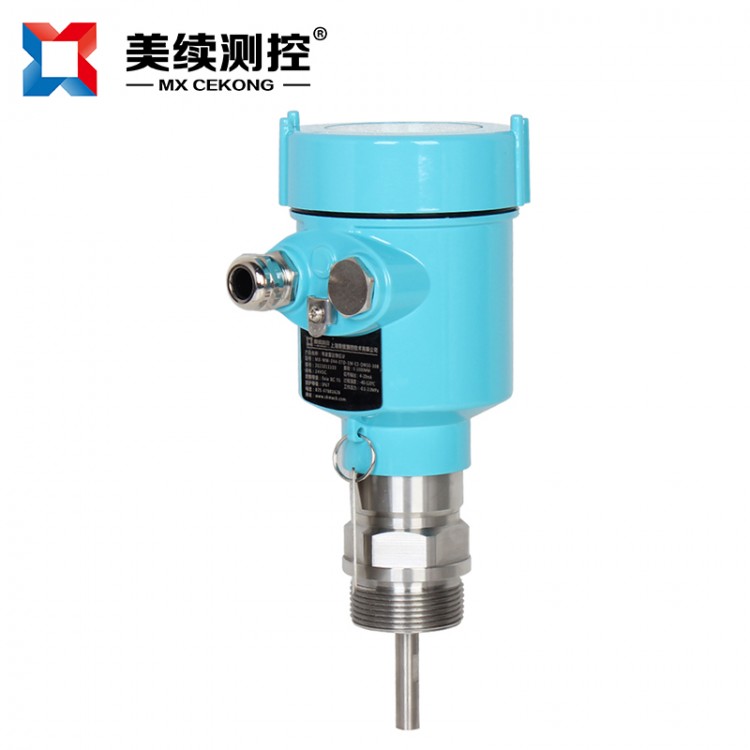
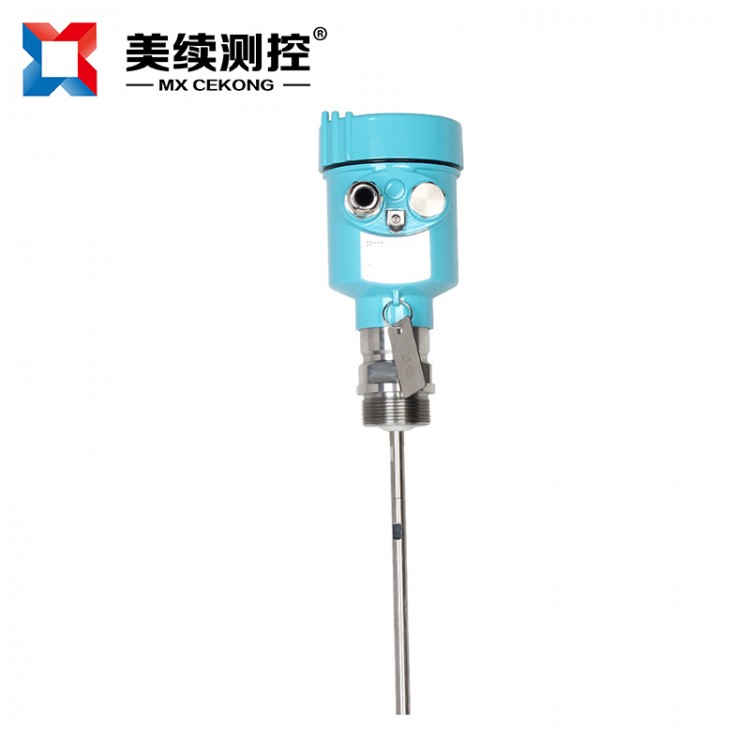
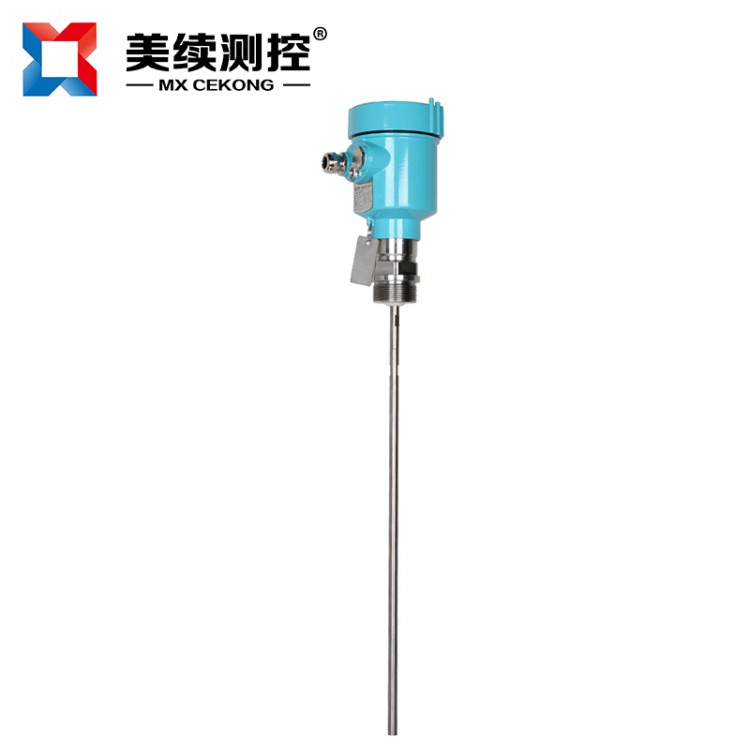
Radar Level Gauges (High and Low Frequency) MX-WW-144-04: The radar level gauge antenna emits a narrow microwave pulse, which is transmitted downwards through the antenna. This pulse travels at the speed of light in space and, upon encountering the surface of the medium being measured, part of its energy is reflected back, received by the same antenna. The time interval between the transmitted and received pulses is proportional to the distance from the antenna to the surface of the medium being measured. Due to the high speed of propagation of electromagnetic waves, the time interval between the transmitted and received pulses is very small (nanosecond scale) and difficult to confirm. The 26G series radar level gauge employs a special correlation demodulation technique that can accurately identify the time interval between the transmitted and received pulses, thereby further calculating the distance from the antenna to the surface of the medium being measured.
Utilizing advanced microprocessors and the unique EchoDiscovery echo processing technology, the radar level gauge is suitable for various complex operating conditions. Operating in a pulse mode, the radar level gauge has low emission power, can be installed in containers made of various metals and non-metals, and poses no harm to humans or the environment.
Widely used in pulp, adhesives, dyes, slurry, alkali solutions, acid solutions, beer, beverages, petrochemicals, light industry, food, water treatment, liquids that can generate gas, and free-flowing solid powders or granules. Provides upper and lower level alarm and control for material level.
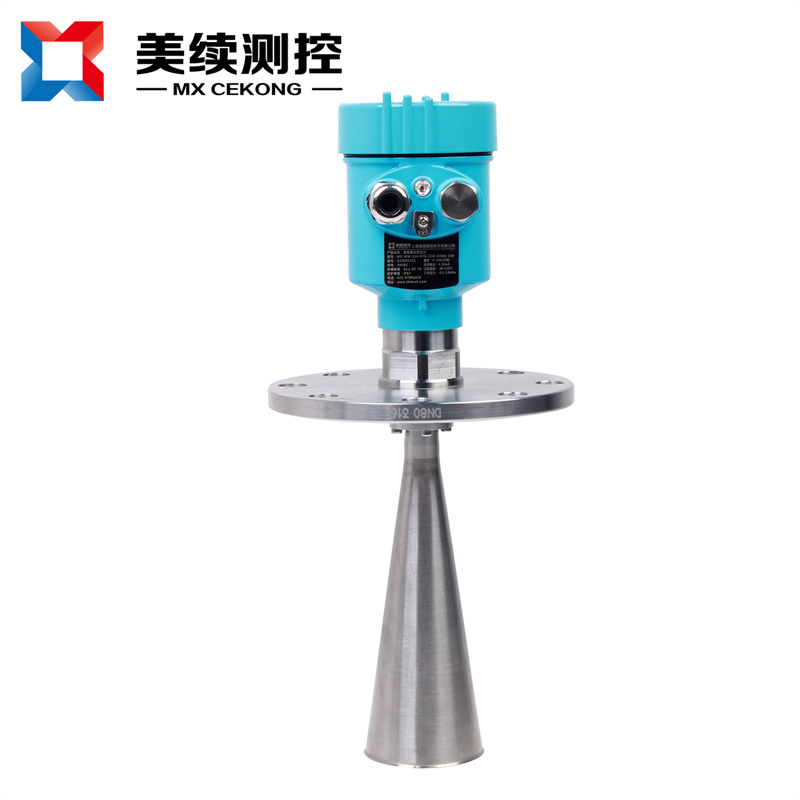
Application Fields
?Height of material inside all drums
Petroleum, environmental protection, petrochemicals
Hydraulic and Pneumatic Control Systems
Food Industry
Automatic Control and Detection System
Liquid Filling, Wastewater Ponds.
Product Features
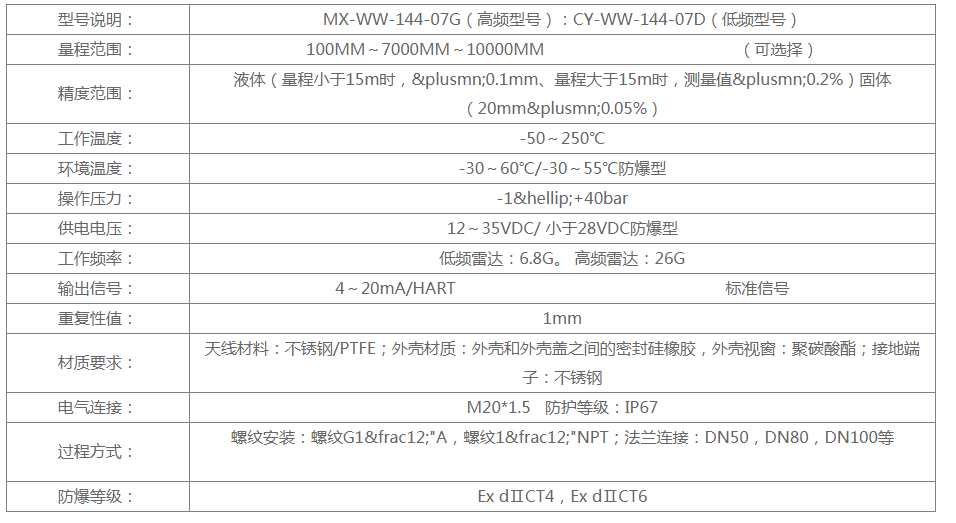
The radar level gauge utilizes a transmission frequency as high as 26GHz, thereby featuring the following characteristics:
Beam angle is small, energy is concentrated, with stronger anti-interference capability, greatly enhancing measurement accuracy and reliability.
The antenna has a compact size, making it easy to install and add dust covers and other antenna protective devices.
?Smaller measurement blind spot, also effective for measuring small containers.
Continuous and accurate measurement under harsh conditions.
Simple operation, easy debugging. Accurate, safe, and energy-efficient.
No maintenance required and strong reliability.
Almost measures all media: particles, small oil storage tanks. Various conductive, non-conductive, and corrosive media. Such as coal silos, ash silos, oil tanks, acid tanks, etc.
Installation Requirements
When an antenna emits microwave pulses, it has a certain beamwidth. Within the area radiated by the microwave beam from the bottom edge of the antenna to the surface of the medium being measured,
No obstructions are allowed. Therefore, during installation, it is recommended to avoid facilities inside the tank as much as possible, such as: ladders, limit switches, heating equipment, brackets, etc. If necessary,
Must undergo "False Echo Learning." Additionally, attention must be paid to ensure that the microwave beam does not intersect with the material feed stream. When installing instruments, note also:
High level should not enter the measurement blind area: The instrument must maintain a certain distance from the tank wall; the installation should be as close as possible to make the antenna's transmission direction perpendicular to the surface of the medium being measured. Instruments installed in explosion-proof areas must comply with national regulations for installation in explosion-proof hazardous areas. The外壳 of explosion-proof instruments is made of die-cast aluminum. Explosion-proof instruments can be installed in environments requiring explosion-proof, and the instrument must be grounded.
Technical Specifications
Ordering Guide

