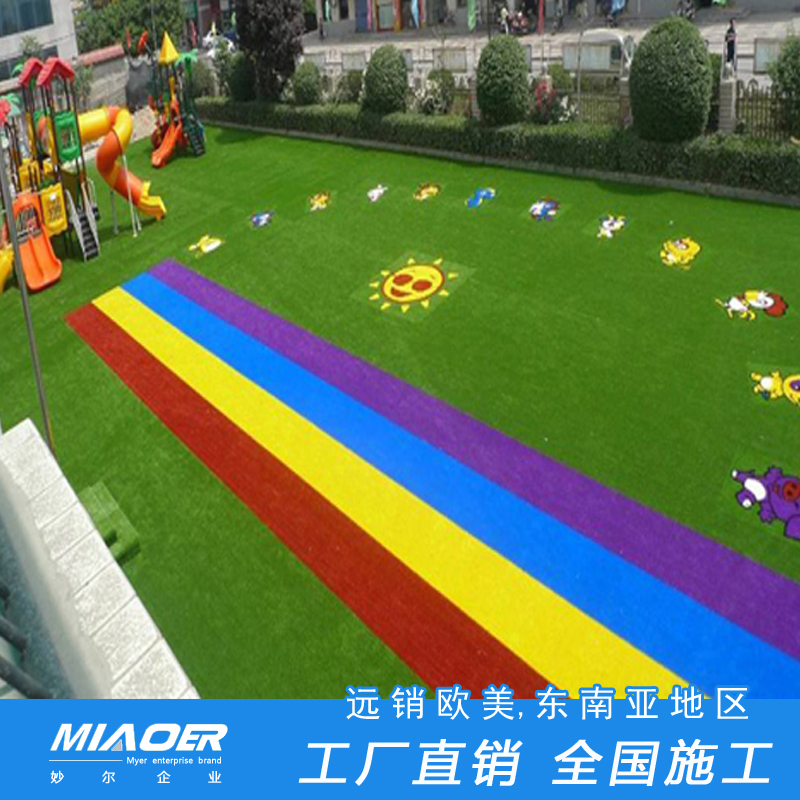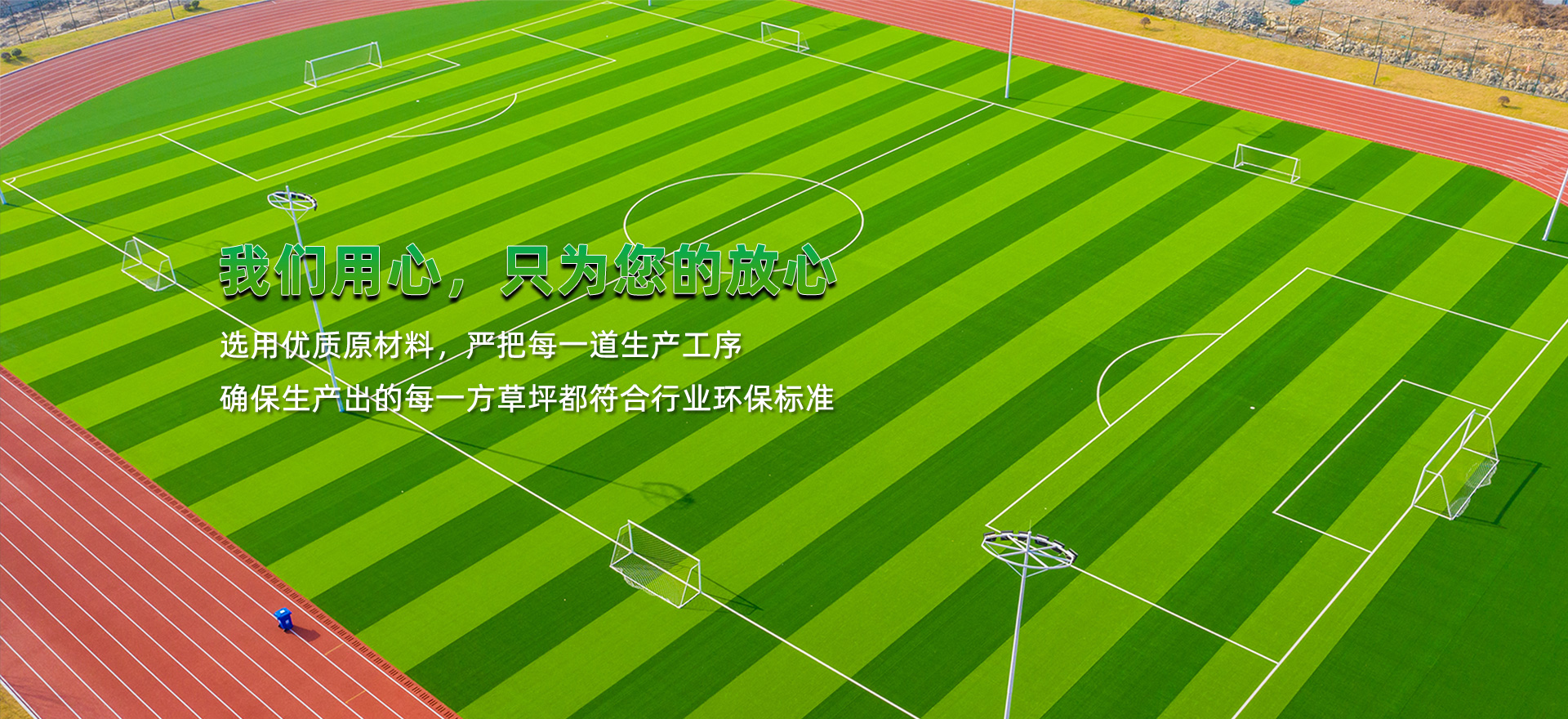

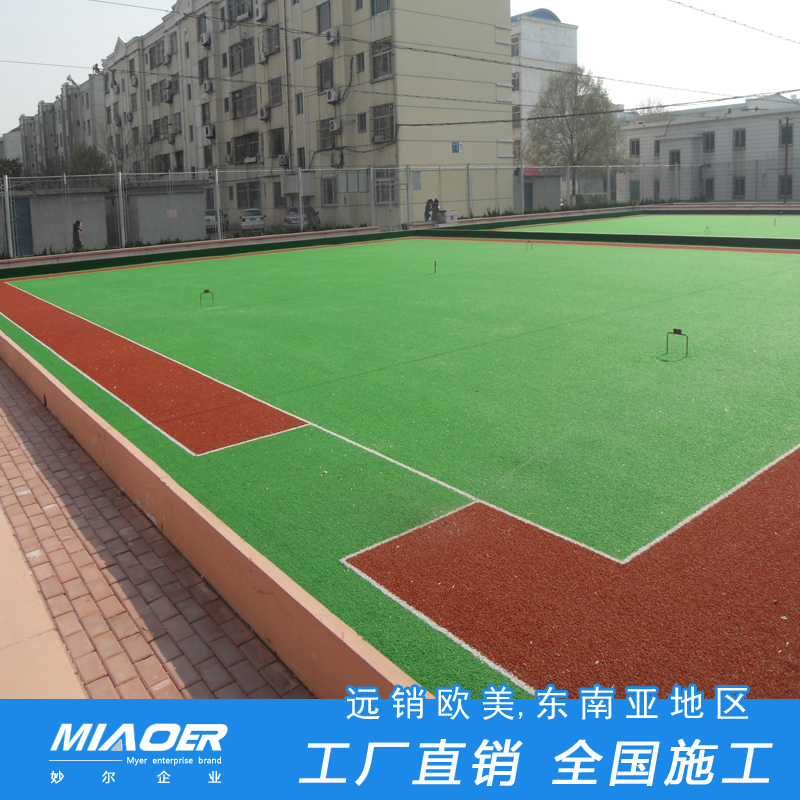
 Material Structure
The artificial turf is composed of three layers. The base layer consists of a compacted soil layer, a gravel layer, and an asphalt or concrete layer. The base layer must be firm, non-deformable, smooth, and waterproof, akin to a general concrete surface. Due to the large area of the hockey field, the base layer must be properly handled during construction to prevent sinking. If a concrete layer is laid, expansion joints must be cut after the concrete has cured to prevent deformation and cracking due to thermal expansion.
Above the base layer is a cushioning layer, typically made of rubber or foam plastic. The rubber has moderate elasticity, with a thickness of 3~5mm. Foam plastic is more cost-effective, but has less elasticity, with a thickness of 5~10mm. Too thick, the lawn becomes overly soft and prone to indentation; too thin, it lacks elasticity and fails to provide cushioning. The cushioning layer must be firmly adhered to the base layer, usually using white glue or a multi-purpose adhesive.
The third layer, the surface layer, is the turf layer. This includes various surfaces such as velvety grass turf, circular curled nylon turf, leaf-shaped polypropylene fiber turf, and permeable turf woven from nylon yarn. This layer must also be bonded to rubber or foam plastic with rubber cement. During installation, it must be coated with adhesive all at once and pressed down in sequence, ensuring no wrinkles or folds.
Overseas, there are two common types of turf layers: 1. The turf layer's leafy fibers are thin, only 1.2~1.5mm; 2. The turf fibers are thicker, ranging from 20~24mm, with quartz filling nearly up to the top of the fibers.
Miaorui Enterprises is a professional sports facility construction company that integrates research and development, production, sales, and engineering construction of sports ground materials. Specializing in the construction of artificial turf basketball courts, basketball court flooring, basketball court construction, renovation, design, and construction, the company boasts years of experience in sports venues and professional contracting qualifications for sports ground engineering. Artificial grass production company with advanced production technology.
Advantages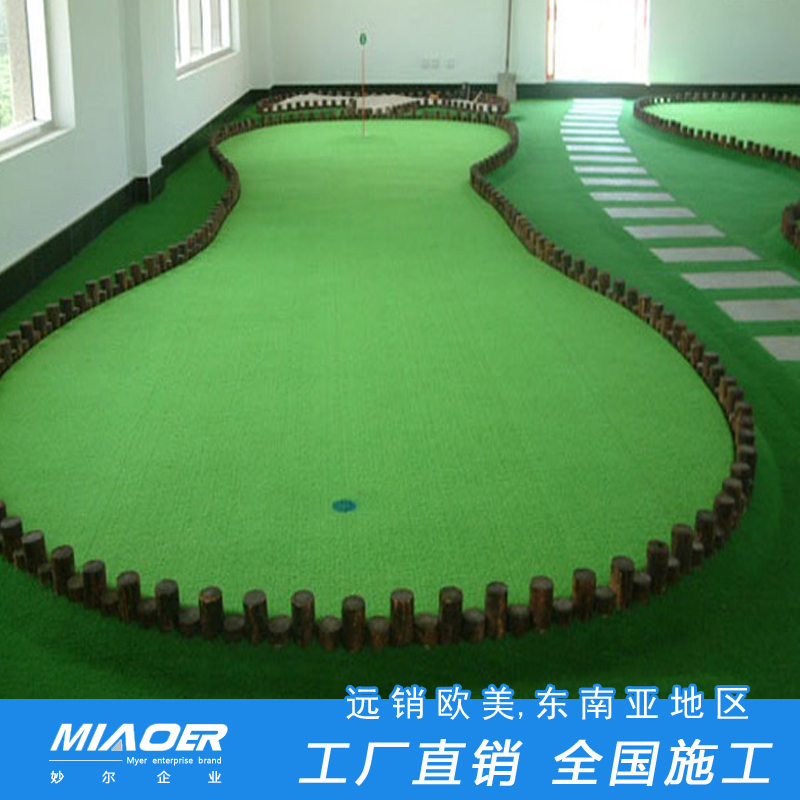 Synthetic lawns offer vibrant appearance, year-round greenery, vividness, excellent drainage, long lifespan, and low maintenance costs.
The quality requirements for artificial turf sports systems primarily focus on three aspects: hardness, flatness, and drainage slope.
Three common types of artificial grass foundations are asphalt, concrete, and gravel. The choice of type is primarily determined by local climate, budget, and time constraints. Asphalt foundations are particularly suitable for climates with significant temperature differences and low winter temperatures in the north. However, due to their high cost, they are not the most suitable for warm and humid environments. Gravel foundations are more common in the south due to their ease of construction, low cost, and rapid drainage. However, their lack of rigidity and stability can lead to foundation loosening over time, resulting in uneven surfaces. Therefore, in most areas of China, concrete and cement foundations have become the most economical and practical artificial grass foundation type, offering high value for money. Based on our extensive experience with artificial grass systems, Double Harmony Sports provides a brief introduction to concrete and cement artificial grass foundations:
The base surface flatness requirements are high to ensure consistent thickness and even elasticity of the artificial grass layer. The pass rate for flatness exceeds 95%.
5-meter ruler with a 3MM error, slope: lateral 8‰, vertical 5‰, semi-circular area 5‰, surface should be flat, smooth, and ensure drainage.
2. The foundation should possess adequate strength and stability.
Miaoer Enterprise boasts a team of experienced and highly-qualified professionals, offering comprehensive engineering services including planning, design, construction, maintenance, and renovation. Specializing in the construction of rubber track projects, rubber playground surfacing, renovation of rubber tracks, school rubber track construction, kindergarten rubber track design and construction, we are a low-cost, high-quality provider of sports facility installations. The surface is even and solid, free of cracks and rough edges, with straight and smooth joints, ideally cut into blocks of approximately 6,000mm x 6,000mm.
4. The subgrade has been compacted to a density greater than 95%, showing no significant wheel marks, no floating soil, and no undulations after being pressed by a medium-sized roller.
5. The cement foundation must have a waterproofing layer. The waterproofing layer should be made of new thickened PVC waterproofing film, with the junction area being greater than 300mm and the edge allowance being greater than 150mm.
6. Consider leaving expansion joints with a width of 5 millimeters.
7. The basic maintenance period is 2-3 weeks.