

The lawn boat fuel tank not only stores oil but also serves as a radiator, separating air bubbles from the oil, and settling impurities in the hydraulic system. The tank is equipped with many accessories, such as coolers, heaters, air filters, and level gauges.
The lawn boat fuel tank can be divided into two types: open and closed. An open tank allows the liquid level to be in communication with the atmosphere, equipped with an air filter on the tank lid. Open tanks have a simple structure, are easy to install and maintain, and are commonly used in hydraulic systems. Closed tanks are generally used for pressure tanks, filled with a certain pressure of inert gas, up to 0.05 MPa. Depending on the shape of the tank, they can also be categorized as rectangular tanks and cylindrical tanks. Rectangular tanks are easy to manufacture, and it's convenient to place hydraulic components on them, so they are widely adopted; cylindrical tanks, however, are stronger, lighter, and easier to clean, though more difficult to manufacture and take up more space, making them often used in large metallurgical equipment.
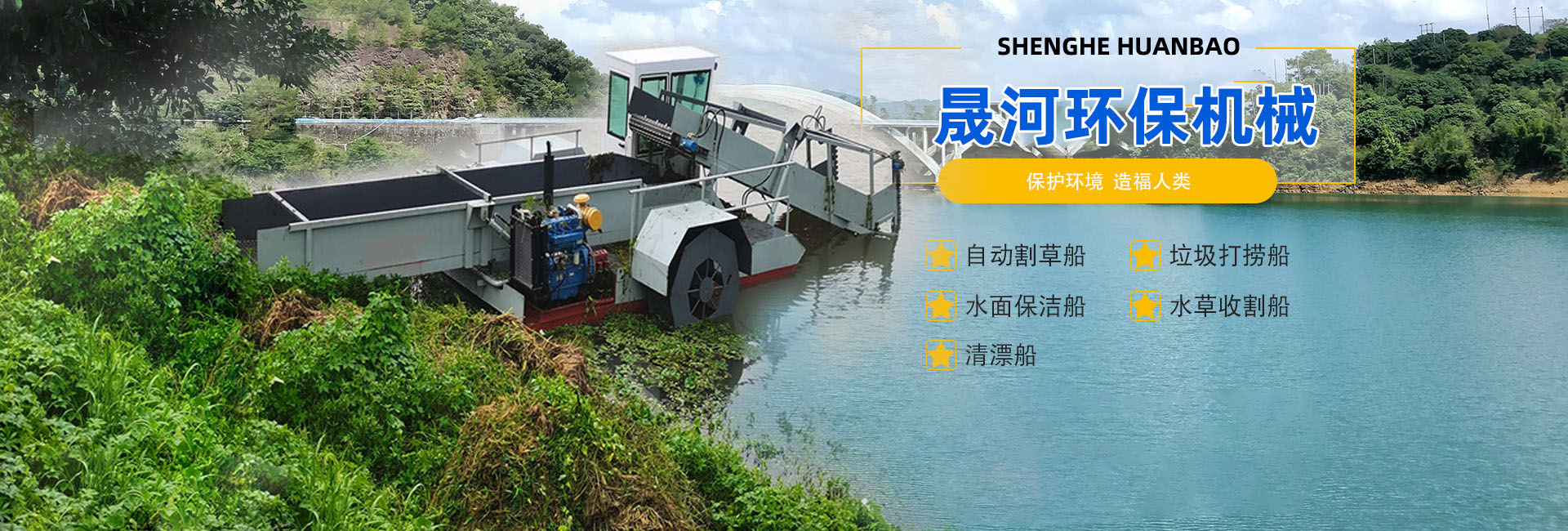
Mowing boats have become an indispensable piece of equipment in industries such as infrastructure, thanks to their superior productivity over traditional mowing technology. The product has received high praise from numerous customers, securing a favorable sales position. With its low operating and maintenance costs and good economic returns, the product must be stabilized after all machinery is stopped to avoid severe vibrations when encountering large rocks or clay layers. The new mowing boats can also process larger materials, standing out in the mowing boat market. The mowing boat has become a worldwide weed removal device and holds a significant position in the construction materials industry.
The waterways suitable for cutter-suction dredgers are diverse, including rivers or lakes. The typical engineering types suitable for ultra-large cutter-suction dredgers differ from those for standard cutter-suction dredgers. In most cases, these vessels are used for relatively small projects worldwide, such as nearshore pipeline sections, marine outfall pipes, port construction, and various special marine engineering projects. Some long-term projects that can be anticipated in the future include the expansion of the Panama Canal or other canals, as well as the laying of long-distance pipeline sections.
