


- AllProduct Category
-
General Instrument Consumables & Inspection Services
Solar Energy/Semiconductors
Surface Analysis
Element Analysis


详情描述
Atomic Force Microscope Probe (AFM Probe)It is one of the crucial accessories and consumables for Atomic Force Microscopy (AFM) equipment. Our company offers a variety of Brook AFM probes in different styles and models, catering to a range of AFM solutions across various application fields.
In the experiment, the data obtained by the user typically depends on the probe's quality and reproducibility. Bruker's probes feature strict nanofabrication control and quality testing, with a professional background in the AFM field. Not only can they provide test results for current applications, but they can also offer reference data for future research.
Currently, the Brook Atomic Force Microscope (AFM) is widely used in nanotechnology development across various fields such as life sciences, materials science, semiconductors, and electrochemistry. With its extensive applications, the variety of probes offered is also growing. To assist customers in conveniently selecting the appropriate probe model for their measurement needs, refer to the following probe selection guide for a quicker identification of the most suitable probe type.
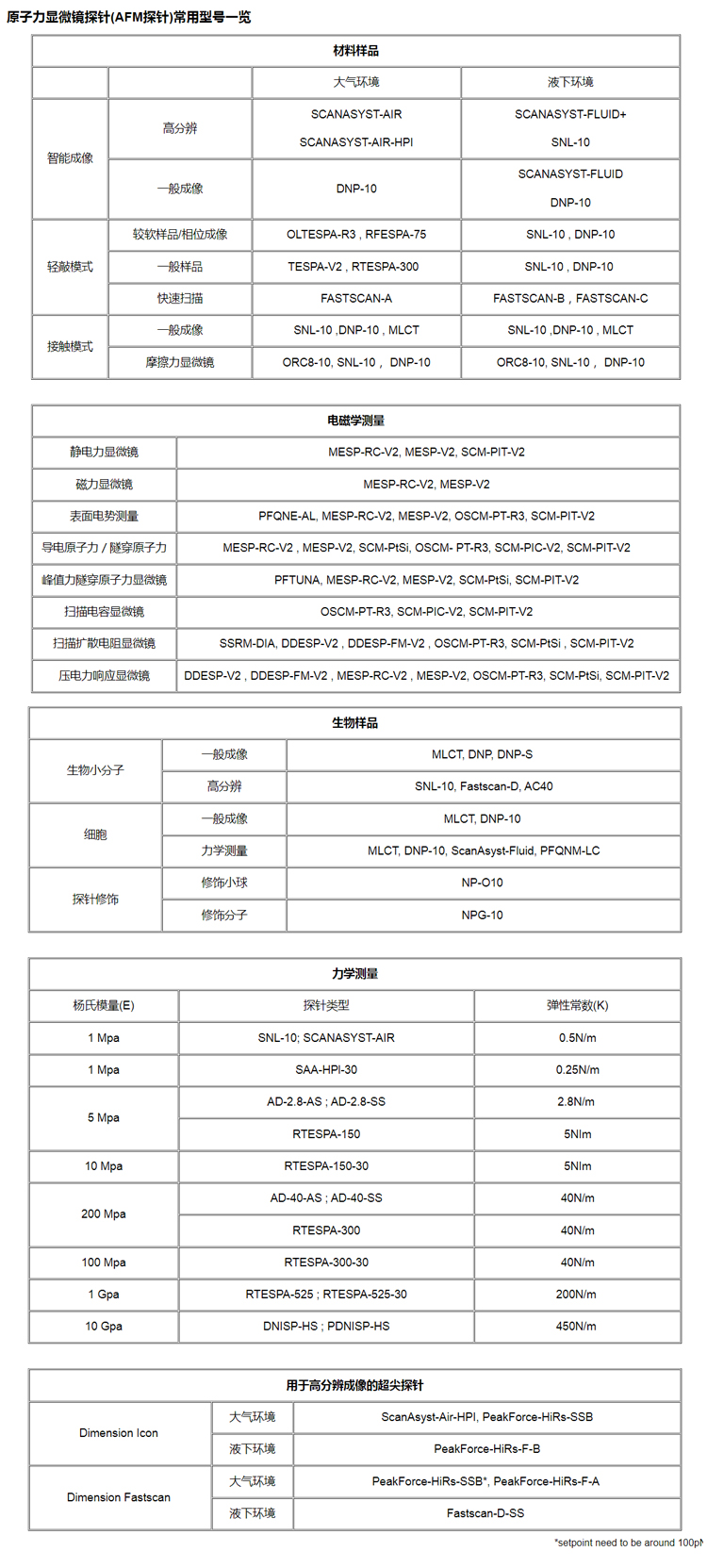
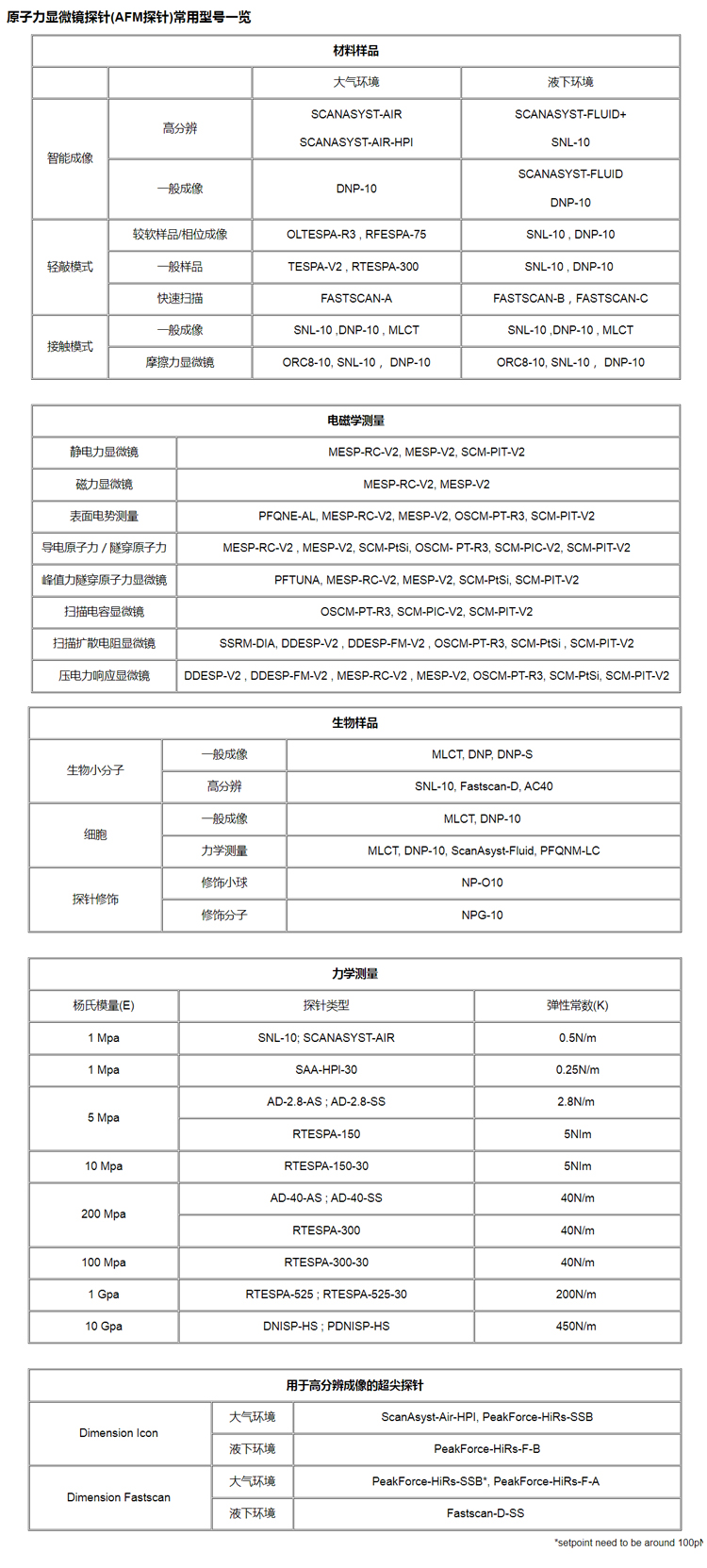
Probe Selection Guide
I. Introduction to AFM Probes
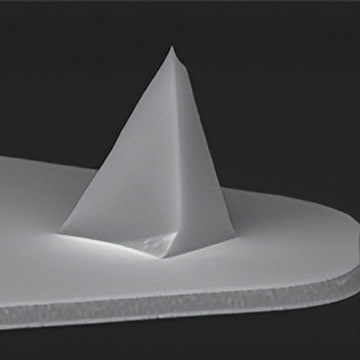
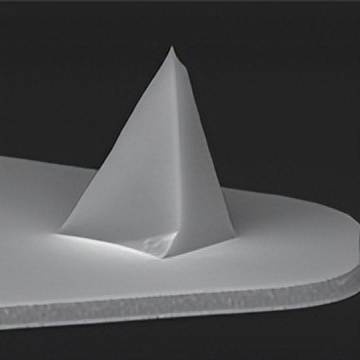
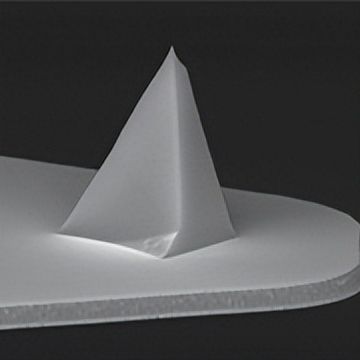
Each probe consists of three parts: the tip (needle point), the cantilever, and the substrate.
Most materials are silicon or silicon nitride.
Common shapes for cantilever beams include: rectangular, triangular, and special.
1) The main parameters of the cantilever include: spring constant, resonance frequency, cantilever length (width, thickness, etc.), cantilever shape, coating of the cantilever, cantilever material, and the number of cantilever beams.
2) Key parameters of the needle tip include: tip radius, tip geometry, tip coating, and tip height.
3) Different probes have specific applications. Therefore, we have categorized the probes based on suitable sample types, compatible AFM models (including non-Bruker AFM models), suitable work modes, and suitable applications. You can perform corresponding filtering and searches using the selection bar on the left side of the probe.
How to Select AFM Probes:
1) Confirm the item to be tested
High polymers, inorganic substances, cells...
2) Confirm AFM Application Mode
Appearance, electrical properties, submersible imaging, force curves............
3) Confirm scan accuracy
Selecting the appropriate probe tip in 1nm, 2nm, 7nm, 10nm, etc.?
4) Confirm resonant frequency and elasticity coefficient
Subject to scanning speed, operating mode, hardness/softness of the item to be tested, etc.
Note: The website currently displays a selection of common probe series and models. Additional Bruker (Bruker) probe models such as PFQNM-LC and PEAKFORCE SECM are not showcased. For a quotation or specific parameters, please contact our company. Contact information is available above in "Contact Us."
III. Below is a brief description for most probe series:
Description of the A, AW, W; -HM, -HR, -LM symbols behind different series probes: as follows:
1) AD series probes, diamond-coated conductive silicon probe, 5 pieces per box. Different models available depending on frequency and curvature radius.
2) CDP and CDR series, EBD-CD probes, mainly used for insight (fully automatic atomic force microscope) models.
3) CLFC Series Probes, Tipless
• CLFC-NOBO and CLFC-NOMB probes for calibration, utilizing their known cantilever Kref (spring constant) values to calibrate the unknown probe's cantilever K value.
• The elastic coefficient of the arm to be calibrated should generally be around 0.3 Kref.
4) CONTV Series Probes
• -A indicates a pack of 10 needles, with an aluminum coating on the back of the arm
• -AW indicates a wafer with approximately 300-400 pins, and the back of the cantilever is coated with aluminum.
• -W indicates a wafer, but the back of the cantilever is uncoated (no coating)
• Wrote CONTV only, indicating a pack of 10 needles, but the arm back is uncoated (no coating).
• - PT indicates that the cantilever front (including the tip) is plated with Ptlr, conductive
5) DDESP series and DDLTESP-V2, DDRFESP40 probes, conductive, with conductive diamond-coated tip
6) DNISP series and PDNISP, MDNISP-HS, NICT-MAP probes, all featuring handcrafted natural diamond nanoindentation tips, are suitable for nanoindentation testing.
7) DNP series probes, each model features a gold-plated coating on the back of the cantilever
• -10 indicates a pack of 10 needles with a nominal curvature radius of 20nm
• DNP followed by no numbers indicates a single wafer per box, containing approximately 300-400 needles, with a nominal curvature radius of 20nm.
• -S10 indicates a pack of 10 needles with a nominal curvature radius of 10nm.
• DNP-S followed by no number indicates a single wafer per box, with approximately 300-400 pins, and the nominal radius of curvature is 10nm.
8) ESP Series Probes
• ESP followed by an "A" indicates a pack of 10 needles, with the arm back coated in aluminum.
• ESP followed by AW indicates a wafer, featuring approximately 300-400 pins, with an aluminum coating on the cantilevered back side.
• ESP with W indicates a wafer, but the backside of the cantilever is uncoated (no coating)
• Simply wrote ESP, indicating a pack of 10 needles, but the arm back is uncoated (no coating)
9) Fastscan series probes, specifically designed for use with the Dimension FASTSCAN AFM model
10) FESP Series Probes
• FESP with "A" indicates a pack of 10 needles, with the arm backside having aluminum coating.
• FESP with AW indicates a wafer, featuring approximately 300-400 pins, and the cantilever backside is coated with aluminum.
• FESP with a W indicates a wafer, but the backside of the cantilever is uncoated (no coating).
• FESP only, indicating a pack of 10 needles, but the arm back is uncoated (no coating)
11) FIB Series Probes
• -A is a box of 5 with an aluminum coating on the arm back; otherwise, it's a box of 5 without any coating (nocoating) on the arm back.
• Different AFM models correspond to different types of FIB probes; please check the AFM probe filter for specifics.
12) FMV Series Probes
• -A indicates a pack of 10 needles with an Al coating on the arm back
• -AW indicates a wafer with approximately 300-400 pins, and the back of the cantilever is coated with aluminum.
• -W indicates a wafer, but the backside of the cantilever is uncoated (no coating)
• Listed as FMV only, indicating a box of 10 pins, but the arm backside is uncoated (no coating)
- PT indicates that the cantilever front (including the tip) is plated with Ptlr, conductive.
13) HAR Series Probes
• -A-10 indicates a pack of 10 needles with an aluminum coating on the back of the arm.
14) HMX Series Probes
• -10 indicates a box of 10 needles, with an aluminum coating on the back of the cantilever
• -W indicates a wafer with an aluminum coating on the backside of the cantilever
15) LTESP Series Probes
• -A indicates a pack of 10 needles, with an aluminum coating on the back of the cantilever
• -AW indicates a wafer with approximately 300-400 pins, and the cantilever backside is coated with aluminum.
• -W indicates a wafer without coating on the backside of the cantilever.
• Simply wrote LTESP, indicating a pack of 10 pins, but the cantilever backside is uncoated (no coating)
16) MESP series probes, conductive, with Magnetic CoCr conductive coating on the cantilever front (including the tip)
• -HM indicates High Moment
• -HR stands for high-resolution, high-moment
• -LM indicates low moment
17) MLCT Series
• The -bio and -bio-DC probes are optimized for biological samples. They have a different tip shape and height compared to MLCT, and the -bio-DC features thermal drift compensation. Therefore, these probes can be considered for measuring biological samples during cell culture and temperature variations.
• The coating of MLCT-FB is thicker than that of MLCT, with all other aspects being identical to MLCT.
• -O indicates no tip.
• -UC indicates no coating. Tip radius is 20nm.
18) MSCT Series Probes
• MSCT-MT-A features a single cantilever, compatible only with innova.
• -UC indicates no coating. The MSCT series has a smaller tip radius (10nm) compared to the MLCT series.
19) The MSNL series features a smaller needle tip radius compared to the MSCT and MLCT series, at just 2nm.
20) Probes for MLCT, MSCT, and MSNL series, all coated ones are reflection gold.
21) The NCHV series, while similar in parameters to the rtesp-300, is a cost-effective probe suitable for qualitative analysis only and not for QNM purposes.
22) The NCLV series probes are also cost-effective probes.
23) NP Series Probes
• -10UC indicates a pack of 10 units, with the arm backside uncoated
• -W-UC indicates one wafer per box, with the cantilever backside uncoated.
• NP followed by "G" indicates that both the front and back of the cantilever have a Gold plating; NPG means one wafer per box, approximately 300-400 pieces of NPG
• -10 indicates a pack of 10 units
• -O10 indicates a pack of 10, needleless probes with a gold-plated back arm
• -OW indicates one wafer per box, with tipless probes and a gold-plated backside of the cantilever
• NPV-10 indicates a box of 10 units, with a gold-plated coating on the back of the cantilever.
24) The OBL-10 probe is non-tiltable; its cantilever angle is ±3°, and it is not compatible with the Dimension afm.
25) PEAKFORCE-HIRS series probes, with a tip radius of only 1nm, and frequencies above 100KHz, capable of high-resolution imaging.
26) PFDT series, specifically designed for measuring Holes/Trenches on Dimension icon models operating in peakforce deep trench mode.
27) PFQNE-AL Probe, Conductive, is a probe specifically optimized for peakforce KPFM mode. Due to some parameters being confidential, the parameters currently available for display are not complete.
28) The PT series is used for STM mode probes
29) RESP Series Probes
• "A" following "RESP" indicates that the back of the cantilever has an aluminum coating, and each box contains 10 pieces.
• Following "RESP," AW indicates that the arm back has an Al coating, and there is one wafer in each box, with approximately 300-400 pieces.
• Followed by " " after "RESP," it indicates that the back of the cantilever is uncoated, and there are 10 pieces in a box.
• -10 indicates the resonant frequency is 10KHz
• -20 indicates the resonance frequency is 20KHz
• -40 indicates the operating frequency is 40KHz
30) RFESP Series Probe
• RFESP followed by "A" indicates that the arm back has an Al coating, and there are 10 pieces in a box.
• RFESP followed by "AW" indicates that the arm back has an Al coating, and there is one wafer in a box, approximately 300-400 pieces.
• RFESP followed by a space indicates that the back of the cantilever is uncoated, and each box contains 10 pieces.
- -190 indicates the resonant frequency is 190KHz
• -75 indicates the resonance frequency is 75KHz
-40 indicates the operating frequency is 40KHz.
31) RMN Series Probes, Conductive
• Solid Metal probes with excellent conductivity and no film adhesion issues typically associated with coated metal silicon probes.
• Different models are available for various applications.
32) RTESP Series Probes
• RTESP followed by "A" indicates that the arm back has an Al coating and there are 10 pieces in a box.
• RTESP followed by "AW" indicates that the arm back has an Al coating, and there is one wafer in a box, approximately 300-400 pieces.
• RTESP followed by a space indicates that the back of the cantilever is uncoated, and each box contains 10 pieces.
- -150 indicates the resonant frequency is 150KHz; -150-30 refers to a pre-calibrated probe, indicating the resonant frequency is 150KHz with a curvature radius of 30nm.
- -300 indicates the resonant frequency is 300KHz; -300-30 is a pre-calibrated probe, meaning the resonant frequency is 300KHz and the curvature radius is 30nm.
- -525 indicates the operating frequency is 525KHz; -525-30 is a pre-calibrated probe, indicating a resonance frequency of 525KHz with a curvature radius of 30nm.
33) SAA-HPI Series Probes
• -30 indicates a pre-calibrated probe with a curvature radius of 30nm
• -SS indicates a super sharp probe, with a nominal curvature radius of 1nm.
Pre-calibrated probes include:
SAA-HPI-30: 0.25N/m, k certified, controlled end radius, 5 pieces per box
• RTESPA-150-30: 5N/m, k certified, controlled end radius, 1 box of 5 pcs
• RTESPA-300-30: 40N/m, k certified, controlled end radius, 5 pcs per box
• RTESPA-525-30: 200N/m, k certified, controlled end radius, 5 pcs per box
34) SCANASYST series probes
Optimized probe for SCANASYST (Intelligent Mode)
35) SCM series probes, conductive, with conductive PtIr or Conductive PtSi coating on the cantilever front (including the tip)
36) SMIM Series Probes, Conductive
37) SNL Series Probes
• -10 indicates a box of 10.
• -W indicates one wafer per box, approximately 300-400 pieces
SSRM-DIA Probe, Conductive
TESP Series Probes
• TESP followed by "A" indicates that the back of the cantilever has an aluminum coating, and there are 10 pieces in a box.
• TESP followed by "AW" indicates that the back of the arm has an aluminum coating, and there is one wafer in a box, approximately 300-400 pieces.
• TESP followed by "D" indicates DLC coated silicon probe, featuring a diamond-like carbon (DLC) coating for surface hardening, which is designed to enhance tip longevity, and each pack contains 10 pieces
• TESP followed by "DW" indicates a DLC coated silicon probe, with a surface hardened diamond-like carbon (DLC) coating, aimed at increasing the tip lifespan, and each wafer comes in a separate box.
• TESP followed by a space indicates that the arm backside is uncoated, and each box contains 10 pieces.
• -HAR indicates a probe with a high aspect ratio (HAR), which is an ideal choice for imaging in tapping mode for samples with high/ deep geometric shapes.
• -V2 indicates a high-quality, newly designed probe
- SS indicates ultra-sharp needle tip, with a nominal curvature radius of 2nm, and each pack contains 10 needles.
• -SSW indicates Extra Sharp Tip, with a nominal tip curvature radius of 2nm, and one wafer per box.
40) VITA series probes, used for thermal analysis or scanning thermal analysis. Specific models, parameters, and compatible AFM models can be found by searching on the probe website.
41) VTESP Series Probes
This is a probe with a visible apex shape, the tip at the front end of the cantilever, suitable for positioning. The OLTESPA-R3, OSCM-PT -R3 (conductive probe), and OTESPA-R3, VTESP series probes are all visible apex shaped probes with the tip at the front end of the cantilever, ideal for positioning.
• VTESP followed by "A" indicates that the back of the cantilever has an Al coating.
-300 indicates the resonance frequency is 300KHz
-70 indicates a resonance frequency of 70KHz
- -300 (or -70) followed by "-W" indicates one wafer per box.
• -300 (or -70) followed by a space indicates a box of 10 pieces


