

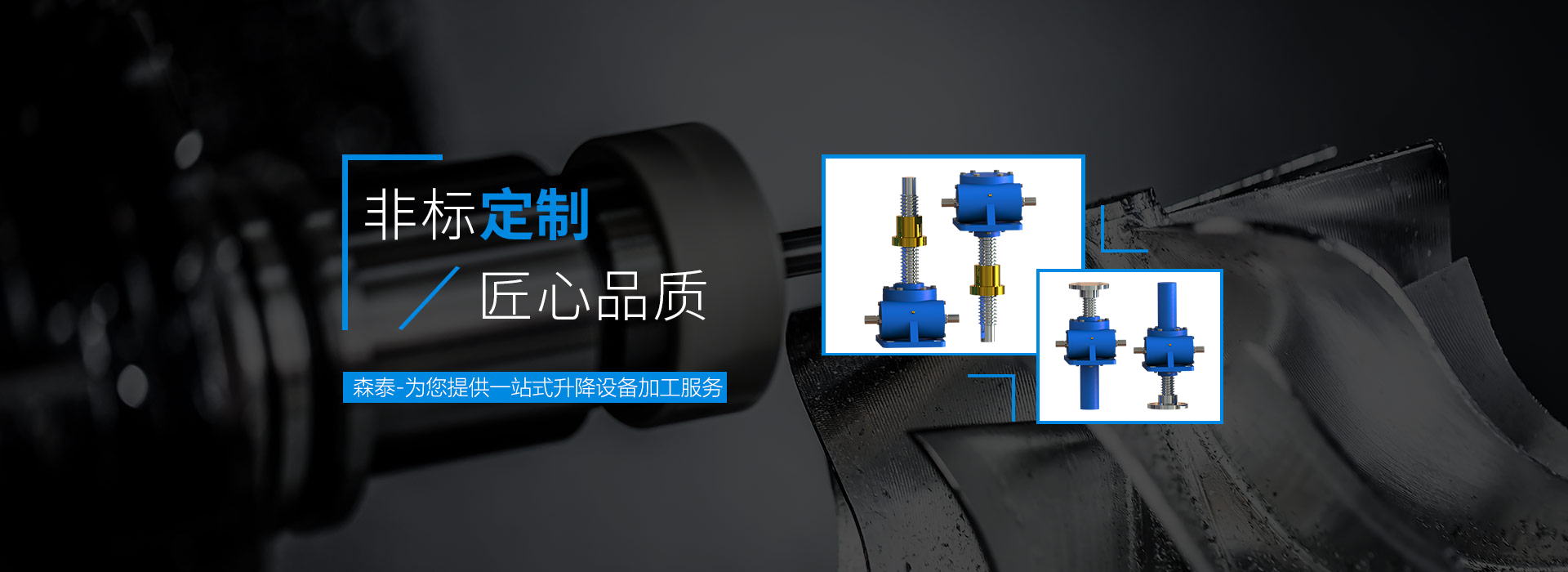
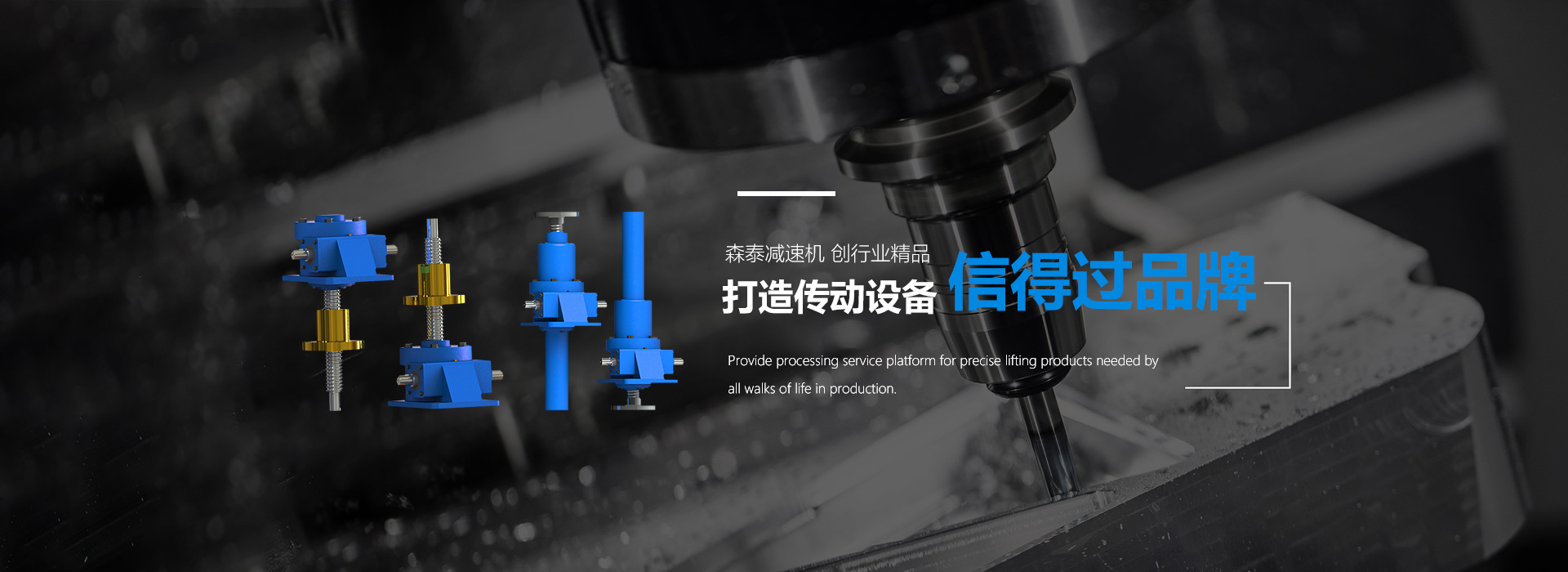

The screw jack, commonly referred to as the worm gear jack, is a fundamental lifting component with a worm gear and worm structure. It boasts a simple design, comprising elements such as worms, gears, bearings, and screw threads. During operation, the worm drives the gear, which in turn drives the screw thread, achieving reduction and amplification of thrust. The worm gear structure is quite common and often seen in various other mechanical equipment. So, what are the advantages of this structure for screw jacks?
The screw jack must have smooth transmission with no noise. Due to the continuous spiral teeth of the worm gear, it continuously engages with the worm wheel teeth without any intermittent process of entering or exiting the mesh. As a result, the operation is smooth with minimal shock, vibration, and noise.
2. The screw jack itself possesses an automatic locking feature. When the helix angle of the worm is very small, the worm can only drive the worm gear transmission, but the worm gear cannot drive the worm to rotate. This ensures the automatic locking of the screw jack.
The screw jack features a high transmission ratio while maintaining a compact structure. The worm is single-threaded, requiring the worm to turn one complete rotation for the worm wheel to turn once, thus achieving a high transmission ratio. This results in a compact worm gear drive structure, with a small size and light weight. This is the primary reason for adopting the worm and worm gear structure in screw jacks, as well as the advantages of worm gear transmission. We hope our clients understand.
The screw jack provides a new, environmentally friendly, energy-saving, and cost-effective maintenance plan for heavy-duty linear transmission. Santai Transmission, a professional provider of linear transmission solutions.
News Center Co., Ltd.
