




 通过中商114认证

Lead is a chemical element, with its chemical symbol derived from Latin, represented as Pb (from Plumbum). It has an atomic weight of 207.2 and an atomic number of 82. Lead has a relatively high atomic number among all stable chemical elements. It belongs to group IVA and has a face-centered cubic (FCC) crystal lattice.
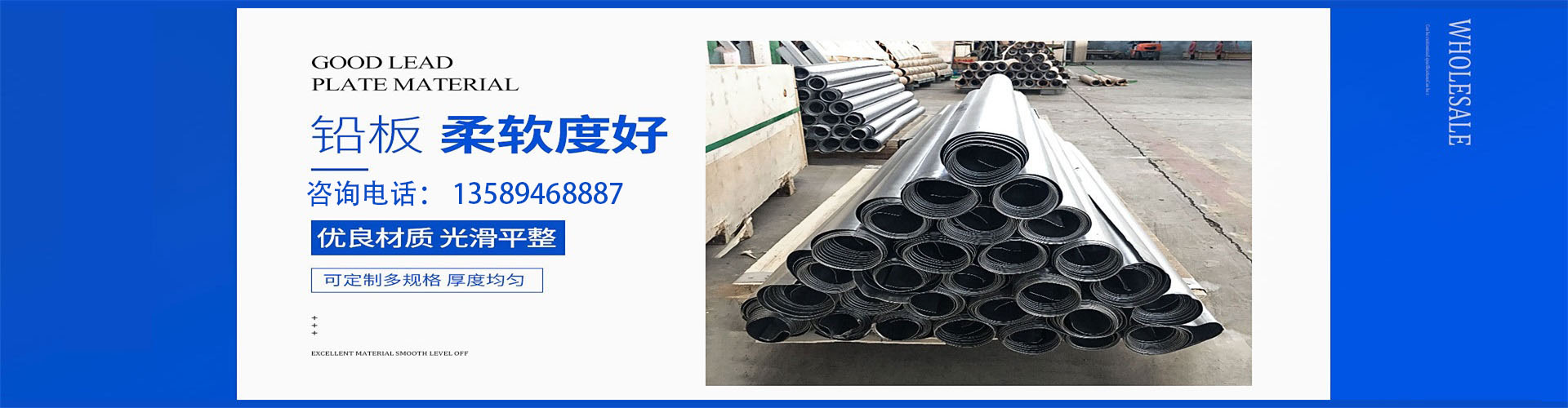
Lead is a silvery blue heavy metal with a toxic nature, classified as an extended group metal. It has a melting point of 327.502°C, a boiling point of 1740°C, a density of 11.3437 g/cm³, a specific heat capacity of 0.13 kJ/(kg·K), a hardness of 1.5, an atomic volume of 18.17 cm³/mol, soft in texture, and low tensile strength.
Lead is present in the sun at a concentration of 0.01 ppm, and in the Pacific Ocean surface, the element's concentration is 0.00001 ppm. The oxidation states are mainly Pb+2 and Pb+4.
Lead is a massive, stable element with four stable isotopes: Lead-204, Lead-206, Lead-207, and Lead-208, along with more than 20 radioactive isotopes.
Lead, when exposed to oxygen, water, and carbon dioxide in the air, quickly oxidizes on its surface to form a protective film; under heat, it readily combines with oxygen, sulfur, and halogens; lead reacts with cold hydrochloric acid and cold sulfuric acid almost not at all, but reacts with hot or concentrated hydrochloric acid and sulfuric acid; it reacts with dilute nitric acid but not with concentrated nitric acid; lead slowly dissolves in strongly alkaline solutions.
