

Product Details

Cement Mat, Geotextile, HDPE Membrane, Composite Geomembrane, Drainage Mesh, Short Fiber Geotextile, Bentonite Waterproof Mat, Eco Bags, etc.
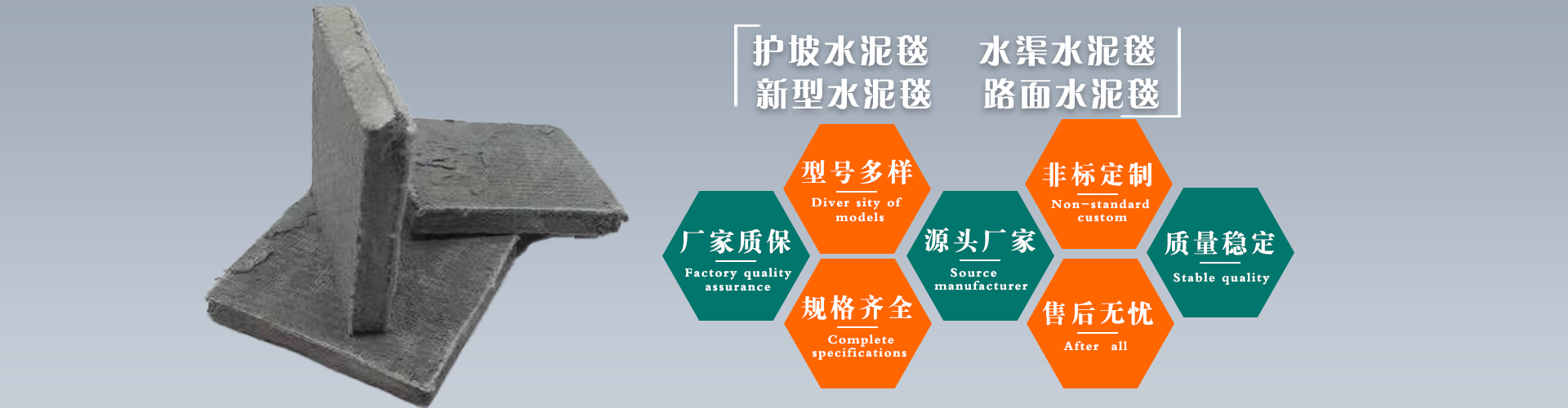

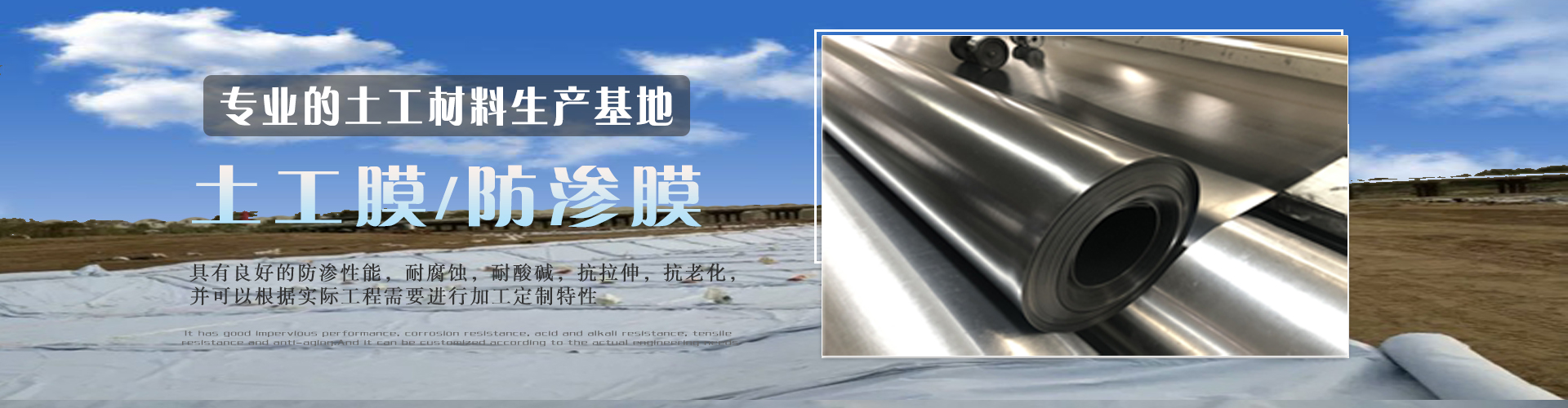


价 格¥3.00
最小起订0 square meter库存0 square meter
 Business Card
Negotiable

Negotiable

Negotiable

Negotiable
 Cement Mat
Negotiable
Cement Mat
Negotiable
 Composite geomembrane with monofi
¥3.00/square meter
Composite drainage mesh
Negotiable
Composite geomembrane with monofi
¥3.00/square meter
Composite drainage mesh
Negotiable
 High-strength specialty adhesive
Negotiable
High-strength specialty adhesive
Negotiable
 Two-bag-one-film composite geomem
Negotiable
Two-bag-one-film composite geomem
Negotiable
 Cement Mat
Negotiable
Cement Mat
Negotiable
 Cement Mat
Negotiable
Cement Mat
Negotiable
 Cement Mat
Negotiable
Cement Mat
Negotiable
 Eco-bags
Negotiable
Eco-bags
Negotiable
 High-strength specialty adhesive
Negotiable
High-strength specialty adhesive
Negotiable
Phone:18053450611
Geosynthetic clay liner is a soil engineering material used for preventing leakage in artificial lakes, landfill sites, underground garages, rooftop gardens, ponds, oil storage chemical yards, and more. It is made by filling a specially formulated composite with highly expansible sodium bentonite.GeotextileGeotextile interlayers made by needle-punching form numerous small fiber spaces, preventing the bentonite particles from flowing in one direction. When water is introduced, it creates a uniform, high-density gel-like waterproof layer within the pad, effectively preventing water leakage. Bentonite waterproof geomembranes can be categorized by production technology into: needle-punched sodium bentonite waterproof geomembranes, needle-punched and coated sodium bentonite waterproof geomembranes, and adhesive sodium bentonite waterproof geomembranes. The needle-punched and coated sodium bentonite waterproof geomembrane is a non-woven geotextile with a layer of high-density polyethylene applied to the outer surface of the needle-punched sodium bentonite waterproof geomembrane.Geotextile membrane。
Performance Features:
Compactness - Sodium-based bentonite forms a high-density diaphragm under hydraulic pressure. At a thickness of approximately 3mm, its permeability is below &×10ˉ11m/sec, equivalent to the compactness of 100 times a 30cm thick clay, and it possesses strong self-water-retaining properties.
The waterproof performance is enduring due to the inorganic nature of sodium-based bentonite, which does not undergo aging or corrosion even after a long time or changes in the surrounding environment.
Easy installation and short construction time—compared to other waterproofing materials, the installation process is relatively simple and does not require heating or bonding. Simply connect and secure using bentonite powder and nails, washers, etc. No special inspection is needed after installation, and any waterproofing defects can be easily repaired.
Unaffected by temperature - won't crack under cold weather conditions.
Integrated - Waterproof materials and objects integration: Sodium bentonite has an expansion capacity of 20-28 times when it meets water. Even if the concrete structure vibrates or settles, the bentonite within the GCL can repair cracks on the concrete surface up to 2mm in width.
—— Bentonite is an inorganic material, harmless to humans and has no particular impact on the environment, with excellent properties.
High performance-to-price ratio, with wide applications. The product range can reach up to 6 meters, significantly enhancing construction efficiency.
Application Scope and Conditions: Suitable for municipal (landfill), hydraulic, and artificial lake construction, as well as underground waterproofing and seepage prevention projects.
Operates at sub-zero temperatures (-20℃) where traditional waterproofing materials cannot be applied; can be used on damp substrates (no standing water); not suitable for construction during rainy or snowy weather; not recommended for use with strongly acidic or alkaline solutions; due to its inorganic nature, bentonite offers better durability than organic waterproofing materials.
Application:
Civil engineering (basement, green roof) waterproofing and seepage prevention
Engineering (Landfill) Liner for Leak Prevention
Hydrological Engineering (Artificial Lakes, Dams) Seepage Prevention
Product Specifications:
Unit area ≥ 4000g/m², width 4m-6m.
Bentonite Waterproof Mat Technical Standards:
Bentonite expansion coefficient (ml/2g) ≥ 24
GCL unit area quality (g/m2) ≥ 4000
GCL longitudinal tensile strength (KN/m) ≥ 6
GCL Lateral Fracture Strength (KN/m) ≥ 6
GCL longitudinal tensile elongation (%) ≥ 10
GCL lateral tensile elongation (%) ≥10
GCL vertical permeability coefficient (cm/s) ≤ 5×10^-11.
GCL peel strength (N/100mm) ≥ 40; GCL hydrostatic resistance test 0.4MPa, 1 hour, no leakage.

Phone Consultation