


 通过中商114认证
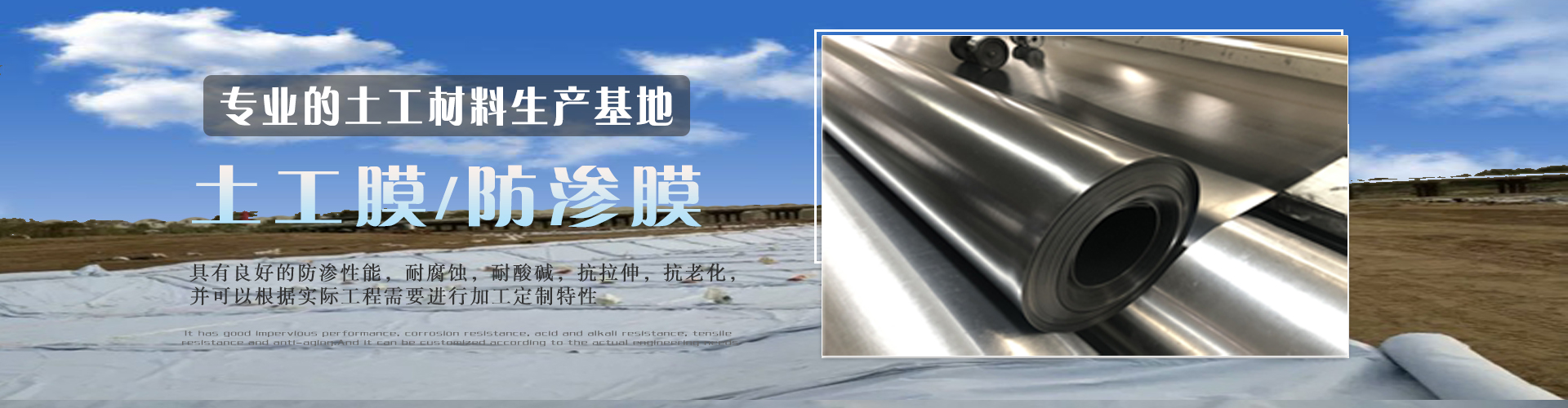
The reliability of geomembranes is particularly crucial. Extensive research efforts are being made to enhance the reliability of geomembranes, especially in reducing seam failure. The cause of seam failure is the stress concentration at the joint during the sewing of two conventional geomembranes, which leads to a decrease in tensile strength and elongation at the joint, ultimately resulting in reduced reliability. Photo-curing reactions offer an entirely different method for the production and laying of geomembranes, avoiding the seam process altogether. Moreover, the produced geomembranes exhibit excellent mechanical properties, adaptable to various ground conditions. More importantly, photo-curing reactions, based on light energy, consume only 1/5 to 1/10 of the energy required for producing conventional geomembranes. The specific research significance and prospects are as follows:
Seamless Solution: Due to manufacturing size limitations, existing geomembranes must be cut, laid, and welded on-site to cover large areas. Despite the use of advanced seam and detection technologies to ensure quality and durability, seam failures still occur frequently, accounting for 20% of all geomembrane failure modes. By utilizing a jetting method and proper application, large areas of continuous geomembrane can be achieved, eliminating the hassle and risk of seam failure.
(2) Safety and Environmental Protection: As early as the 1980s, researchers attempted to form polymer barrier layers using in-situ curing methods, such as low-viscosity resins, ethyl carbamate, phenolic, polyester fibers, and more. In these applications, catalysts were often used to initiate polymerization or cross-linking reactions to create the barrier layers. However, catalysts that activate polymerization reactions can be harmful to humans and even carcinogenic. Multiple incidents occurred in Europe, the United States, and Japan where residues from these chemical reactions leaked into the environment, contaminating water sources and soil. As a result, countries, including China, have banned or restricted the use of these methods in large-scale projects. Conversely, the raw materials and products of photo-curing reactions have been proven to be safe, causing no adverse effects on humans, animals, or the environment. This is why photo-curing reactions have gradually been adopted in the medical and pharmaceutical fields, such as in dental orthodontics, reconstructive surgery, and repairs.
(3) Easy Construction and Control: The current geomembrane widths range from 4.6 to 10.6 meters, making it cumbersome to lay out and connect them into large areas on-site through spreading, cutting, and welding. The photo-curing geomembrane, however, can cover large areas of subgrade in a short time by spraying, eliminating the need for laying processes. Moreover, the speed of the photo-polymerization reaction can be precisely controlled by adjusting the intensity of light, typically completing within ten minutes. More importantly, the spraying method can overcome limitations of terrain and elevation, allowing for the application of geomembrane coverings in areas that are difficult for workers to access or climb. Additionally, photo-curing is a highly controllable chemical reaction, as a single photoinitiator absorbs only specific wavelengths of light. Therefore, construction can be carried out at any time without being affected by the ultraviolet rays emitted by the sun during the day.
(4) Low Energy Consumption: The existing geomembrane is formed through thermal curing (by providing heat to excite and maintain the polymerization reaction) and thermal processing. Both the polymerization reaction and the subsequent processing and cooling consume a significant amount of energy. In contrast, the photopolymerization reaction utilizes light energy, consuming only 1/5 to 1/10 of the energy required for thermal curing, making it a more ideal choice for sustainable development.
(5) Long-term Material Stability: The photopolymerization reaction generates highly crosslinked polymers, whose molecular chains are connected through covalent bonds, resulting in strong intermolecular forces and a low propensity for creep.
