


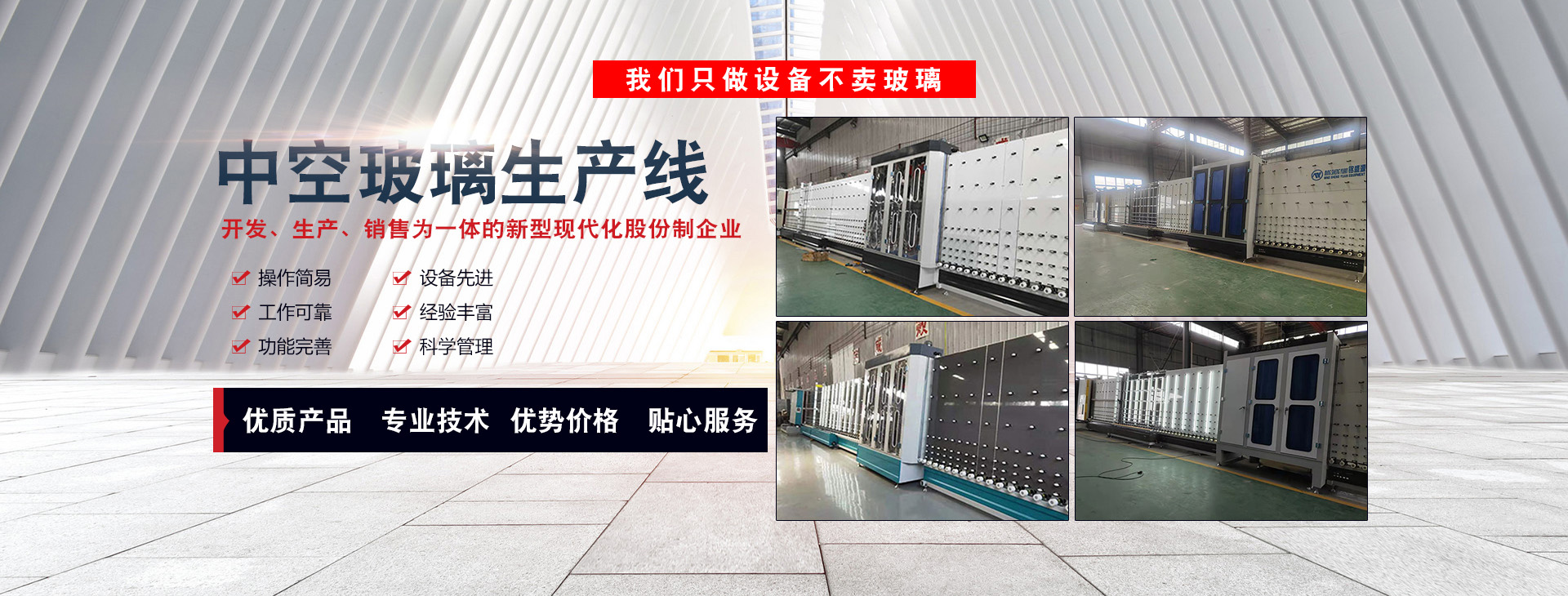
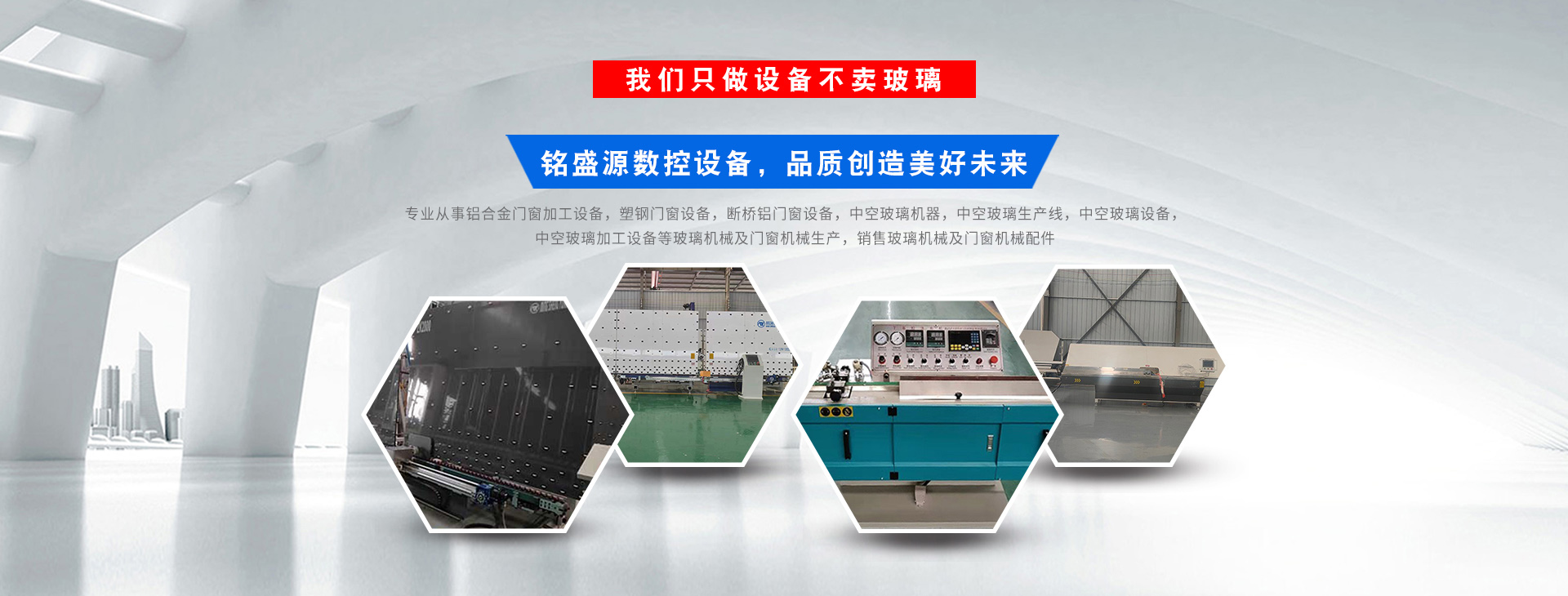

When selecting a small hollow glass production line, pay attention to the following aspects:
Section 1: Look for the Logo to Verify Certificates
Insulating glass (safety) equipment refers to the individual glass panes that make up insulating glass, which are all safety glass that has passed the 3C certification (tempered glass or laminated glass). In 2006, insulating glass (safety) was included in the mandatory certification products for safety glass. Since the implementation of the certificationCome on, many manufacturers have passed product certification and obtained the 3C certificate. Enterprises should print or affix the 3C mark on the product itself, or on the smallest outer packaging and accompanying documents (such as the certificate of conformity) when selling the product. When purchasing products, the first thing to check is whether there isThe 3C mark, and check online the manufacturer of the product through the enterprise information, factory number, or product certification certificate to see if the manufacturer has passed the mandatory product certification (holds a valid 3C certificate), and if the product model specifications are within the scope of the manufacturer's certified capabilities for mandatory certification.Within the perimeter, is the certification status valid?
Two: Inspect the appearance to check the quality of the small hollow glass production line
Inspect the product's appearance quality: hollow glass equipment should not have any stains, inclusions, or sealant splashes that obstruct visibility. The spacer layer must be free of any foreign objects. The sealant or gasket application must be even and continuous, securely bonded to the glass surface without any airways or bubbles.The width and depth of the sealant must not be less than the requirements specified in GB/T11944-2002 standard.
Three: Submit samples to qualified testing institutions for quality inspection to confirm product quality.
The production of insulating glass products involves many key raw materials and production processes. The quality of the raw materials and the level of control over the production processes greatly affect the quality of the products. Additionally, the critical performance of insulating glass equipment cannot be identified by simply looking at the product's appearance; it can only be determined through testing.Ensure accuracy. Therefore, it is highly recommended to have samples sent to a third-party testing facility for inspection and verification when purchasing insulating glass equipment, especially in bulk quantities.
Confirmation of Energy-Saving Performance for Small-Scale Hollow Glass Production Line
When designing curtain wall glass and architectural doors and windows, certain performance parameters of insulating glass, such as visible light transmittance, shading coefficient, thermal transmission coefficient, and dew point, are required. To enhance the energy-saving effect of insulating glass, different types of coated glass and colored glass are selected for combination.Insulating glass. The glass sheets and structures of insulating glass vary, leading to different energy-saving performance in the products. Therefore, before selecting insulating glass, it is essential to send the glass to a qualified third-party testing institution for confirmation to ensure that the selected product meets the energy-saving requirements.When selecting high-transmittance Low-E[3] coated insulating glass, since the coated surfaces are all placed on the inner side of the spacer cavity, they are not easily identifiable or detectable. Therefore, it is imperative to conduct sampling inspections of the products provided by the insulating glass equipment suppliers.Ensure professional testing and verification by qualified institutions to prevent substandard products from being passed off as high-quality or counterfeit.
Section 5: Handling, Storage, and Use of Small Hollow Glass Production Lines
Insulating glass equipment is typically packaged in wooden crates or shipping racks. Plastics or papers are used to separate the glass panes, and soft materials should be filled in between the glass and packaging to prevent scratches. Insulating glass equipment should be stored vertically in a dry indoor area, and efforts should be made to avoid external impacts during handling and use.When cleaning glass, be cautious to avoid scratching or damaging the glass surface.

