
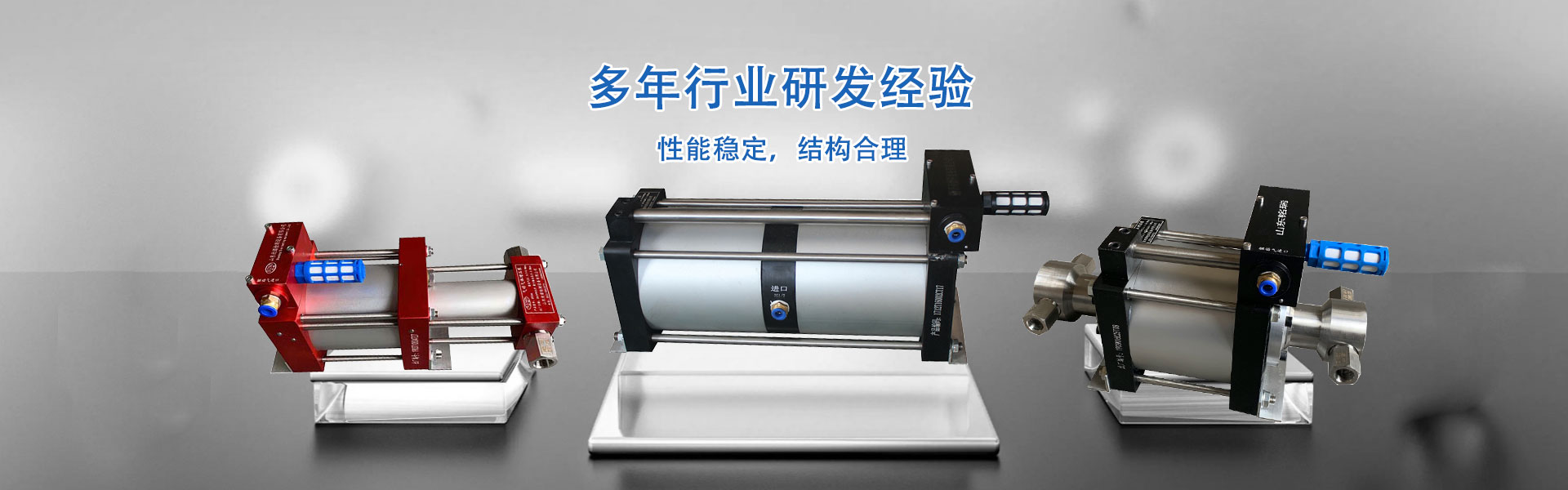
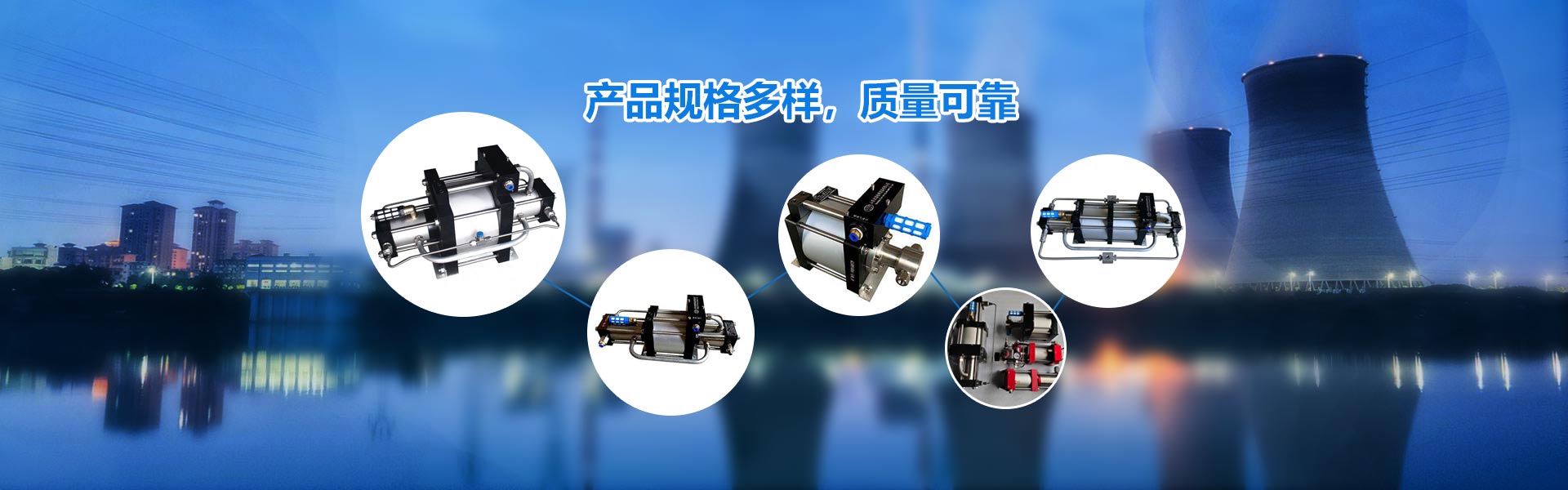

Pneumatic booster pumps utilize low-pressure gas driven by a large piston end to produce high-pressure fluid at a small piston end. They are suitable for compressing air and other gases, with the output pressure adjustable infinitely through the driving pressure. Multiple gas drives: compressed air, liquid nitrogen, pipeline nitrogen, and steam.

The working principle of a gas booster pump
The high-pressure plunger, controlled by a one-way valve, continuously expels the liquid. The outlet pressure of the booster pump is related to the air-driven pressure. When the pressure between the driving section and the output liquid section reaches equilibrium, the booster pump stops running and no longer consumes air. When the output pressure drops or the air-driven pressure increases, the booster pump automatically starts and runs until it reaches pressure balance again, at which point it stops automatically.
