
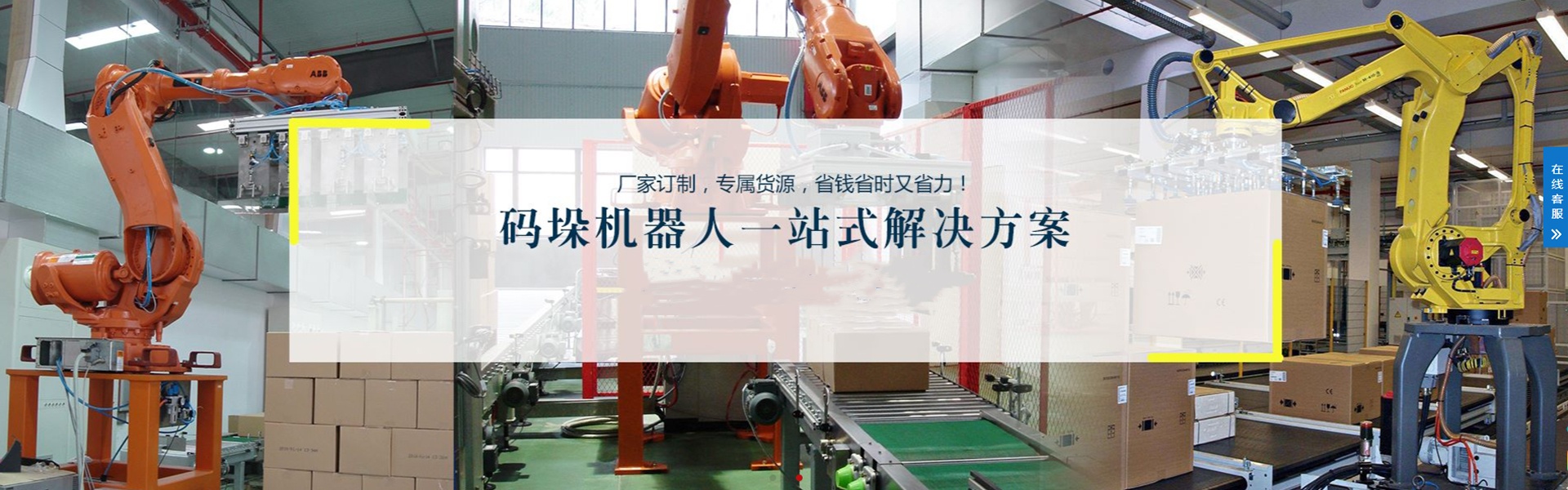

Palletizing is a relatively simple application for robots, which puts significant strain on their load capacity, precision, motion control, and data transmission speed. If a traditional six-axis robot is used for palletizing and stopped, it not only results in a certain level of waste in robot operation but also, due to its shorter arms, limits the range of palletizing and can only handle medium to small-sized objects. So, what are the main requirements for industrial robots on the automatic production line?
1. Cost Control in the Application of Palletizing Robots
In contrast to traditional manufacturing, an automated assembly line can experience a halt in production if a single machine malfunctions, disrupting the continuity of the production process. Under this requirement, robots must possess high stability and excellent continuous production capabilities. Additionally, it is essential that we are not only "able to use" them but also "use them effectively."
2. Selection of Palletizing Robots
Industrial robots are complex integrated systems, encompassing mechanical arms, control systems, programmers, and other software and accessories. It is crucial to make a selection based on the specific practical consumption requirements of the enterprise before application, choosing products suitable for one's own production line. The selection criteria include cost-effectiveness, environmental conditions, technical parameters, etc. Only by selecting products that meet practical consumption needs can the advantages of the robots be fully utilized, creating greater value with minimal investment.
3. Rational machine tool clamping fixtures
Robots are like our brains, and fixtures are akin to our hands. Therefore, the design and selection of workholding fixtures are of paramount importance. Only by choosing the right fixtures and coordinating them with the programmed motion of the process can the full potential of the robot be realized.
This concludes the key considerations for demand attention regarding stacker robots on automated assembly lines. Using stacker robots can provide excellent consumer assistance in the industrial sector. Not only are they highly efficient and labor-saving, but they also offer great value for money.
