
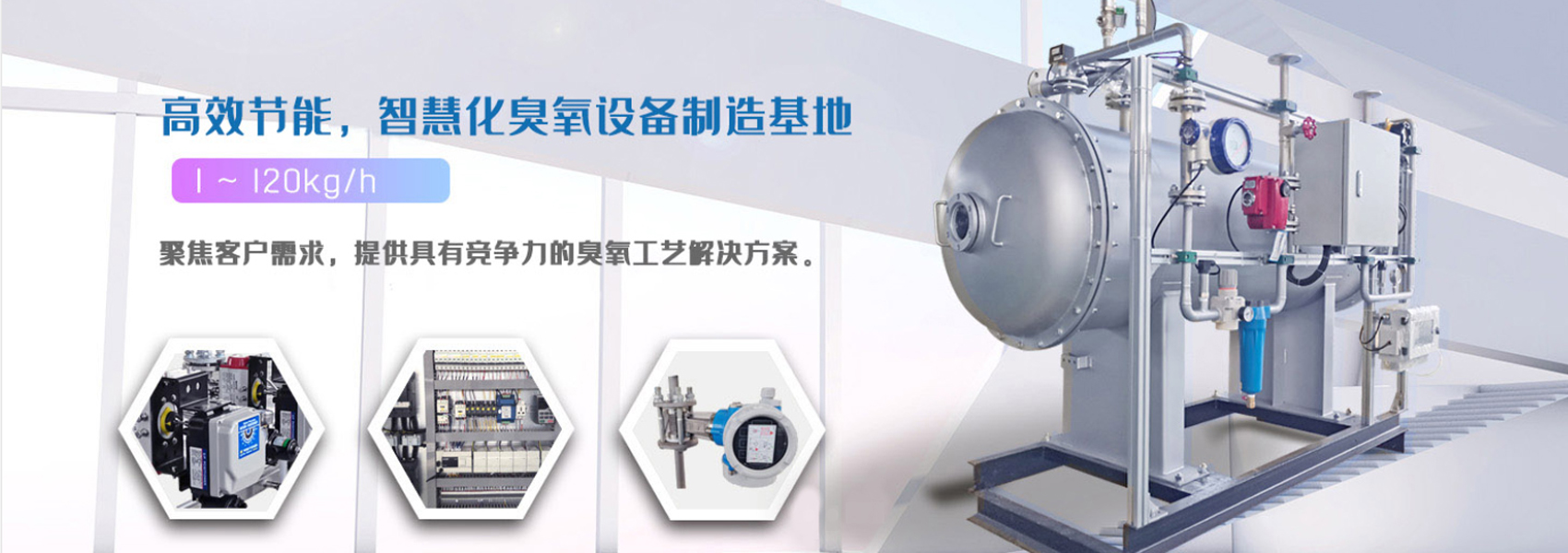
One, Large ozone generators are primarily used in the wastewater industry. Ozone, being a strong oxidant, can be utilized for wastewater COD degradation, decolorization, enhancing biodegradability, sterilization, deodorization, and more.
Ozone is utilized in wastewater COD degradation, primarily relying on its strong oxidizing properties to oxidize and degrade the COD in wastewater. The application of ozone in wastewater COD degradation is mainly during the advanced treatment stage, where the ozone dosage is low and the cost is affordable.
Based on our years of experience in the ozone industry, ozone is applied in the deep treatment of wastewater for COD degradation, typically at a 1:1 dosage ratio. This means to degrade 1mg/L of COD, 1mg/L of ozone is required. For instance, during the deep treatment phase, if the wastewater COD is 600, it needs to be reduced to below 80 to meet emission standards. This would require the degradation of at least 520g of COD per ton of water. Consequently, 520g of ozone per ton of water would also be needed. If the water volume is 3 tons per hour, a large-scale ozone generator of 3 * 520 = 1560g/h is required. To ensure a buffer, it is recommended to use a capacity of 2000g/h.
Ozone is utilized for wastewater COD degradation, primarily through oxidation based on ozone concentration. Large-scale ozone generators are available in two types of gas sources: air and oxygen. The higher the ozone concentration, the stronger the oxidizing power and the more pronounced the COD degradation effect.
1. Air-source ozone generators utilize high-voltage electricity to ionize the air, converting 21% of the oxygen into ozone. Due to the lower oxygen concentration, the ozone concentration is also low, with an air-source concentration ranging from 15-35 mg/L. This low concentration is suitable for deodorization and sterilization purposes.
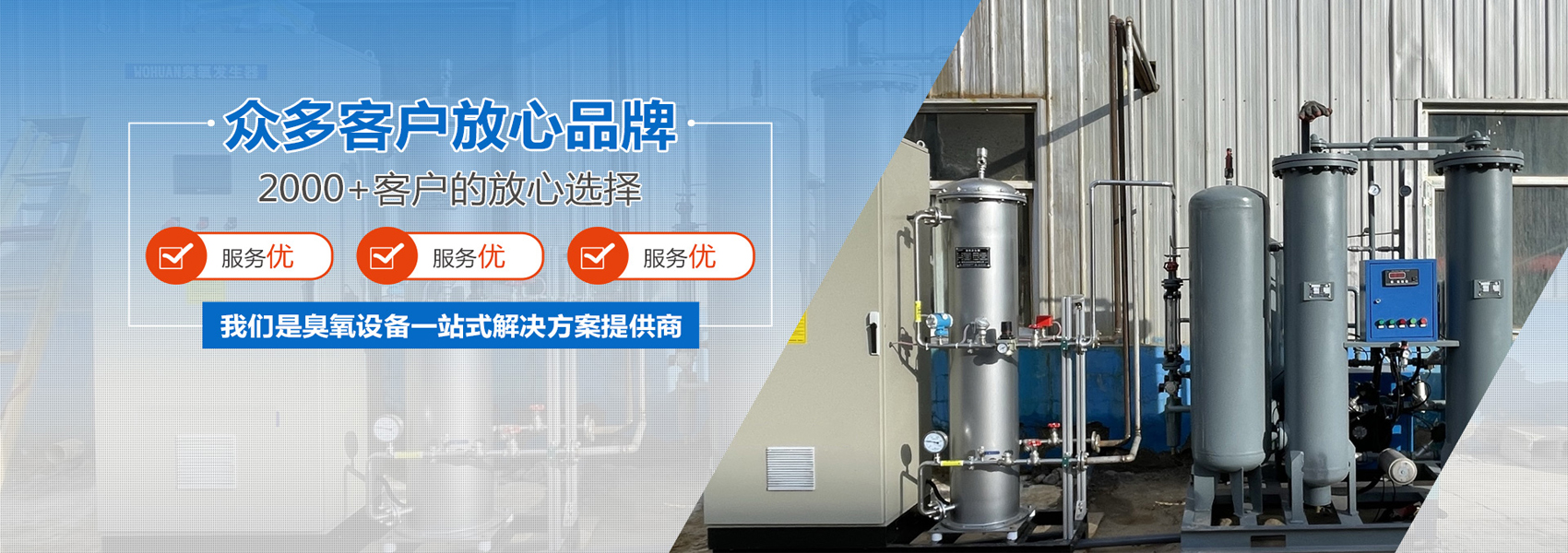
2. Oxygen Source Ozone Equipment, the raw material is also air. After compressing air, drying, oxygen production, and filtration, a pair of molecular sieve oxygen generators is used. Utilizing the principle of molecular sieving, nitrogen in the air is separated from oxygen, and nitrogen is expelled. The oxygen purity can be upgraded to over 90%. Then, using 95% pure oxygen, it is passed through a high-voltage electric discharge to produce an ozone concentration of 120-150 mg/L, which is 6-8 times the concentration of air sources. Its oxidizing power is very strong, and it is used for wastewater COD degradation and decolorization, with very noticeable effects.