

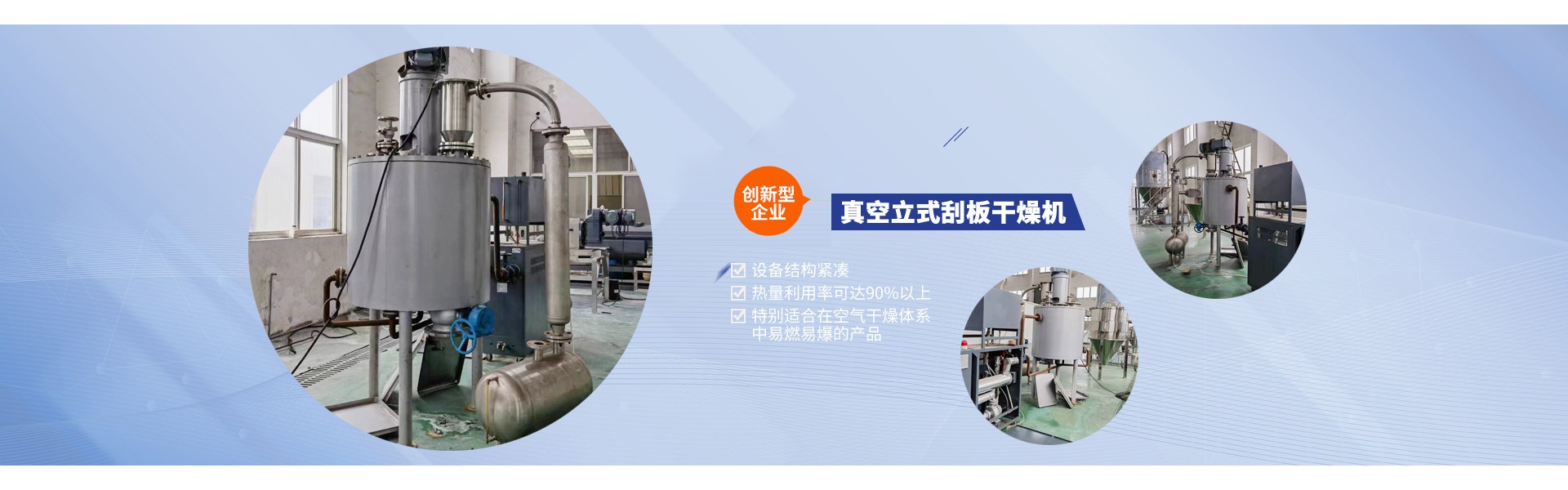
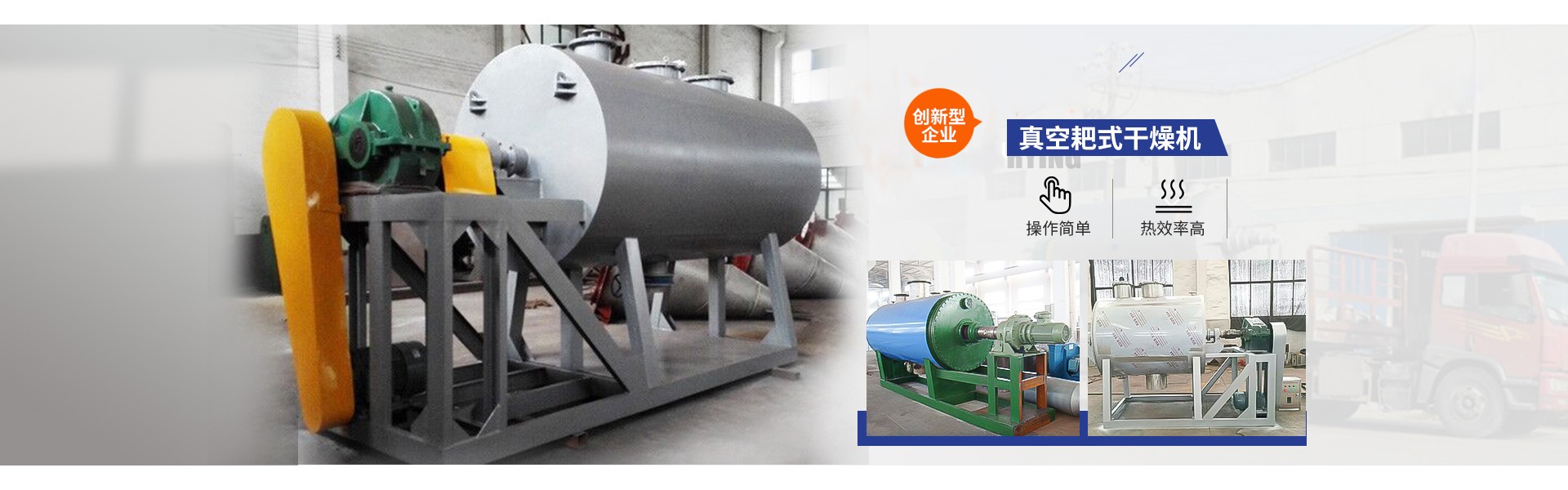

Continuous wet material is added to the upper layer of the dryer's drying tray by an adder. A scraper arm with rake blades rotates to continuously flip the material. The material flows over the surface of the drying tray along an exponential spiral line, where it is moved from the inner edge of the small drying tray to the outer edge of the larger drying tray below. The material then moves inward on the large tray and falls through the middle discharge opening into the next layer of smaller trays. The trays of different sizes are alternately arranged vertically, allowing the material to continuously flow through the entire dryer. Hollow drying trays are filled with heating medium, which can be saturated steam, hot water, or thermal oil, and the medium enters at one end of the tray and exits at the other. The dried material falls from the upper tray to the bottom of the shell, where it is conveyed by the rake blades to the discharge point. Moisture evaporates from the material and is expelled through a moisture exhaust port on the top cover. The moisture from the vacuum-type disk dryer is expelled through a vacuum pump port on the top cover. The dried material discharged from the bottom can be directly packaged. By adding auxiliary equipment such as finned heaters, solvent recovery condensers, bag dust collectors, dry material blending mechanisms, induced draft fans, etc., the drying capacity can be increased, making it possible to dry paste-like and heat-sensitive materials. Solvents can be conveniently recovered, and thermal decomposition and reaction can be performed.
News Center Co., Ltd.
