
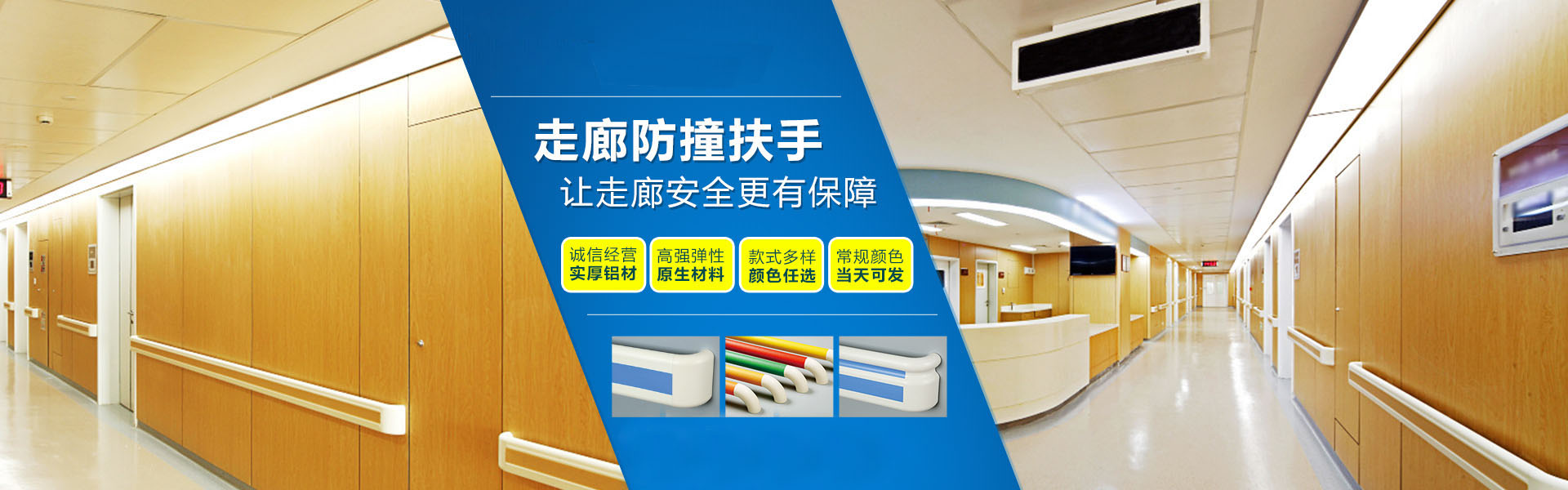


Adjacent to the public restroom or at a suitable location, an accessible restroom should be provided to replace the disabled toilet space in the public restroom. When using a restroom with a swing door, the door should open outward, ensuring a clear passage width of not less than 0.80m. The door handle should be horizontal, and a door latch that can be accessed from both sides should be installed. A door pull should be placed on the inside of the door.
1. Ramps, stairways, and both sides of steps exceeding two levels should be equipped with wheelchair ramps, and the handrails should be continuous around the elevator.
2. The shape, specifications, and color of the disabled handrails must be easily identifiable and graspable. The cross-sectional size of the handrails should be between 35mm and 50mm, with a clear space of 40mm between the inner side of the handrail and the wall.
Handrails for ramps, stairs, and steps should extend horizontally for at least 0.30m beyond the starting and ending points.
4. Handrails for the disabled should be made of quality wood or other superior materials. They must be securely installed and able to bear the weight of the body.
5. The toilet stall floor should be level, non-slip, and free of puddles, with no variations in height. A hanging hook of 1.20 meters in height should be installed inside the toilet stall.
6. The diameter of the grab bar ranges from 32mm to 40mm, with an inner distance from the wall of 40mm. The grab bar must be securely installed and capable of supporting the weight of the body.
Two Key Points for Installing Handrails for the Disabled
Note: Ensure that the installation of wheelchair ramps is securely fastened.
Before installing the disabled handrails, the existing staircase handrails must be sanded to remove surface dirt and to inspect for any damaged areas. During installation, it is crucial to check the stability of the balusters and ensure that there are connecting plates between the linked balusters. To enhance the durability of the disabled handrails, they must be anchored into the wall, with a depth of at least 10 cm.
Note: Inadequate installation of wheelchair railing.
During the construction process, many installation workers have placed excessive emphasis on the robustness of wheelchair ramps, overlooking their smoothness. Smoothness not only affects the overall aesthetic of the project but also has a greater impact on the comfort of use. Only more even, attractive, and elegant products can be used for a longer duration.
