



- AllProduct Category
-
Intelligent Hierarchical Analyzer
Online Viscosity Gauge
Online Density Meter
Level Gauge
Level Switch


详情描述
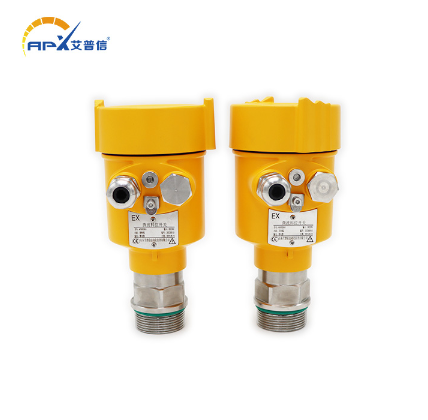
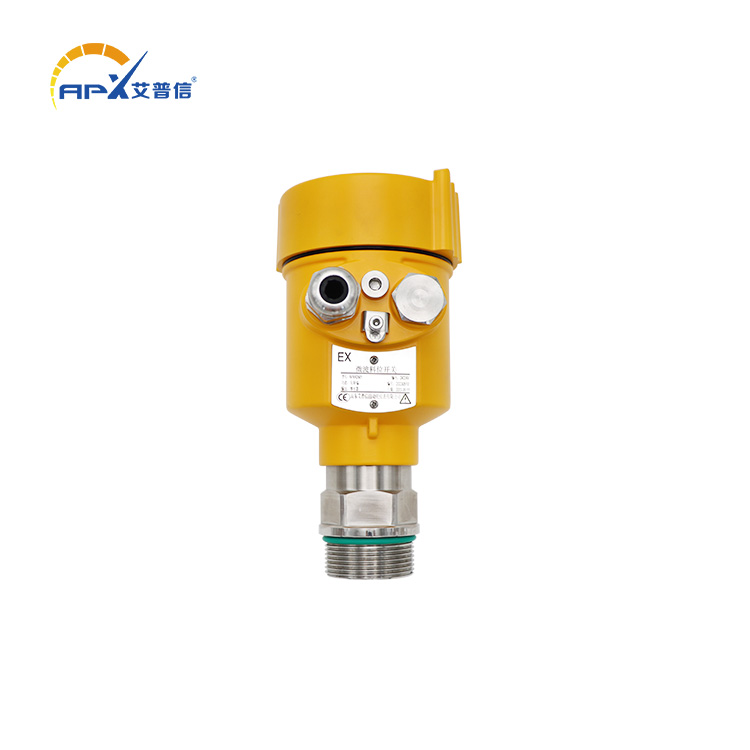
Overview
Transmitters and receivers are installed face-to-face.
The transmitter emits microwaves to the receiver, and when the microwaves are obstructed by objects, the receiver outputs a relay signal. Adverse working conditions may cause sensors to become dirty or covered with paper shreds and other materials. Due to the strong penetrability of microwaves, the sensors can easily penetrate these contaminants to complete measurements. Therefore, it can effectively be used to monitor the level of materials such as waste, ore, powder, granules, and asphalt.
Features
1) Sensors are unaffected by dust, surface scabs, steam, and suspended particles
2) Wide microwave emission angle range, easy to install and adjust, unaffected by vibration, reliable operation
3) Suitable for detecting hazardous materials in high-temperature, high-pressure, and other dangerous environments
4) Simple operation for various distance measurement transformations
5) Voltage supply options available: DC24V
6) Monolithic structure, 24GHz, lightweight, easy to connect
Microwave Penetration
When microwaves pass through the air and encounter an object, some are reflected back, some are absorbed, and the remainder passes through the object. The amount of microwaves passing through an object depends on its composition. Generally, microwaves cannot pass through metal and are reflected back; water absorbs the vast majority of microwaves. Microwaves can easily penetrate materials such as plastic, glass, ceramics, and paper.
Therefore:
1. Do not test loose paper materials, polystyrene foam, and dry cement. 2. Microwaves can penetrate non-metallic floating objects on the sensor surface. The penetration strength depends on the thickness, composition, metal content, and water content of the object being measured.
3. Due to the high penetrability of microwaves, damage to microwave sensors caused by high temperatures, hazardous materials, vibrations, or impacts can be avoided by installing protective windows on both sides of the container or placing them away from harsh environments. The protective windows should be made of materials such as ceramic, Teflon plastic, and waterless polypropylene to minimize microwave loss.
4. The diameter of the detection window should be at least 60 millimeters to allow for a wider angle of microwave emission. The distance between the window and the sensor should be less than 200 millimeters; if a larger window is used, the installation distance can be increased.