

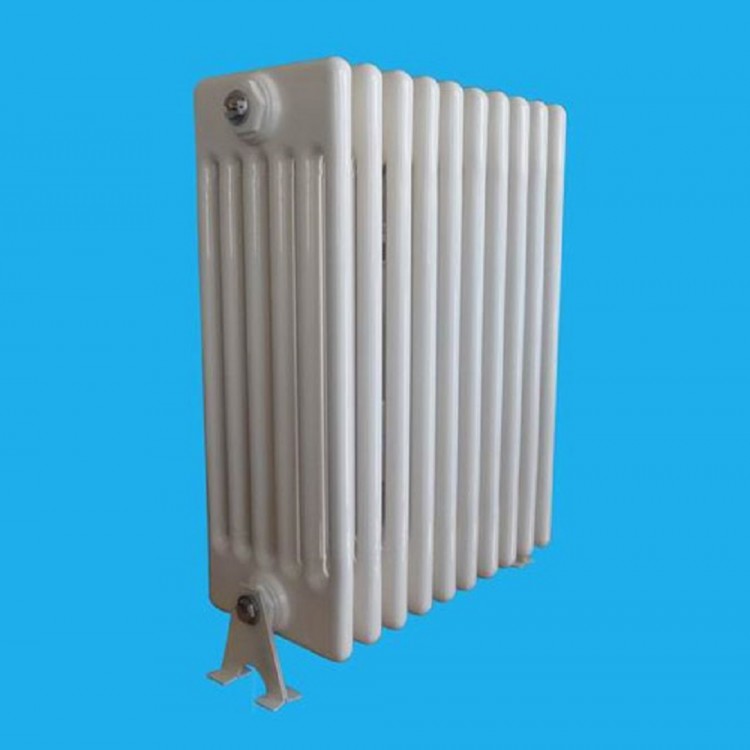
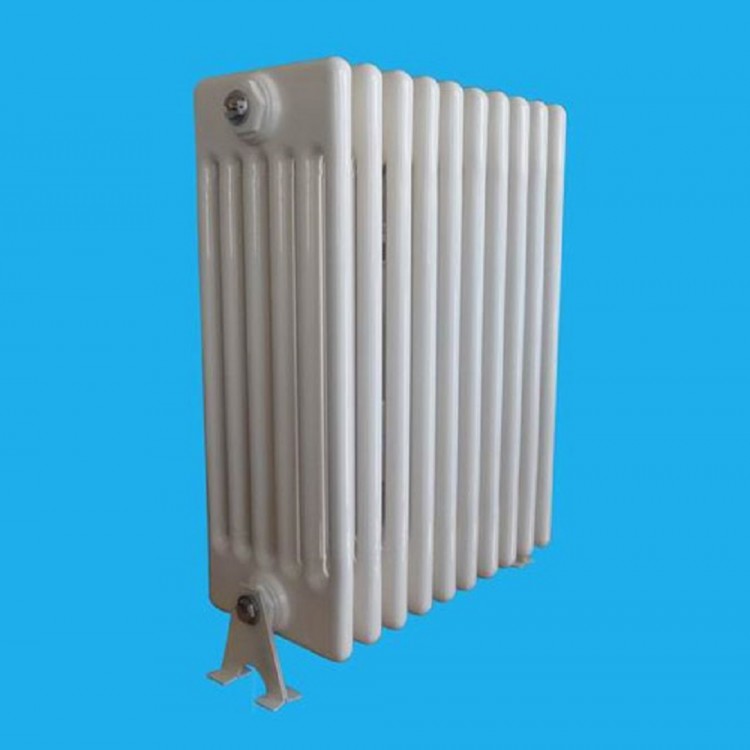
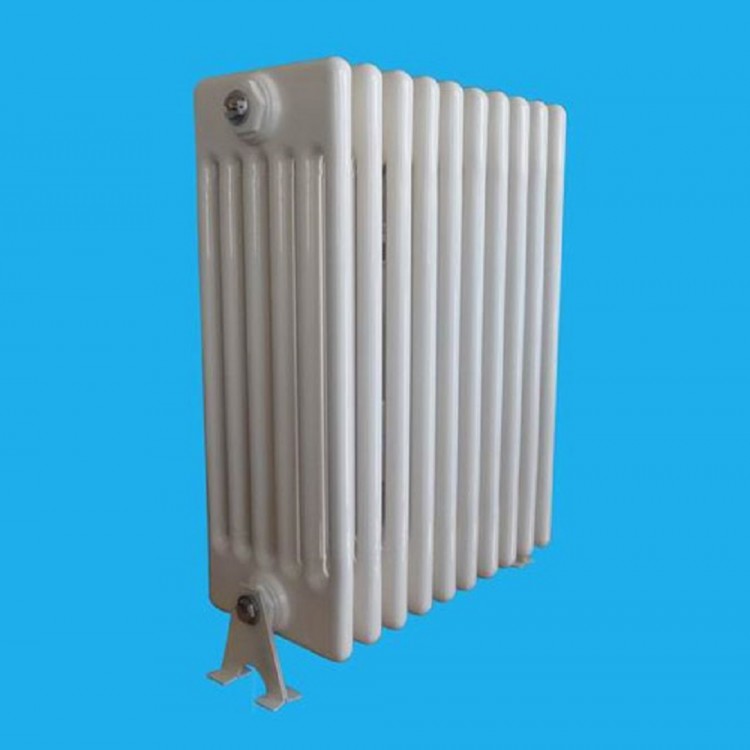
Steel column radiators refer to water heating radiators made of cold-rolled low-carbon steel in a column shape. The structure of the steel column radiators is similar to that of cast iron column radiators, with each panel consisting of several hollow pillars interconnected, typically measuring 640mm in height. However, they are formed by pressing and stretching 1.5~2mm thick steel plates into a semi-column shape, then welding two semi-column panels together to form a single panel. The panels are then connected using gas tungsten arc welding to create the radiator sections. The number of panels per section can be determined according to the design requirements.
Steel column radiators have a much higher heat transfer coefficient than steel strip and plate radiators, but their manufacturing process is more complex. Steel column radiators are mainly composed of the water passage section and the convection fins. Their heat dissipation effect is primarily influenced by the temperature of the heat medium inside the radiator, the external air temperature, the surface area in contact with the air, and the air flow rate. Therefore, the temperature of the heat medium source directly and fundamentally determines and affects the actual performance of the radiator. Currently, the steel column radiators being discussed here are mainly for water heating, using water as the heat medium carrier, with the radiator steel acting as a conductor to heat the air first, then raising the room temperature to achieve the heating purpose.
Steel six-column radiator
