

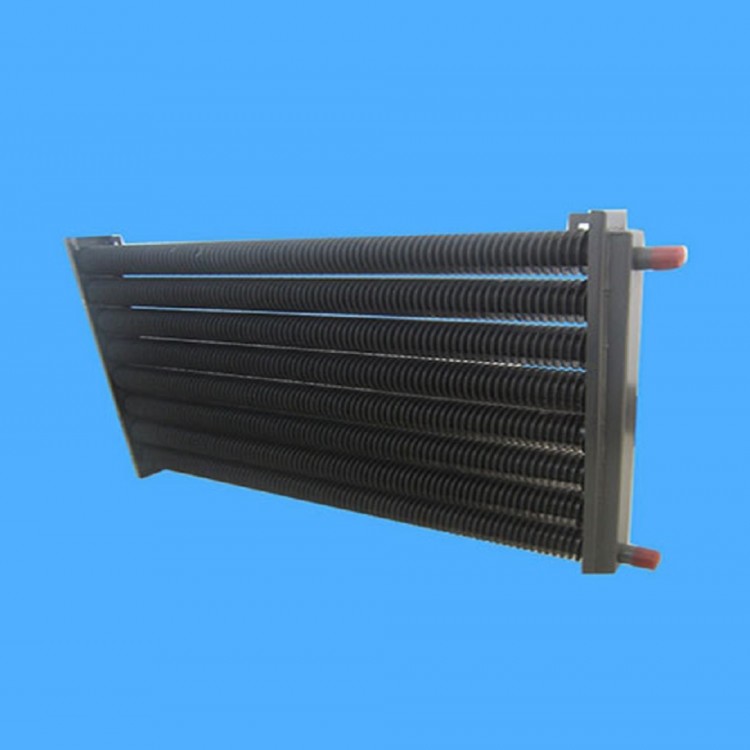
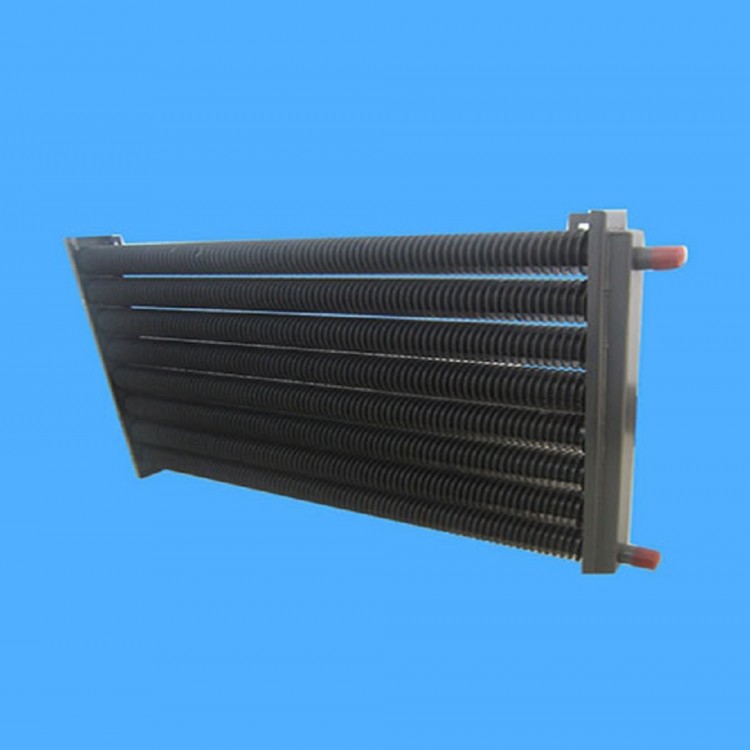
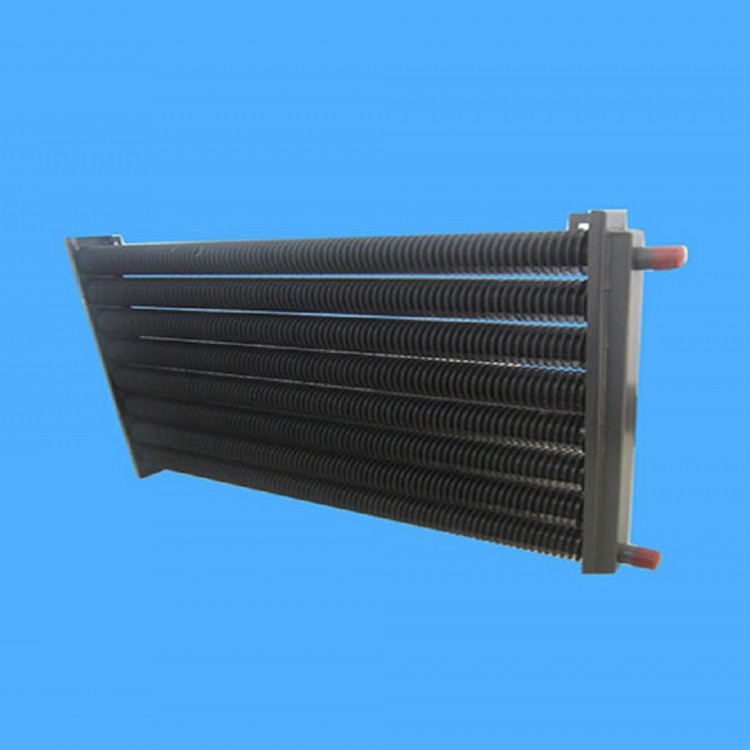
Finned tubes, designed to enhance heat exchange efficiency, typically increase the surface area (either external or internal) of the heat exchange tubes by adding fins, thereby improving the heat exchange efficiency. Such heat exchange tubes.
Main performance requirements for finned tubes
Finned tubes, as heat exchange elements, operate under harsh conditions of high-temperature flue gas for extended periods, such as in boiler heat exchangers where the finned tubes are subjected to extreme environments of high temperature and pressure, as well as corrosive atmospheres. This necessitates that finned tubes possess high performance specifications.
1) Anti-corrosion Properties
2) Wear Resistance
3)、Low contact thermal resistancentact resistance)
4) High Stability
5) Dust-Resistant Ability
Our company has been dedicated to the development and research of integral finned tubes, which are now widely used in boilers, chemical industry, ships, waste heat power generation,
Home decoration and various other fields utilize it extensively. In the boiler industry, as a heating surface, it makes full use of the advantages of the integral finned tube.
In the heating surface of boilers, superheaters, economizers, and air preheaters are all utilizing integral finned tubes, which are now performing exceptionally well. This is due to the following six advantages of integral finned tubes:
1. Integral finned tubes can enhance heat exchange efficiency (area and heat transfer coefficient). Under the same base tube conditions: (with tube)
For φ32X4, with an airfoil height of 12 and airfoil spacing of 12, 1 meter is equivalent to: 4 meters of light tube or 2.6 meters of foil structure (spacing 62X3, flat steel 30X3) or 1.5 meters of flat steel coiled and welded fin tube (flat steel 12X3).
2. The integral finned tube is abrasion-resistant. As the fins of the integral finned tube are molded as a whole with the base tube, they share the same crystalline structure.
The performance is stable, and the fins are in a sand dune shape, which matches the temperature gradient shape when heated. The surface temperature of the fins remains consistent when heated, ensuring uniform thermal stress without concentration, thereby eliminating weak points in strength. Additionally, the fins have a guiding effect on the flue gas, making the various indicators (temperature, flow rate, ash content, etc.) more uniform. This prevents the flue gas from flowing unevenly and avoids concentrating the flushing on a specific area or part. As a result, it is more wear-resistant. Typically, the light tube experiences severe wear at locations such as 30° to the radial left and right, at the end bend, and on the side of the wall tube.
3. The rigidity of the integral finned tube is significantly enhanced. The rigidity depends on the moment of inertia, and the moment of inertia of the integral finned tube is 4.76 times that of the corresponding smooth tube. (The moment of inertia for φ32X4 is 35168mm²), while the finned tube's moment of inertia is 167613mm². The spacing between supports for smooth tubes is 2.71m (3.55m for the old tube specification), and for finned tubes, it is 5.28m (6.91m for the old tube specification). When calculating the wall temperature near 460°, the spacing between supports will decrease, resulting in the phenomenon where several rows of tubes on the upper economizer break between supports. This phenomenon is characterized by a clean break, and no material issues have been identified.
4. Integrated finned tube does not accumulate dust. The reason for dust accumulation is due to the Karman vortex: as the flue gas flows through the tube, a negative pressure zone forms on the back of the tube. In this area, the flow velocity of the flue gas is zero or even reverses, causing the flue gas to accumulate here, with dust adhering to the surface of the tube. The thermal resistance of the dust is relatively high; the thicker the dust accumulates, the greater the thermal resistance becomes, resulting in less heat transfer and an increase in exhaust gas temperature, which in turn reduces the efficiency of the boiler. However, the finned tube guides the flue gas, overcoming the Karman vortex and also sorting out the distribution of the dust, making it uniformly distributed in the flue gas. Since its operation, Weilusheng Group has not accumulated any dust.
(No dust blowing equipment installed), the experimental report by Xi'an Jiaotong University also confirms this.
5. Stable thermal conductivity. The monolithic structure, serving as the heating surface, has shown minimal fluctuation in exhaust gas temperature over many years of operation without any signs of economizer tube bursting.
6. Long service life. Under the same operating conditions (coal quality, temperature, heat surface position), finned tubes ensure a lifespan twice that of plain tubes. Generally, if the lifespan of plain tubes is 3 to 4 years, the lifespan of finned tubes is at least 7 to 8 years longer. Regarding the structural arrangement of the 240t/h boiler, the following is the discussion on the economizer retrofitting plan:
(1) Misplaced structure: S1XS2 = 100x75?
(2) To prevent low-temperature corrosion, the lower two rows of the economizer are treated with increased thickness, featuring 34X6 fin height and a fin spacing of 12.
(3) To reduce wear, the two upper rows of each economizer are treated with added thickness, featuring 34X6 fin height and a fin spacing of 12.
(4) Other finned tubes: 32x4 fins, fin height 10, fin spacing 12.
(5) Elbows are shielded by smoke baffles, preventing them from being washed by smoke.
(6) Low airflow velocity is adopted. (Wear is proportional to the cube of the airflow velocity.)
Fin-tube radiator 04
