





- AllProduct Category
-
Injoinic
CreateCore Micro ICM
RICOH
HYCON
Xi'an Huatech



Recommended Products
详情描述
Product Description:
The R5460N series is a high-voltage, CMOS process battery protection IC, used for 2-cell series-connected lithium-ion/lithium polymer rechargeable batteries.
Battery overcharge/overdischarge protection, with an integrated overload short-circuit protection circuit to prevent large overload short-circuit currents; built-in overcurrent protection circuit
To prevent over-discharge and over-charge currents.
Each IC in this series is equipped with six voltage detectors, one reference unit, one delay circuit, and one load short-circuit protection circuit.
An oscillator, a counter, and a logic module make up the structure. When the charging voltage/current increases from low to high, exceeding the threshold of the corresponding detector,
Upon reaching the set value, after an internal fixed delay, the output of pin COUT will switch to a low level. To deactivate overcharge protection: detect overcharge
After charging or overcurrent charging, disconnect the battery from the charger and then connect the load. When the battery voltage falls below the overcharge detector threshold, the overcharge protection will be activated.
The charging detector must be reset for the COUT output to return to a high level. If the charger is continuously connected to the battery, when the battery voltage falls below
Overcharge protection is lifted when the overcharge voltage is released.
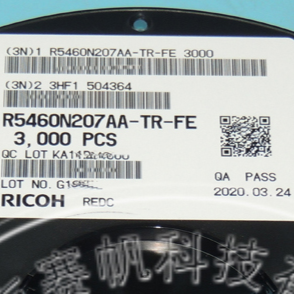
R5460N207AA-TR-FEThis is a commonly used dual-cell lithium battery protection chip.
Overcharge 4.35V, over-discharge 2.3V, with overcurrent protection (overcurrent detection at 0.2V) and short-circuit protection, high accuracy.
The R5460N series is a highly competitive series by Ricoh Ricoh at present.
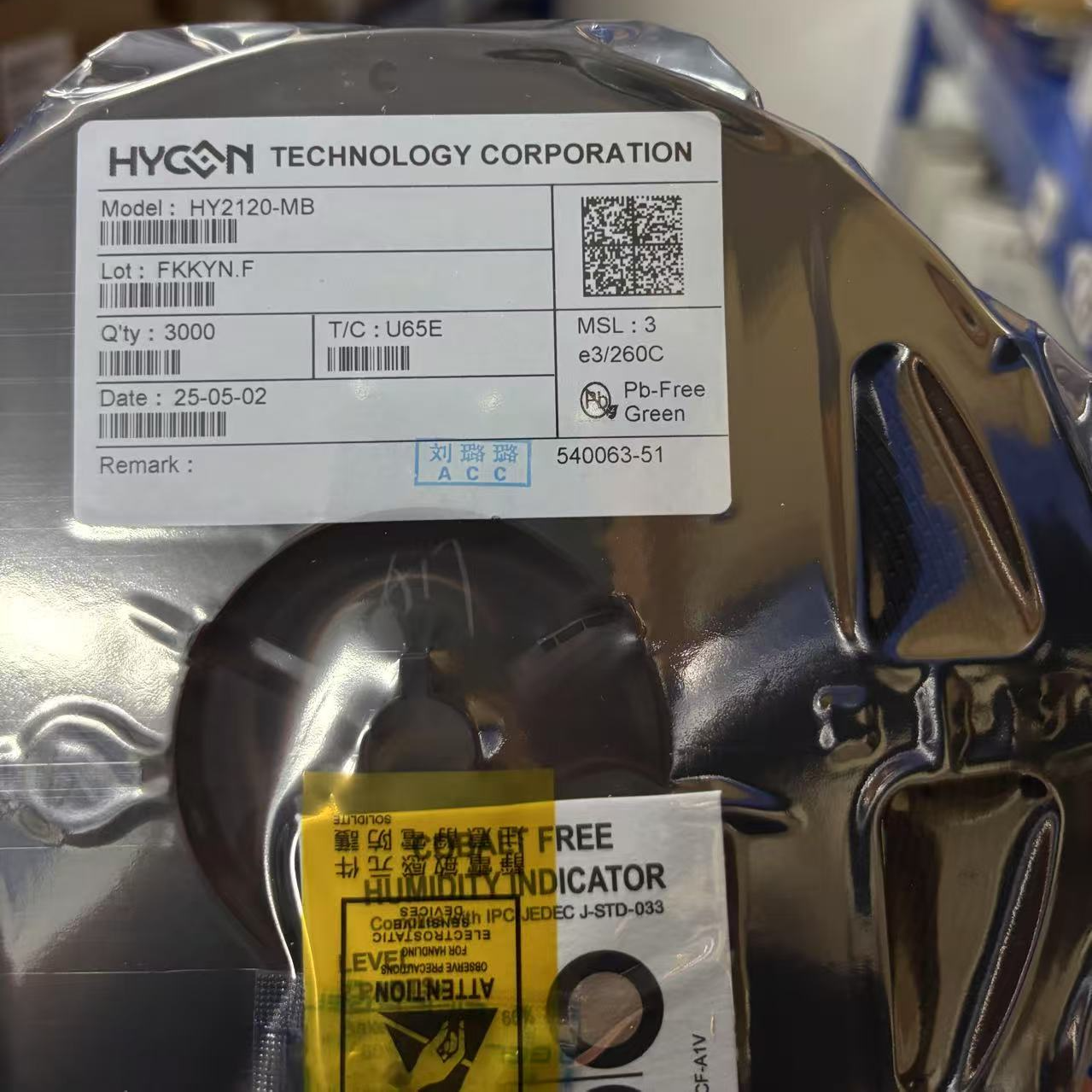
Most people choose this series for the double holiday, or the HY2120 from Taiwan's HYCON.
Description of model R5460N207AA-TR-FE as follows:
R5460 indicates the dual-protection chip series, N represents SOT23-6 package, 207 indicates overcharge at 4.35V, over-discharge at 2.3V, and overcurrent at 0.2V.
A indicates a delay of 1 second; this series all has this parameter.
The second A variable will change: A: Overcharge Protection = Level Release, Undercharge Protection = Level Release
Overcharge Protection = Level Discharge; Overdischarge Protection = Latch
Overcharge Protection = Level Disengagement, Overdischarge Protection = Level Disengagement
Overcharge Protection = Level Disengagement; Undercharge Protection = Level Disengagement
Overcharge Protection = Level Discharge, Under-voltage Protection = Latch (with hysteresis)
Here you can see that the AA combination and the AF combination are the most commonly used, so when selecting a model, it's either AA or AF.
Why? Because over-charging must be protected. Some applications might experience temporary over-discharge, so an auto-recovery is needed, in which case AA batteries are chosen. For those that require stable current and gradually discharge to avoid over-discharge, AF batteries are the best choice, offering protection upon over-discharge.


