


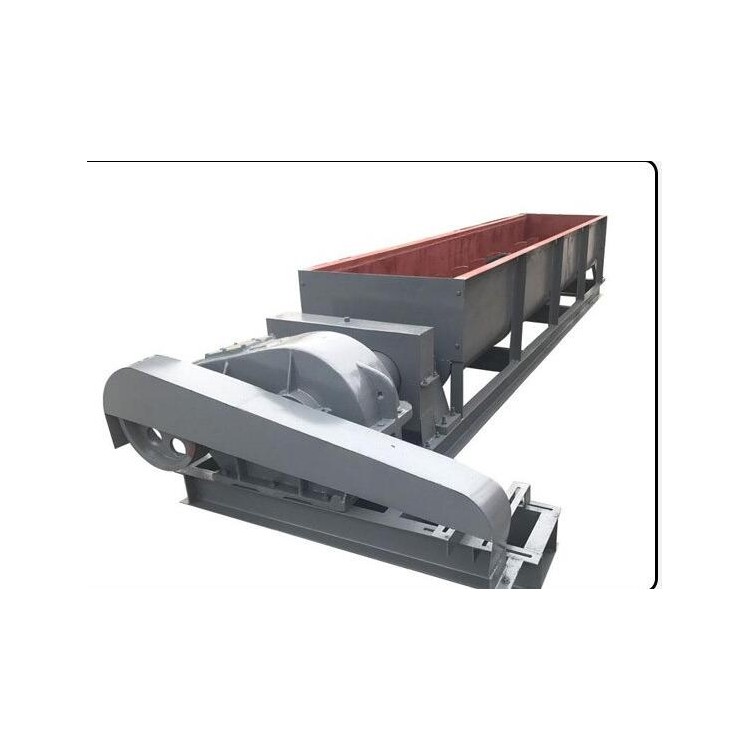
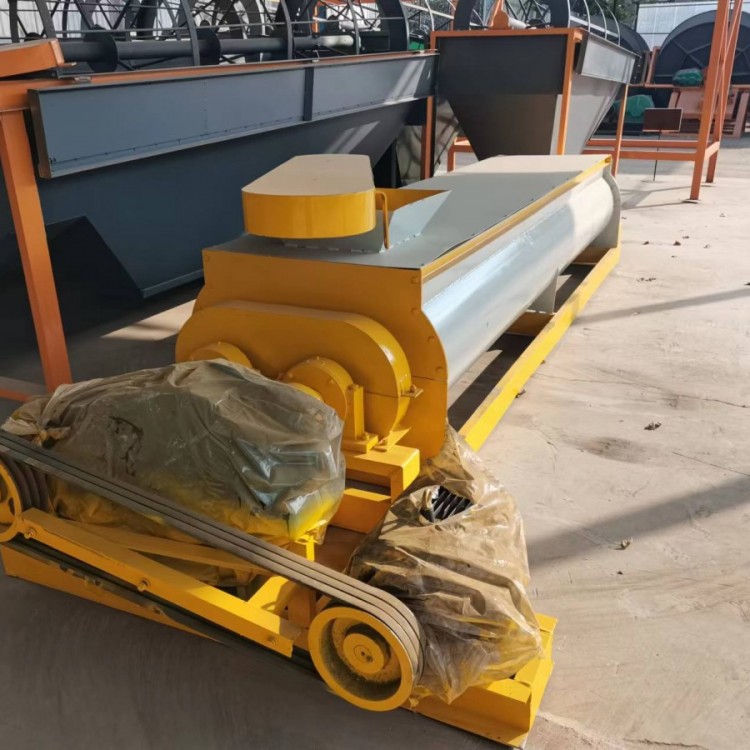

The twin-shaft mixer uses the synchronous rotation of two symmetrical spiral shafts to add water and mix while conveying dry ash and other powdered materials, uniformly moistening the dry ash powder. This ensures that the moistened material neither releases dry ash nor leaks water droplets, facilitating the loading of moistened ash for transportation or transfer to other conveying equipment. Primarily used in power plants, mines, and other industries for the wetting and loading of fly ash or similar materials.
Dual-axis mixer structure: It includes two parallel mixing shafts 1 and 2, mixing blades, and a horizontal mixing drum. The mixing blades extend outward from shafts 1 and 2 to the sides, arranged evenly spaced along the shaft axis and at a fixed angle to each other in a clockwise or counterclockwise direction around the drum, creating a helical pattern with opposite directions on shafts 1 and 2. Shafts 1 and 2 rotate synchronously and their blades interlace through a plane determined by the axes of shafts 1 and 2. A feed opening is located at the top of one end of the drum, and a discharge point is at the bottom of the other end. This structure allows the mixer blades to discharge the dry powder mortar from the feed opening while mixing it, ensuring continuous production and effectively increasing efficiency.

Dual-shaft mixer features: The housing is mainly composed of plates and shaped steel, welded into shape at the manufacturing plant and assembled with other components, serving as the support for the dual-shaft mixer. The housing is tightly sealed, preventing any fly ash or leakage of powder. The spiral shaft assembly is a key component of the dual-shaft mixer, consisting of left and right-handed spiral shafts, bearing seats, bearing sleeves, bearing caps, gears, sprockets, oil cups, blades, and other parts.
