





Tea Dehydration and Drying EquipmentThe primary process involves destroying and钝izing the activity of oxidase in fresh leaves through high temperatures, inhibiting the enzymatic oxidation of compounds like tea polyphenols in the leaves, evaporating a portion of the leaves' moisture, softening the tea leaves for easy rolling and shaping, and simultaneously releasing the pungent smell, promoting the development of a good aroma. Tea leaves are rich in polyphenol oxidase; if not subjected to the killing green process, polyphenolic substances would undergo oxidation and fermentation under the enzyme's action, causing the tea to lose its color quickly and then spoil.
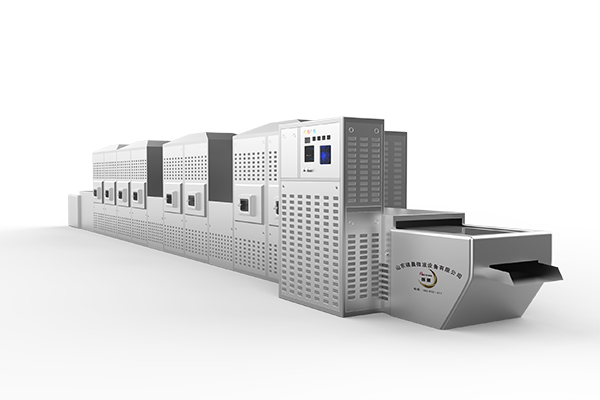
Microwave Greening Machine External Structure and StandardMicrowave Drying EquipmentSimilar to its predecessor, the main feature is the inclusion of a moisture-evaporation device within the microwave cavity. This retains water molecules evaporated under microwave radiation within a specific range, creating a blanching environment. The microwave can rapidly heat up to enzyme inactivation temperatures (60°C-80°C), and after 3-5 minutes of microwave exposure, a high-quality blanching process is achieved.
The process of "kill green" is a critical step in the processing of tea, chrysanthemum flowers, and fresh flowers. Its purpose is to utilize high temperatures to destroy the activity of polyphenol oxidase, suppressing oxidation and redening, and fixing the fresh, green quality of the leaves. Kill green also involves the evaporation of moisture, releasing volatile low-boiling-point aromatic substances, revealing a fresh scent. Microwave kill green has the characteristics of fast temperature rise, even temperature distribution, high thermal efficiency, short kill green time, and high kill green quality. It can be operated solely using electrical energy, posing no environmental pollution. As a new mode of energy transmission, microwave has been used in multiple provinces and cities across China for the kill green and drying of tea and chrysanthemum flowers, improving the quality and grade of tea and yielding significant economic benefits.
