


Geosynthetic steel-plastic格栅's role and material characteristics in subgrade applications
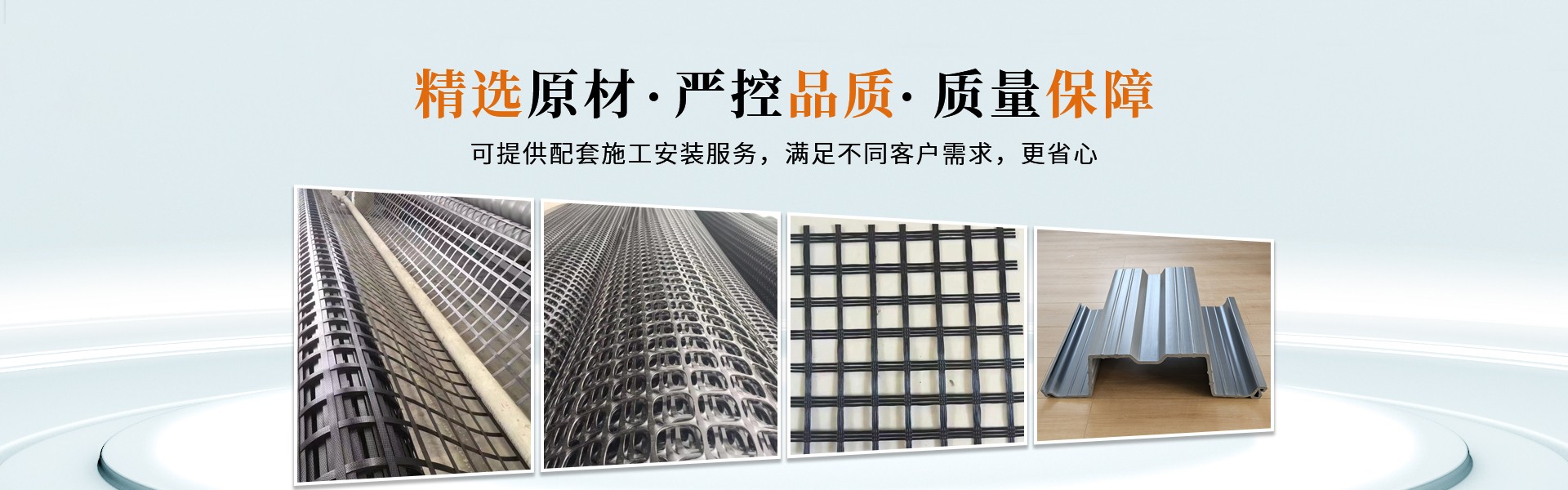
Glass Fiber Reinforced: Geogrid is a geosynthetic material primarily made from glass fiber. It boasts a high tensile strength, typically reaching 60-120kN/m, which makes it excellent in resisting the formation and expansion of road cracks. Furthermore, the chemical properties of glass fiber are stable, resistant to corrosion from acids, alkalis, and other chemicals, maintaining good performance in various soil and road conditions.
The Grid Structure: It features a regular grid shape. This grid structure not only provides a larger surface area, enhancing friction and bite with the road material, but also effectively distributes stress. When the road is subjected to external forces like vehicle loads, the stress can propagate through the grid, preventing localized damage due to stress concentration.
Principle of Crack Resistance
Stress Absorption and Distribution: In pavement structures, the loads generated by vehicle traffic produce tensile and shear stresses. Geotextile fiberglass格栅 can absorb and distribute these stresses. When pavement cracks begin to expand, the high-strength mesh of the geotextile can distribute the stresses at the crack tips over a larger area, similar to dispersing a concentrated force in multiple directions, thereby slowing the further expansion of the cracks. For instance, in asphalt pavements, as vehicles frequently pass over them, the asphalt layer is prone to fatigue cracks. Geotextile fiberglass格栅 can effectively prevent the spread of these cracks.
Enhancing Road Integrity: Geogrids made of glass fiber are tightly integrated with road materials, effectively enhancing the overall integrity of the road surface. They connect various structural layers of the road, such as binding the asphalt surface with the base layer, allowing these layers to work together under external forces. This is akin to fitting a "tight-fitting garment" over the loose road structure, improving its resistance to deformation and cracking.
Construction Key Points
Pavement Preparation: Prior to laying the glass fiber geogrid, the road surface must be cleaned and leveled. Remove debris, dust, and loose materials from the surface to ensure it is dry and flat. If there are noticeable dips or bumps, repairs are necessary to ensure the geogrid fits the road surface tightly.
Grating Installation: It should be laid according to the design requirements. Glass fiber geogrids are generally supplied in rolls, and attention should be paid to the unfolding direction during installation to ensure that the longitudinal direction of the geogrid aligns with the driving direction of the road, maximizing its crack resistance. There should be a certain overlap width between the gratings, typically not less than 10-15 centimeters, and effective fastening measures should be adopted, such as using steel nails or specialized fastening clamps to secure the geogrid to the road surface, preventing any movement during construction.
Combining with Road Materials: After the geogrid is properly laid, it is essential to promptly proceed with the road material installation. During the process, ensure that the road materials make full contact with the geogrid. Appropriate compaction measures can be taken to embed the road materials into the geogrid's mesh, enhancing the friction and interlocking force between them. For instance, when laying asphalt pavements, control the temperature and spreading speed of the asphalt mixture to ensure the asphalt fully fills the geogrid's mesh.
Application Scenarios and Advantages
New Road Construction: Installing glass fiber geogrids in newly paved asphalt or concrete surfaces effectively prevents the occurrence of road cracks. Especially on heavy-traffic roads and mountainous roads where cracks are more prone to form, it significantly enhances the road's crack resistance and extends its service life. For instance, on heavy cargo roads in some large ports, the service life of the road has been improved by 30% to 50% after the application of glass fiber geogrids.
Road Reconstruction: For aging roads with cracks, laying glass fiber geogrid during repairs is an effective improvement measure. It prevents the further expansion of existing cracks and serves as a good transition between the newly laid road materials and the old road surface, enhancing the bonding between the old and new road materials, thereby improving the overall quality of the road.
