


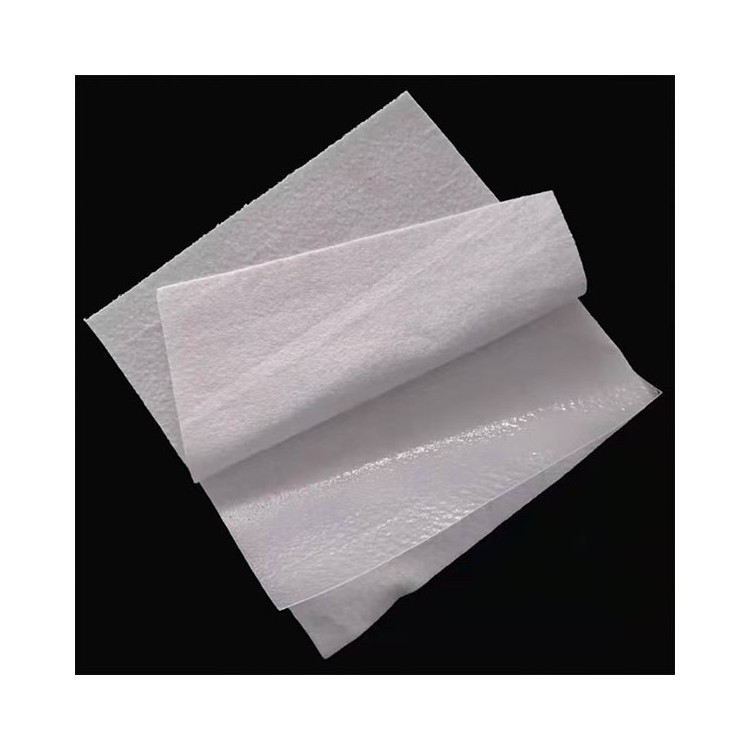
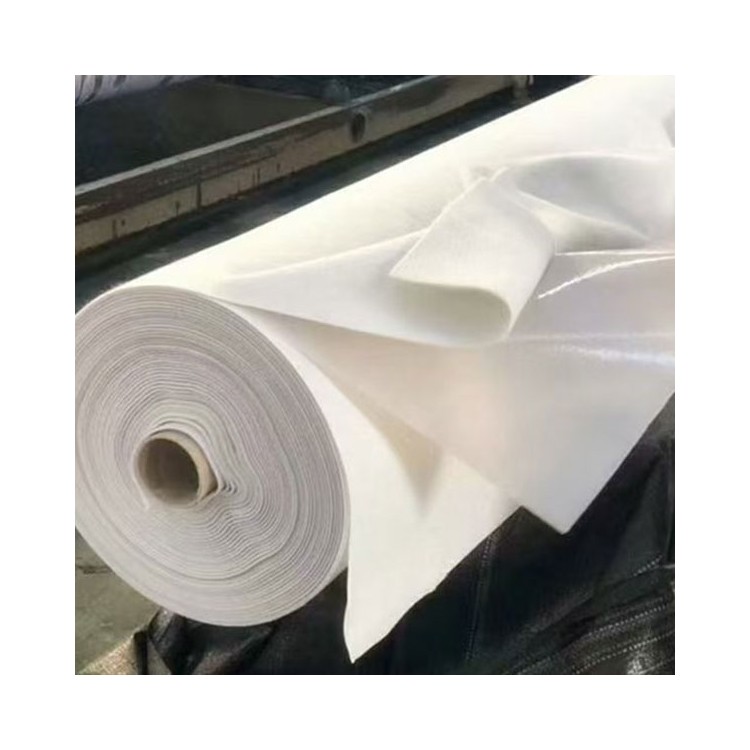

Composite geomembrane is an impermeable material made by bonding geomembrane with geotextile. It is primarily used for waterproofing, and comes in two types: one-geotextile-one-membrane and two-geotextile-one-membrane, with widths ranging from 4 to 6 meters, and weights from 200 to 1500 grams per square meter. It boasts high physical and mechanical properties such as tensile strength, tear resistance, and puncture resistance, meeting the requirements of civil engineering projects in water conservancy, municipal, construction, transportation, subway, and tunnel sectors. Due to the use of high molecular materials and the addition of anti-aging agents during the production process, it can be used in unconventional temperature environments.
Performance
Composite geomembranes (composite waterproofing membrane) are available in single-bias single-membrane and double-bias single-membrane types, with widths ranging from 4 to 6 meters, and weights from 200 to 1500g per square meter. They boast high mechanical properties such as tensile strength, tear resistance, and puncture resistance. These products are characterized by their high strength, good elongation, large modulus of deformation, resistance to acids and alkalis, corrosion resistance, aging resistance, and excellent waterproofing capabilities. They meet the civil engineering needs for waterproofing, isolation, reinforcement, and crack prevention in water conservancy, municipal, construction, transportation, subway, tunnel, and infrastructure projects. Commonly used for waterproofing treatment of embankments, drainage channels, and for preventing pollution in waste disposal sites.
Construction
Composite geomembrane is formed by heating one or both sides of a film, then pressing the geotextile and geomembrane together through guide rollers to create the composite geomembrane. With the advancement of production technology, there is also a casting method for producing composite geomembranes. The configurations include one geotextile and one film, two geotextiles and one film, and two films and one geotextile, etc.
Geotextile serves as a protective layer for the geomembrane, ensuring the waterproofing layer remains undamaged. To reduce UV radiation and enhance resistance to aging, it is advisable to lay it using the burial method.
During construction, first level the base surface with sand or clay of smaller diameter, then lay the geotextile membrane. Do not stretch the geotextile membrane too tightly; the ends buried in the soil should be wavy. Later, lay a 10cm thick layer of fine sand or clay as a transition layer over the laid geotextile membrane. Build a protective layer using 20-30cm blocks of stone (or concrete precast blocks). During construction, endeavor to avoid stones hitting the geotextile membrane directly; it's best to lay the membrane while constructing the protective layer. Connect the composite geotextile membrane to surrounding structures using expansion bolts and steel strips, and coat the joint with emulsified asphalt (2mm thick) to prevent leakage.
