


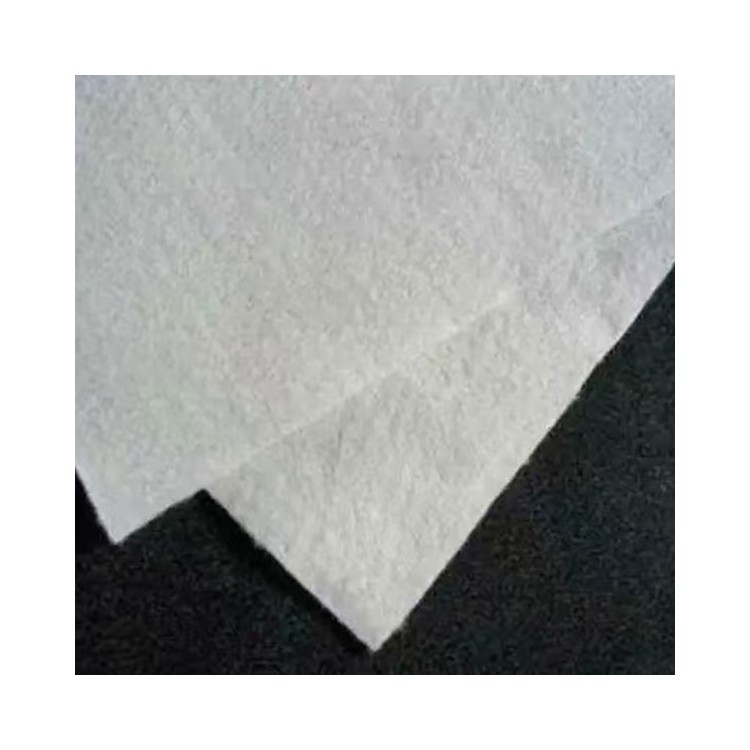
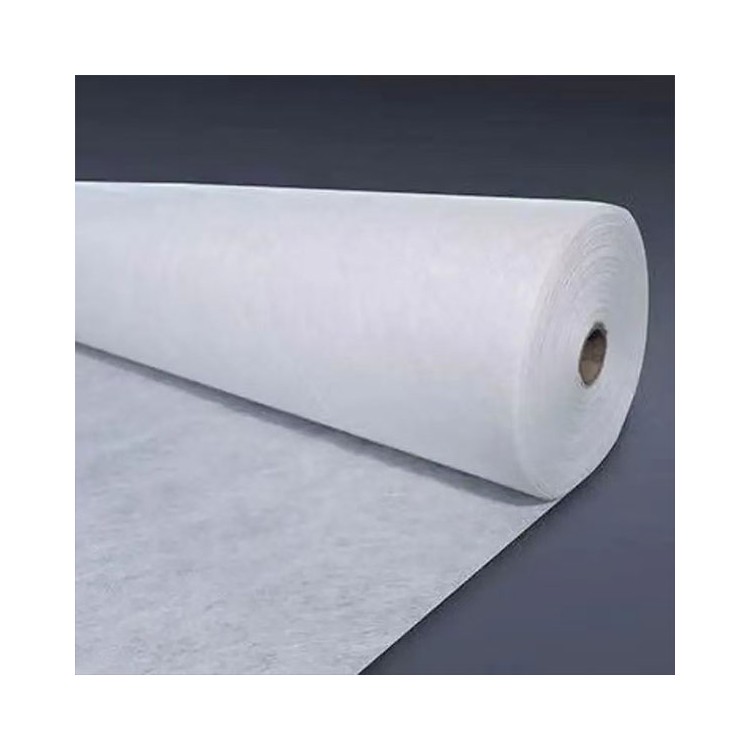
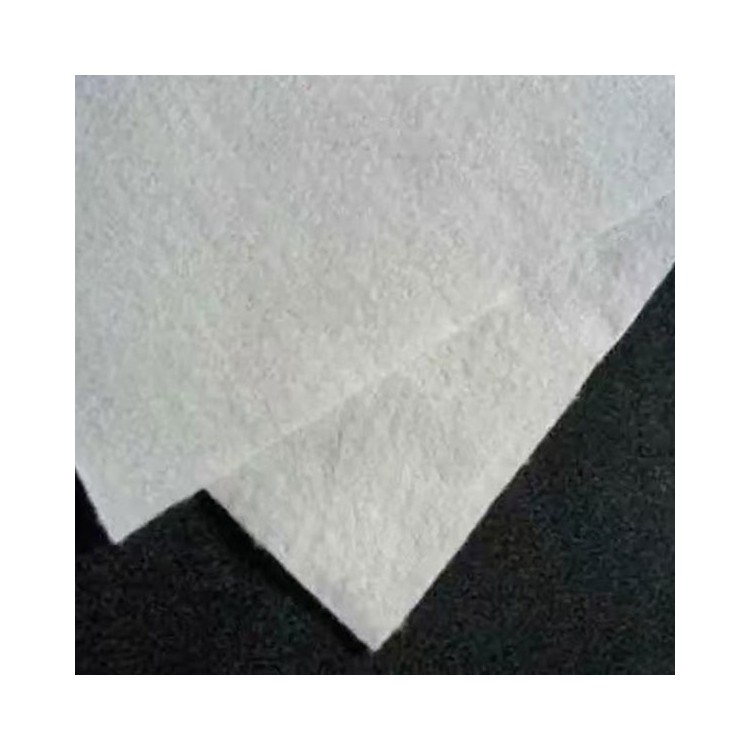
Geotextiles, also known as geotextile fabrics, are permeable synthetic fiber materials made through needle-punching or weaving. They are categorized into woven geotextiles and non-woven long-fiber geotextiles.
Features
1. High strength retention, thanks to the use of plastic fibers, maintains ample strength and elongation in both dry and wet conditions.
2. Corrosion-resistant, enduring long-term corrosion in soils and waters of varying acidity and alkalinity.
3. Excellent water permeability; there are gaps between the fibers, thus offering good water permeability.
4. Excellent antimicrobial properties; resistant to damage from microorganisms and pests.
5. Easy to install due to its lightweight and flexible nature, making transportation, laying, and installation convenient.
Function
Isolation
Utilize polyester short fiber needle-punched geotextiles to isolate construction materials with varying physical properties (particle size, distribution, viscosity, and density, etc.), such as soil and sand particles, soil and concrete, etc. This ensures that materials do not leak or mix, maintaining the integrity and functionality of the materials, thereby enhancing the load-bearing capacity of the structure.
Filtering (Anti-Filtering)
As water flows from fine-grained soil layers into coarse-grained soil layers, utilize the excellent permeability and water-permeability of涤纶短纤针刺土工布 to allow water passage while effectively intercepting soil particles, fine sand, small aggregates, etc., to maintain the stability of water and soil engineering.
Drainage
Polyester short fiber needle-punched geotextile boasts excellent water permeability, enabling it to form drainage channels within the soil mass, effectively expelling excess liquid and gas from the soil structure.
4: Reinforced
Utilize polyester short fiber needle-punched geotextile to enhance soil tensile strength and deformation resistance, thereby improving the stability of the building structure and soil quality.
5: Protective
As water flows and washes over soil, it effectively diffuses, transmits, or decomposes concentrated stresses, preventing the soil from being damaged by external forces and thus protecting the soil.
6:穿刺防护
Application Fields
(1) Reinforcement for soil-retaining wall backfill or for anchoring the retaining wall panels. Construct encasement retaining walls or bridge abutments.
(2) Reinforce flexible road surfaces, repair cracks on roads, and prevent reflective cracking of the pavement.
(3) Enhance the stability of crushed stone slopes and reinforced soil, prevent soil and water erosion, and guard against frost damage to soil bodies during low temperatures.
(4) Separation layer between the ballast and the subgrade, or between the subgrade and the soft foundation.
(5) Separation layer between manually filled soil, stone piles, or material sites and foundations, as well as between different frozen soil layers. Functions include filter prevention and reinforcement.
(6) Filter layers in the upstream embankment surface of ash dams or tailings dams, and in the drainage system of backfill soil in retaining walls.
(7) Filter layer around the drainage pipe or around the gravely drainage trench.
(8) Filter layer for water wells, pressure-reducing wells, or inclined pressure pipes in hydraulic engineering.
(9) Separation layer of geotextiles between roads, airports, railway ballasts, and artificial rockfills, etc., and the subgrade.
(10) Internal vertical or horizontal drainage of embankments, buried in soil to dissipate the pressure of void water.
(11) Drainage behind or beneath the concrete facing in earth dams or embankments.
(12) Exclude water seepage around tunnels to alleviate the external water pressure on the lining and reduce seepage around all buildings.
(13) Drainage for landfills used as artificial fill for athletic field foundations.
(14) Used to reinforce soft subsoil in projects such as roads (including temporary roads), railways, embankments, earth dams, airports, and sports fields.
